“Don’t talk,” whispered the Ethiopian proprietor(店主,老板) of a small café in Nairobi, Kenya’s capital, on the afternoon of September 8th. The doors were hurriedly bolted(闩上,插上插销). Music playing from a Bluetooth speaker was abruptly(突然地,唐突地) switched off. For the next half-hour your correspondent and a handful of others sat in silence, while city officials prowled around outside.(接下来的半小时里,本刊记者和寥寥数人默不作声地坐着,而市政官员在外面来回踱步。) Though the café is a legally registered business, its staff say they have faced harassment(骚扰,侵扰) from the city council in recent days.
“别说话,”9月8日下午,肯尼亚首都内罗毕一家小咖啡馆的埃塞俄比亚老板低声说道。店门被匆匆闩上。蓝牙音箱里播放的音乐戛然而止。接下来的半小时里,本刊记者和寥寥数人默不作声地坐着,而市政官员在外面来回踱步。尽管这家咖啡馆是合法注册的企业,但员工们说,他们近日来一直遭到市议会的骚扰。
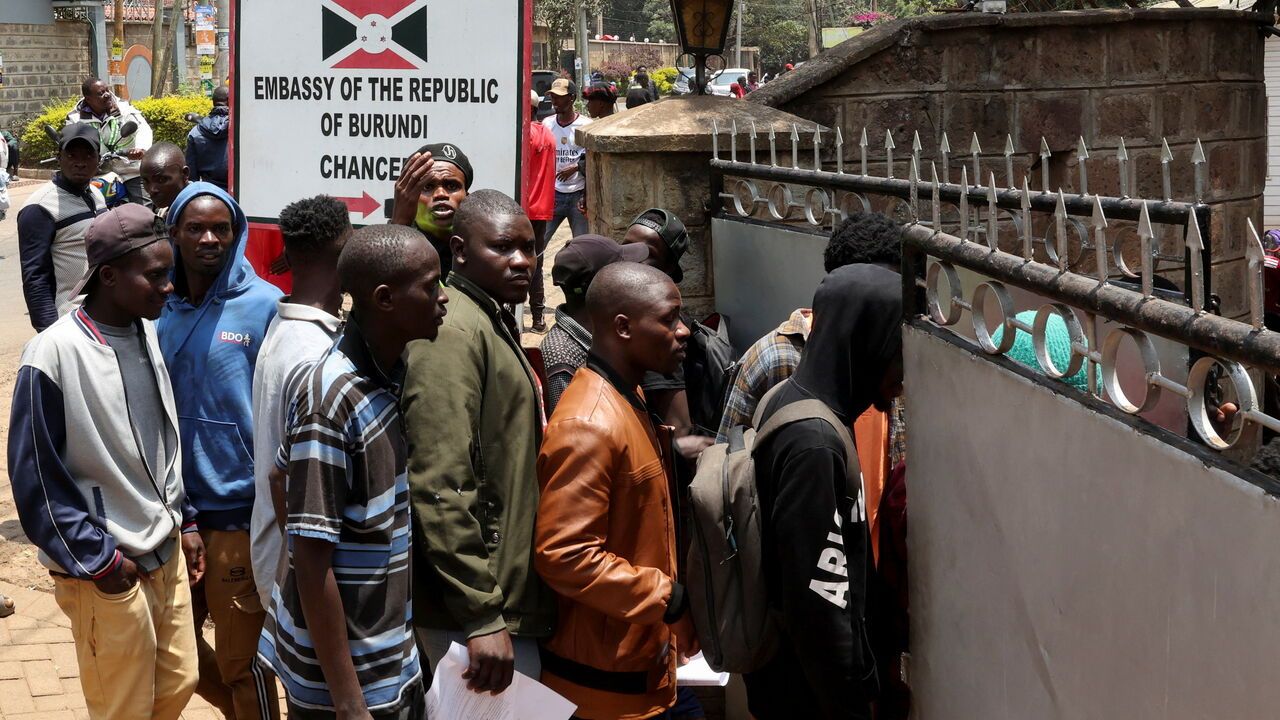
They are not the only ones to have been living in fear since September 2nd, when William Ruto, Kenya’s president, said foreigners running small businesses should close them “from next week”.(自9月2日以来,生活在恐惧中的远不止他们。那天,肯尼亚总统威廉·鲁托表示,经营小企业的外国人应该“从下周起”关门。) Mr Ruto said he remained keen on(热衷于,渴望) foreign investment to create jobs for Kenyans, but would not tolerate foreign “hawkers(小贩,沿街叫卖者)” undercutting(以低价竞争,压低价格) local traders. The comments were followed by a spate of(一连串,接二连三的) xenophobic(排外的,仇外的) attacks in Nairobi, with migrants from Burundi, an impoverished(贫困的,赤贫的) east African state, bearing the brunt of(首当其冲,承受主要冲击) the violence. Videos circulating on social media showed people being beaten in the street. Hundreds of undocumented migrants have flocked(蜂拥而至,成群涌向) to the Burundian embassy, scrambling(争相,仓促行动) to register for emergency travel documents to go home.
自9月2日以来,生活在恐惧中的远不止他们。那天,肯尼亚总统威廉·鲁托表示,经营小企业的外国人应该“从下周起”关门。鲁托说,他仍然热衷于吸引外国投资为肯尼亚人创造就业,但不会容忍外国“小贩”压低本地商贩的价格。此番言论之后,内罗毕发生了一连串排外袭击,来自贫穷东非国家布隆迪的移民首当其冲。社交媒体上流传的视频显示,有人在街头遭到殴打。数百名无证移民涌向布隆迪大使馆,争相登记办理紧急旅行证件回国。
Following heavy criticism in the wake of(在……之后,紧随……而来) the attacks, the government softened(软化,缓和) its stance(立场,态度) on September 8th, announcing that foreign traders would be given 90 days to ensure they held legal status in Kenya. Still, the episode is a worrying sign of hostility(敌意,敌对) to migrants in Africa. In 2024 some 25m Africans lived in an African country other than their own, according to the UN’s migration agency, an increase of 17% since 2020 and of 39% since 2015. Combined with widespread dissatisfaction about a lack of jobs, that has created fertile ground for anti-migrant rhetoric.(再加上民众对就业不足的普遍不满,这为反移民言论提供了肥沃的土壤。) There are echoes(回声,相似之处) in Kenya of the attacks carried out on foreign shop-owners in South Africa, where there has been a recent upsurge(激增,急剧上升) in xenophobic vigilantism(私刑,治安维持行为).
在袭击引发强烈批评后,政府于9月8日软化了立场,宣布外国商贩将获得90天时间来确保他们在肯尼亚的合法身份。尽管如此,这一事件仍是非洲对移民敌意的一个令人担忧的信号。根据联合国移民机构的数据,2024年约有2500万非洲人生活在母国之外的非洲国家,比2020年增加了17%,比2015年增加了39%。再加上民众对就业不足的普遍不满,这为反移民言论提供了肥沃的土壤。肯尼亚的情况与南非针对外国店主的袭击如出一辙,南非近期排外私刑事件激增。