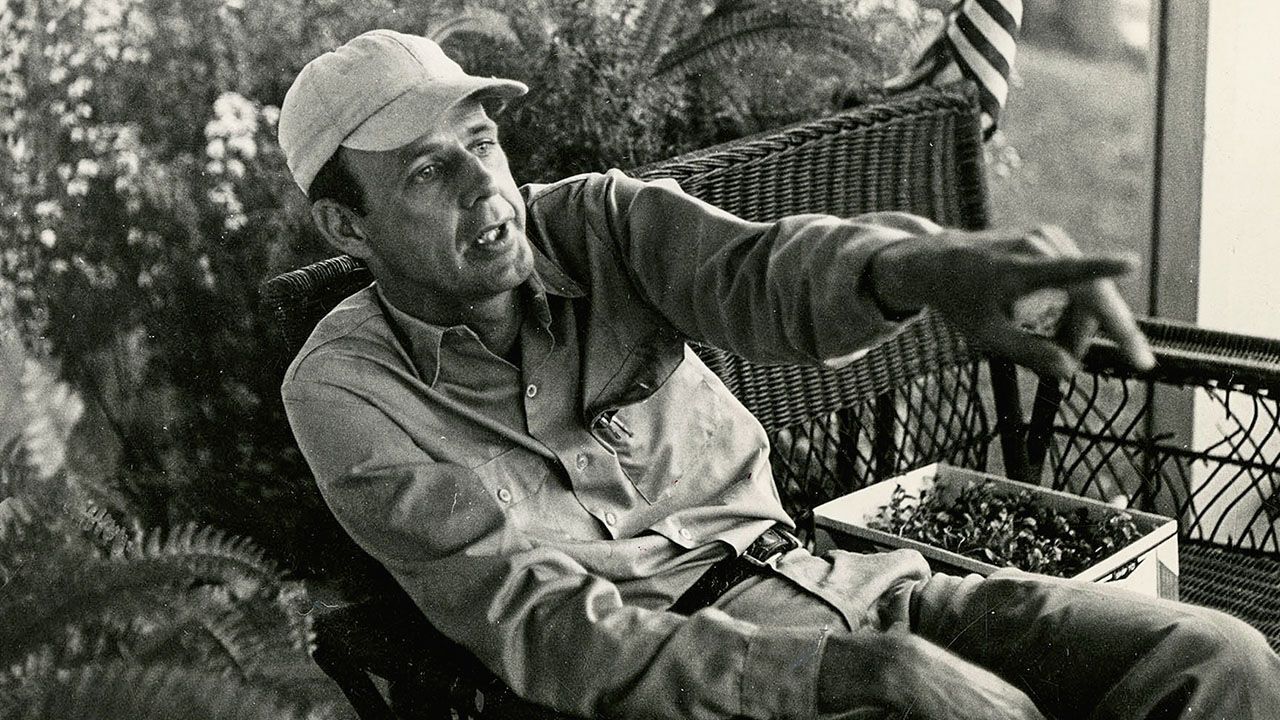
When he could no longer think in the house, Wendell Berry would go to the woods. He went along paths so familiar that his feet led him, rather than his mind.(他走的小路熟悉得让双脚而非头脑为他引路。) Once there, by some miracle, everything fell into place(一切都各归其位、豁然开朗). He stood humbled(感到渺小、谦卑) amid the serenity(宁静、安详) and dignity of the trees, watching the play of sunlight through the leaves. His life took its place among all the other lives of the wood, the insects and the birds. Taking from his pocket the tools of his work, a pencil and any old scrap of paper, he could resume(重新开始、继续) writing. The only subject he needed was all around him.
每当在屋里再也无法思考时,温德尔·贝里就会走进树林。他走的小路熟悉得让双脚而非头脑为他引路。一到那里,仿佛有某种奇迹,一切都各归其位。他站在树木的宁静与庄严之间,自觉渺小,看着阳光在树叶间嬉戏。他的生命在林中所有其他生命——昆虫与鸟儿——之间找到了自己的位置。他从口袋里掏出工作的工具,一支铅笔和随便一张旧纸片,便能重新开始写作。他唯一需要的题材,就在他四周。
He could have been in New York City. At 28, he had been appointed(被任命、被委派) an assistant professor of English there. But he knew he was not made for urban places. Even more strongly, he realised that he could not escape Kentucky. A tiny patch of land, “12 acres more or less” in Henry County, at the edge of the high Bluegrass, had been farmed by his family since 1803. Before he went away to school, he was sure he would follow. He had learned as a child how to assess the strength of a mule and how to drive a team of them, hooves wet with dew, up to the tobacco plots on the sides of the valley. He knew, thanks to a black hired hand called Bill, how to creep(悄悄移动、蹑手蹑脚) silently after squirrels. The value of that locally rooted, neighbourly, waste-not-want-not agrarian life was so deeply engrained in him that he had to return.(那种扎根当地、邻里互助、不浪费不匮乏的农耕生活的价值,在他心中根深蒂固,他必须回去。) For decades, in books, articles and poems, he tried to persuade Americans to understand.
他本可以在纽约市生活。28岁时,他已被聘为那里的英语助理教授。但他知道自己天生不适合都市。更强烈的是,他意识到自己无法逃离肯塔基。亨利县一块小小的土地——'十二英亩上下',位于高蓝草区边缘——自1803年起就由他的家族耕种。离家求学之前,他就确信自己会继承这份家业。他小时候就学会了如何判断一头骡子的力气,如何赶着一队骡子——蹄子沾满露水——爬上谷地两侧的烟草地。多亏一个叫比尔的黑人雇工,他学会了如何悄无声息地跟踪松鼠。那种扎根当地、邻里互助、不浪费不匮乏的农耕生活的价值,在他心中根深蒂固,他必须回去。几十年来,他在书籍、文章和诗歌中,努力让美国人理解这一点。
He deeply lamented(哀叹、痛惜) what had been done to his country. In the name of “progress” and the pursuit of profit, forests had been felled and watersheds, such as his local one on the Kentucky river, paved over until they could no longer retain water.(以'进步'和追逐利润之名,森林被砍伐,流域——比如他家乡的肯塔基河流域——被铺上路面,直到再也无法蓄水。) Human-scale paths, respecting the natural contours(轮廓、地形起伏), had been violently straightened into interstates; industrialised agriculture had ravaged(蹂躏、严重破坏) and denuded(剥光、使裸露) the land. Self-sustaining smallholdings(小农庄、小农场) were left as ruins, while giant corporations fed Americans on food grown far away. Heavy industry’s return for the holy gift and mystery of creation was not thanks and care, but poisonous waste.
他深深哀叹自己的国家所遭受的一切。以'进步'和追逐利润之名,森林被砍伐,流域——比如他家乡的肯塔基河流域——被铺上路面,直到再也无法蓄水。尊重自然轮廓、适合人行走的小径,被粗暴地拉直成州际公路;工业化农业蹂躏并剥光了土地。自给自足的小农庄沦为废墟,而巨型企业用远方种植的食物喂养美国人。重工业对造物这一神圣礼物与奥秘的回报,不是感恩与呵护,而是有毒的废物。