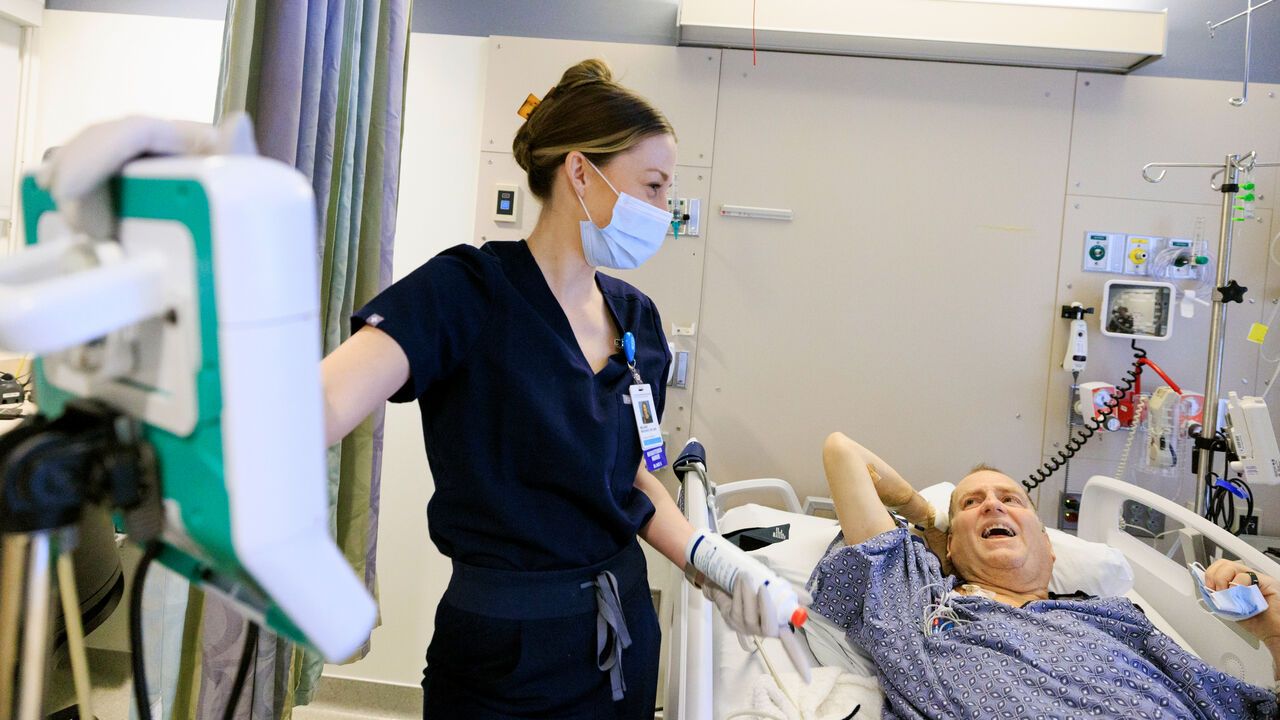
IN JANUARY Tim Andrews received a new kidney. It was not his first such replacement. Twelve months earlier, after years of end-stage renal failure and declining health even with dialysis, he had been given a genetically modified pig’s kidney to tide him over until a human one became available.(十二个月前,在多年终末期肾衰竭、即便透析也每况愈下的情况下,他被移植了一颗经过基因改造的猪肾,以支撑到有人类肾脏可用为止。) It was the first time such “xenotransplantation(异种移植:跨物种器官移植)” (previously employed as a last-ditch(最后关头的) life-sustaining end in itself) had been used as a stop-gap(权宜之计) in this way.
今年1月,蒂姆·安德鲁斯接受了一颗新肾脏。这并非他第一次接受此类置换手术。十二个月前,在多年终末期肾衰竭、即便透析也每况愈下的情况下,他被移植了一颗经过基因改造的猪肾,以支撑到有人类肾脏可用为止。这是“异种移植”(此前一直被当作维持生命的最后手段)首次以这种方式被用作权宜之计。
If a pig kidney were transplanted unmodified(未经改造的) into a human the immune system would reject it. Moreover, its chromosomes would host so-called retroviruses(逆转录病毒), the DNA of which is integrated into normal DNA but can thence(从那里;由此) emerge to cause infection. However, eGenesis, the firm that provided Mr Andrews’s stop-gap organ, uses gene editing to tweak(微调;调整) the pig cells’ DNA to stop either of those things happening(阻止这两种情况发生) while also introducing human genes that improve a transplant’s compatibility(兼容性;相容性) with the patient. These modified cells are used to generate embryos which, after implantation into a surrogate sow, develop into piglets that can act as organ donors.(这些经过改造的细胞被用来培育胚胎,胚胎植入代孕母猪后发育成仔猪,这些仔猪便可充当器官供体。)
如果把未经改造的猪肾移植到人体,免疫系统会排斥它。此外,猪的染色体上还携带着所谓的逆转录病毒,其DNA已整合进正常DNA中,但可能从中冒出来引发感染。不过,为安德鲁斯提供过渡器官的公司eGenesis利用基因编辑技术调整猪细胞的DNA,以阻止上述两种情况发生,同时引入人类基因,提高移植器官与患者的兼容性。这些经过改造的细胞被用来培育胚胎,胚胎植入代孕母猪后发育成仔猪,这些仔猪便可充当器官供体。
Mr Andrews’s transplant, performed by a team led by Leonardo Riella of Massachusetts General Hospital, in Boston, and just reported in the Lancet, was not a perfect bridge to his second date with the operating table.(安德鲁斯的这次移植由波士顿麻省总医院莱昂纳多·里埃拉领导的团队完成,并刚在《柳叶刀》上报告。它并非通往他第二次手术的完美桥梁。) But it lasted 271 days—a record for a xenotransplanted(异种移植的) kidney. In that time, says Dr Riella, it provided “all the functions we would expect of a kidney”. Eventually, an infection caused it to fail and it had to be removed, so Mr Andrews returned to dialysis. But he transitioned to the human replacement without any complications from having had the porcine(猪的) placeholder(替代物;占位符).
安德鲁斯的这次移植由波士顿麻省总医院莱昂纳多·里埃拉领导的团队完成,并刚在《柳叶刀》上报告。它并非通往他第二次手术的完美桥梁。但这颗猪肾存活了271天——创下异种移植肾脏的纪录。里埃拉博士说,在此期间,它提供了“我们对肾脏所期待的全部功能”。最终,感染导致它衰竭,不得不被取出,安德鲁斯重新开始透析。但他过渡到人类肾脏替代时,没有因曾使用猪肾而出现任何并发症。