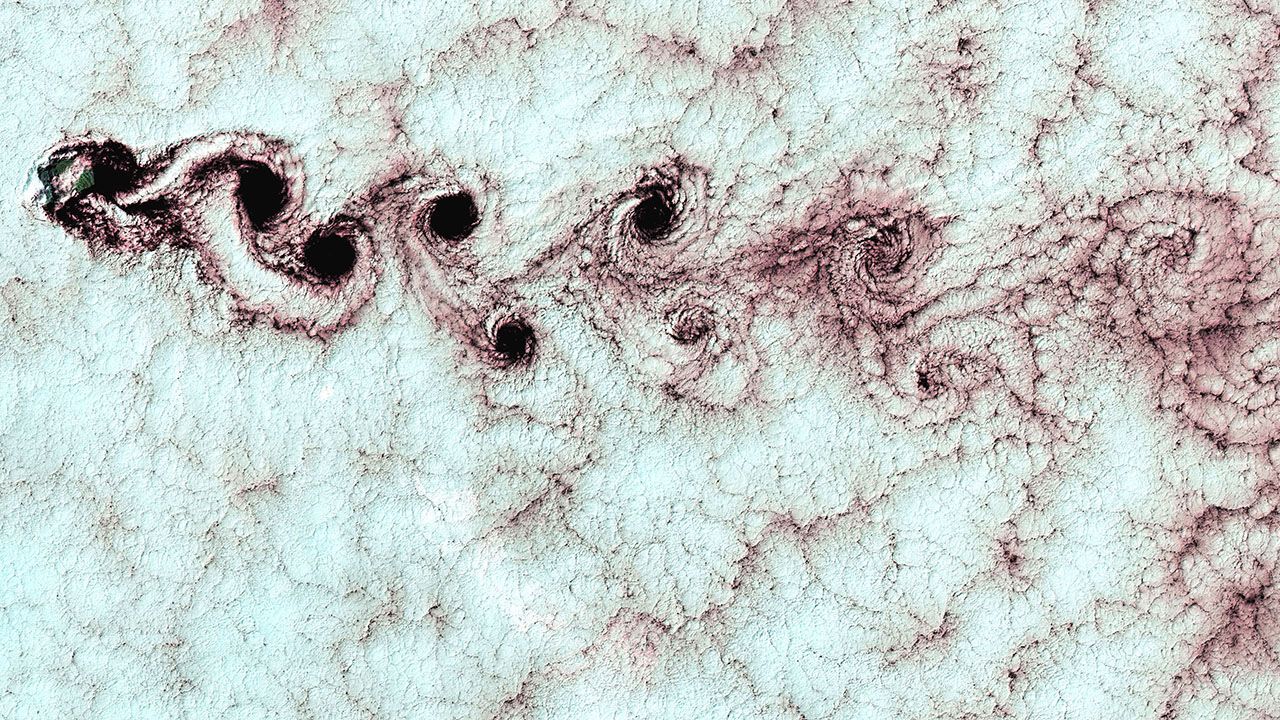
TO MARK THE turn of the century the Clay Mathematics Institute, in Denver, took stock of what mathematicians knew and what they did not. The result was a set of seven Millennium Prize problems representing the most important unsolved matters in maths. Solutions would attract a purse(奖金、财力) of $1m.
为纪念世纪之交,位于丹佛的克莱数学研究所盘点了数学家们已知与未知的领域。盘点结果便是七道“千禧年大奖难题”,它们代表了数学中最重要的未解之谜。谁能给出解答,便可获得100万美元奖金。
Until September 8th only one of these problems had been solved. On that day, however, OpenAI, an American artificial-intelligence firm, announced it had conquer(攻克、征服)ed another. This is called the Navier-Stokes existence and smoothness problem, and it relates to a set of equations that capture the flow of fluids. Mathematicians have been trying to bottle this one up(把难题收进瓶中、彻底解决) for at least a century. OpenAI says a team of its AI agents solved it in just 88 hours.
截至9月8日,这些难题中只有一道被解决。然而就在这一天,美国人工智能公司 OpenAI 宣布它又攻克了一道。这道题名为“纳维-斯托克斯存在性与光滑性问题”,涉及一组描述流体运动的方程。数学家们试图将这个问题“收进瓶中”至少已有一个世纪。OpenAI 称,其一支 AI 智能体团队仅用88小时便解决了它。
The Navier-Stokes equations are useful for modelling how air flows over aircraft wings, oil squeezes through pipes and plasma(等离子体) circulates inside stars. But, though mathematicians have a good grasp of how to harness them practically, a thorough understanding of the properties of the equations themselves eludes them.(然而,尽管数学家们非常清楚如何在实践中驾驭这些方程,他们却始终无法彻底理解方程本身的性质。)
纳维-斯托克斯方程可用于模拟空气如何流过机翼、石油如何挤过管道、等离子体如何在恒星内部循环。然而,尽管数学家们非常清楚如何在实践中驾驭这些方程,他们却始终无法彻底理解方程本身的性质。