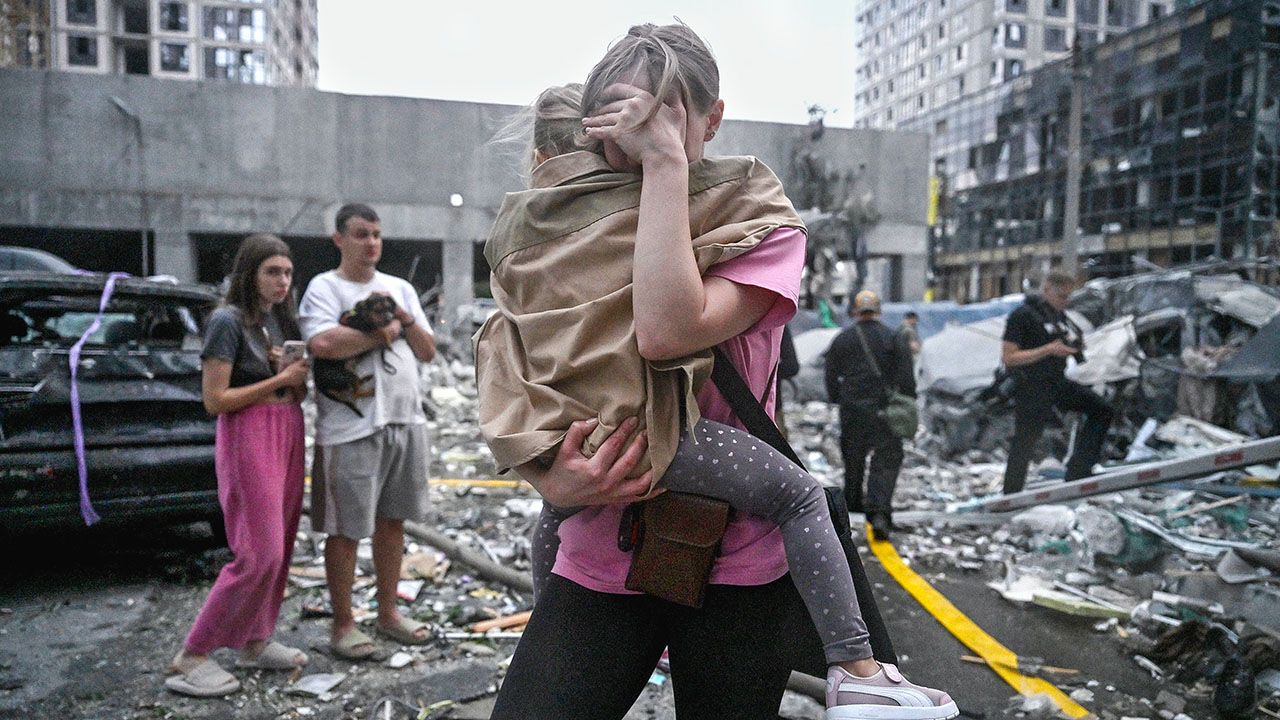
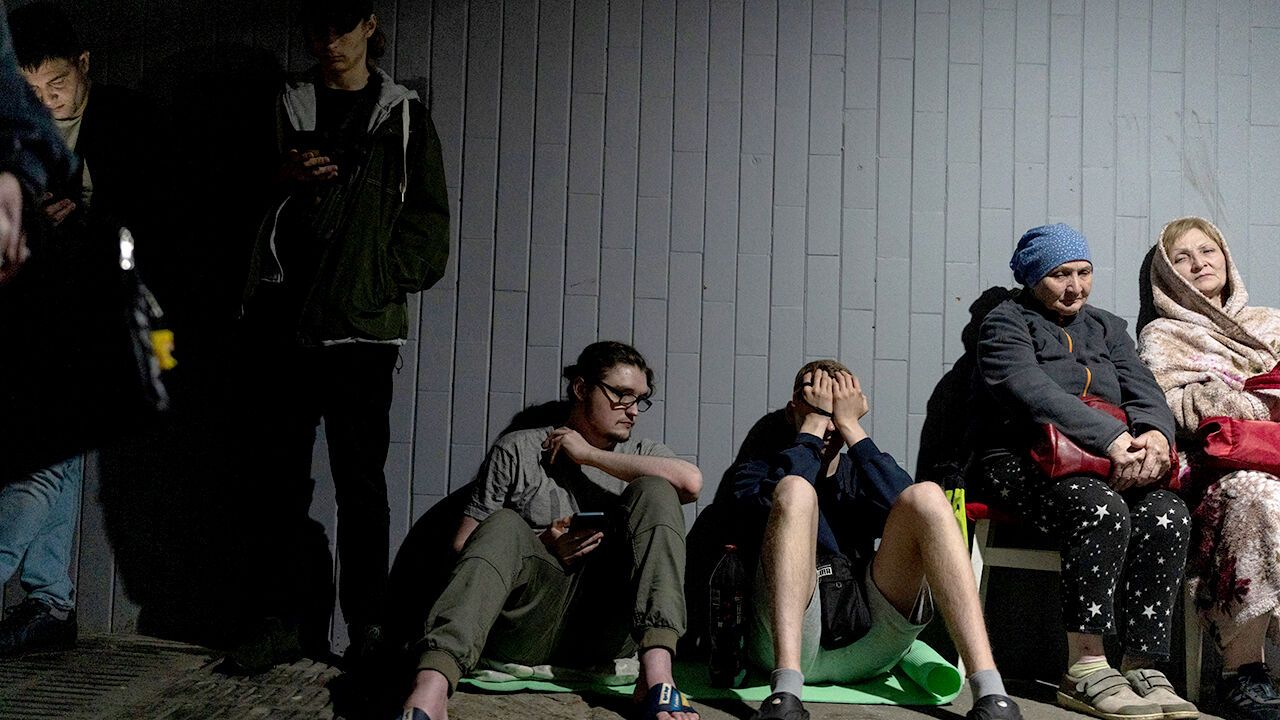
LIFE IS NEWLY, intensely, disrupted in Kyiv. Wailing sirens and screeching(刺耳的尖响) apps that warn of incoming strikes are common sounds all over. Explosions at petrol and railway stations, shopping malls, offices and apartment blocks are a constant backdrop(持续不断的背景). Some reports suggest there is a new exodus(大批撤离) of families from the capital to safer parts west.
基辅的生活刚刚被剧烈打乱。凄厉的防空警报和刺耳的预警应用提示音,在全城随处可闻。加油站、火车站、购物中心、写字楼和公寓楼的爆炸声,成了持续不断的背景音。有报道称,新一轮家庭撤离潮正在出现,人们从首都迁往更安全的西部。
Ukrainians in the capital had grown accustomed, if not entirely inured(使麻木,使习惯), to the vicissitudes(变迁,变故) of life in wartime—air-raid alerts, missiles, blackouts and bouts(一阵阵,发作) of freezing cold due to Russian attacks on power plants. But the arrival at scale(大规模地) in late August of jet-powered Shahed drones—and a rise in Russian missile hits—wreaked(造成,带来(破坏)) a new level of fear and devastation. Russia’s ramped-up(升级的,加强的) deep-strike capability, combined with a dearth(匮乏,短缺) of Ukrainian interceptors(拦截弹,拦截器), has once again brought the front line closer to the people of Kyiv.
首都的乌克兰人早已习惯了战时生活的种种变故——防空警报、导弹、停电,以及俄军袭击电厂带来的阵阵严寒——即便谈不上完全麻木。但八月下旬喷气动力“沙赫德”无人机的大规模登场,加上俄军导弹命中率的上升,制造了新一轮恐惧与破坏。俄罗斯远程打击能力的升级,加上乌克兰拦截弹的匮乏,再次把前线拉近到基辅人身边。
A team from The Economist saw, during a recent reporting trip in the country, how the new phase of the war has put stress on Ukraine physically, psychologically, economically and politically. Your correspondents also learned just how routine(例行的,平常的) close encounters with strike drones have become; they were near enough to feel a drone explosion in the street of one front-line city. Even before the blasts occur, it is an unnerving(令人不安的) experience to stare up at the black, triangular shape of a Shahed drone(伊朗设计的自杀式无人机), as it swoops(俯冲,猛扑) and whines(发出尖啸声) overhead.
《经济学人》的一个团队在近期赴乌采访中亲眼看到,战争的新阶段如何在身体、心理、经济和政治层面对乌克兰施加压力。本刊记者还了解到,与攻击无人机近距离遭遇已变得多么稀松平常;他们曾在一座前线城市的街道上,近到能感受到无人机爆炸的冲击。甚至在爆炸发生之前,抬头盯着“沙赫德”无人机那黑色三角形的轮廓,看它俯冲、尖啸着从头顶掠过,就已经是一种令人心惊的体验。
Winter is coming
凛冬将至