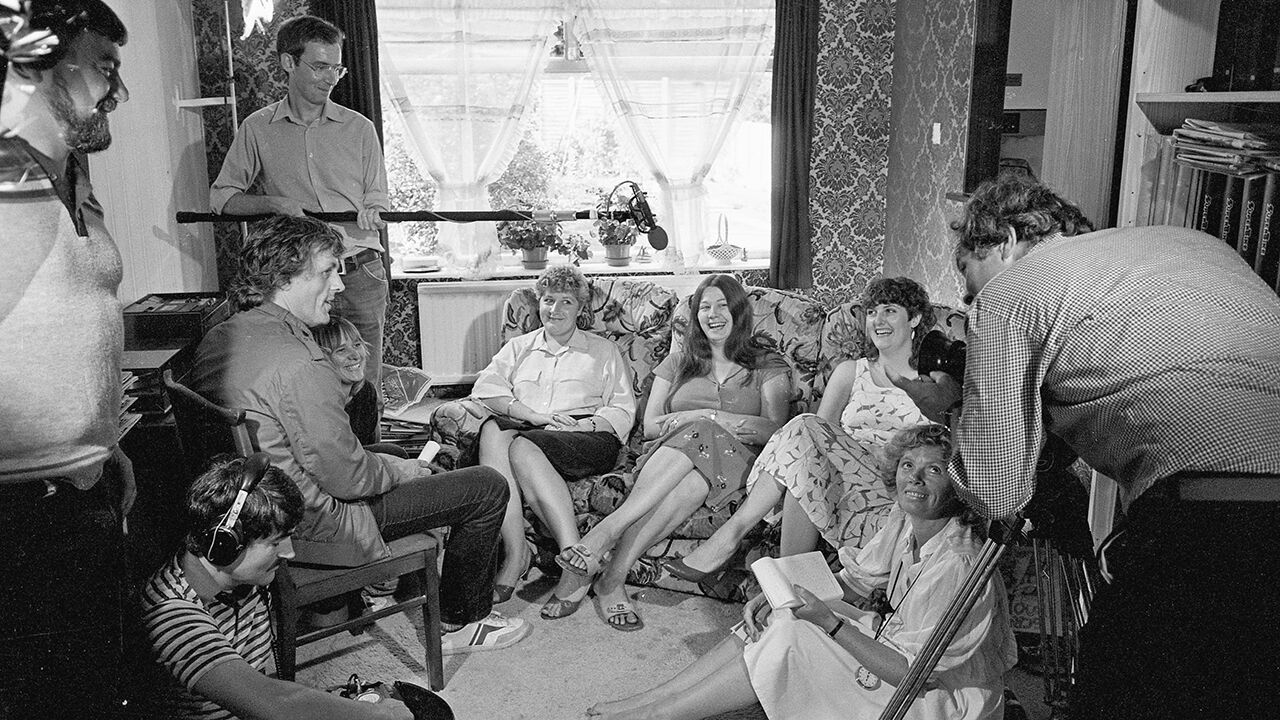
The plan was to make a single programme called “Seven Up!” In 1964 a clutch(一群,一簇) of seven-year-olds were filmed as they visited a zoo, had a party and mused(沉思,冥想) about their future lives. That could have been that(事情本可以到此为止). But after a few years the film-makers decided to check in on(探访,查看) 14 of the children, and they kept coming back. So the “Up” series was born—an epic about ordinary lives that is, in a sense, the weighty ancestor of modern reality TV.(于是《人生七年》系列诞生了——一部关于平凡人生的史诗,从某种意义上说,也是现代真人秀节目分量十足的鼻祖。)
最初的计划只是制作一档名为《七岁》的节目。1964年,一群七岁孩子被拍下参观动物园、参加派对、畅想未来的画面。事情本可以到此为止。但几年后,制片人决定回访其中14个孩子,此后便一再回访。于是《人生七年》系列诞生了——一部关于平凡人生的史诗,从某种意义上说,也是现代真人秀节目分量十足的鼻祖。
Now the children are roughly(大约,大致) 70 years old, and “Up” is ending. Two episodes broadcast on ITV on September 15th and 22nd will be the last. The long series has illuminated(照亮,阐明) Britain wonderfully, although not in the way the film-makers expected.
如今,这些孩子已年近七十,《人生七年》也即将落幕。9月15日和22日在ITV播出的两集将是最后的内容。这个长寿系列精彩地照亮了英国,尽管方式并非制片人所预料的那样。
It began as a study of social class. The children were plucked(挑选,拉出) from contrasting backgrounds such as a private school in west London, a state school in the East End(伦敦东区,传统工人阶级聚居区) and a children’s home. They were expected to display the effects of privilege and privation(贫困,匮乏), and to some extent(在一定程度上) they did. But as they became adults, the subjects messed with(打乱,干扰) the programme’s tidy assumptions.
它最初是一项关于社会阶层的研究。这些孩子被从截然不同的背景中挑选出来,比如伦敦西区的私立学校、东区的公立学校以及一家儿童福利院。人们期望他们展现出特权与贫困带来的影响,而他们确实在一定程度上做到了。但随着他们长大成人,这些拍摄对象打乱了节目原本整齐的假设。