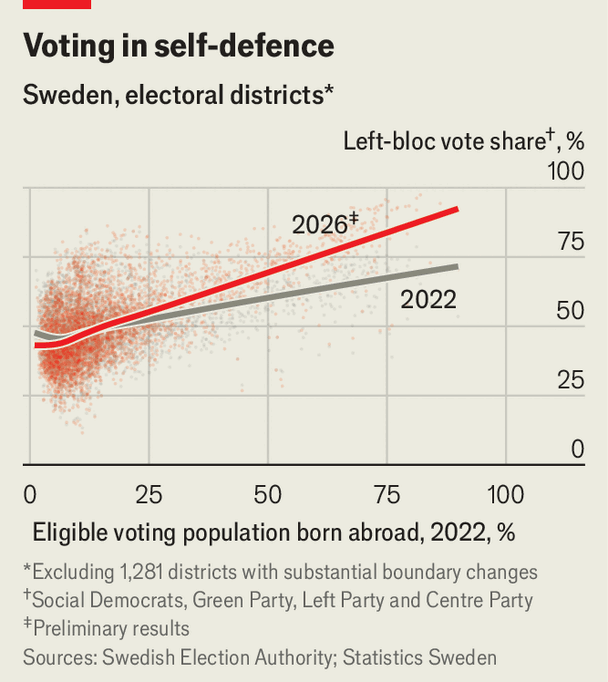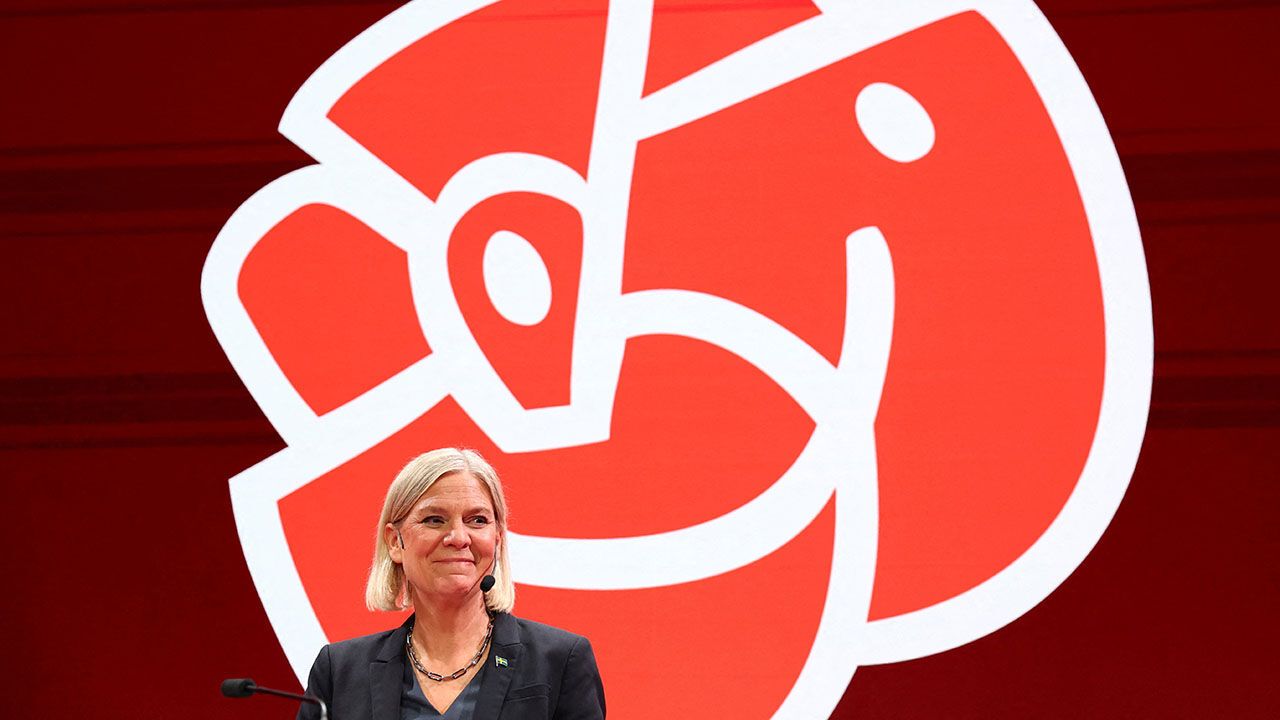
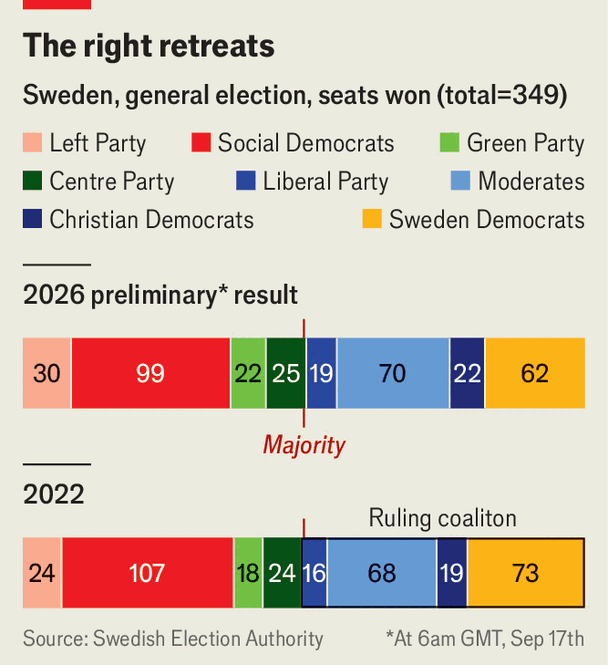
SWEDISH ELECTIONS are often nail-bitingly(令人揪心地) close. The vote on September 13th was no exception. For much of election night, the government looked like it might cling to power(紧握权力不放). But as the votes were counted, the left-wing opposition’s narrow lead (with 176 seats against the right’s 173) firmed up. Magdalena Andersson, the Social Democrats’ leader, looks likely to take power—albeit atop a wobbly(摇摇欲坠的、不稳定的), divided bloc(阵营、集团).
瑞典大选往往胶着得令人揪心。9月13日的投票也不例外。选举夜的大部分时间里,政府看似还能保住权力。但随着选票清点,左翼反对派以176席对右翼173席的微弱领先逐渐稳固。社会民主党领袖玛格达莱娜·安德松看来有望上台——尽管她要领导的将是一个摇摇欲坠、四分五裂的阵营。
The vote is a blow(打击、挫折) to Ulf Kristersson, the centre-right prime minister, but not in the way most predicted. For much of the year, opinion polls suggested that liberal voters would punish Mr Kristersson’s government for co-operating with the Sweden Democrats (SD)(瑞典民主党,极右翼民粹政党), a populist(民粹主义的) party that was once shun(回避、排斥)ned by mainstream conservatives because of its neo-Nazi roots. Together they implemented some of the toughest migration policies in Europe.
这次投票对中右翼首相乌尔夫·克里斯特松是一记打击,但打击的方式与多数人预料的并不相同。今年大部分时间里,民调都显示自由派选民会因克里斯特松政府与瑞典民主党合作而惩罚它。瑞典民主党是一个民粹主义政党,因其新纳粹渊源,曾长期被主流保守派拒之门外。两党联手推行了欧洲最严厉的一些移民政策。
But in the end Mr Kristersson’s Moderate Party held firm, while the SD stumble(失足、受挫)d. The party’s vote share(得票率、选票份额) dropped by three percentage points, falling below that of the Moderates. The SD, which had increased its vote share at every election since entering parliament in 2010, once prided itself on its insurgent(反叛的、造反的) energy. It is a rare setback(挫折、倒退) for the populist-right party, whose allies elsewhere in Europe are mostly on the rise(正在上升、势头见涨).
但最终克里斯特松的温和党稳住了阵脚,而瑞典民主党却失足跌倒。该党得票率下降三个百分点,跌至温和党之下。瑞典民主党自2010年进入议会以来,每次选举得票率都上升,曾以自身的反叛活力为傲。对这样一个民粹主义右翼政党而言,这是一次罕见的挫折——它在欧洲其他地方的盟友大多正在崛起。