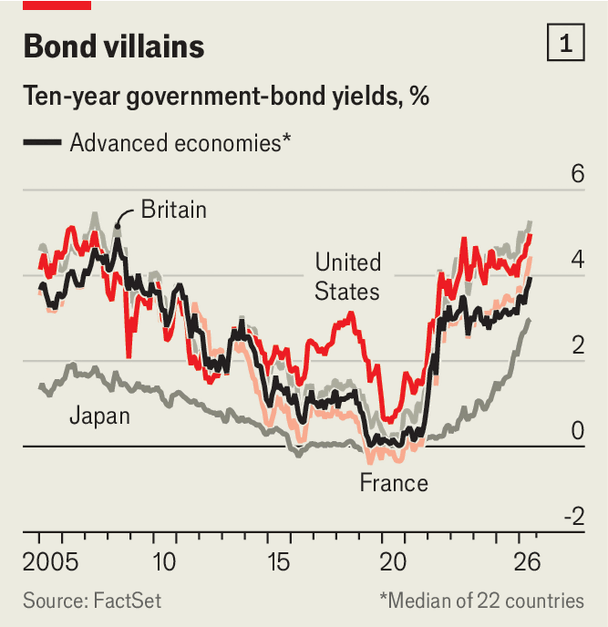
ACROSS THE rich world, investors are making governments pay up(付清欠款;付出代价). Bond yield(收益率)s have risen in Britain, France, Germany and Japan. On September 14th the yield on ten-year American Treasuries(美国国债) exceeded 5%, the highest it has been in two decades. The median(中位数) yield on rich countries’ ten-year government bonds is above 4%, its highest in more than 15 years and roughly five times its average in 2015-21 (see chart 1).
在整个富裕世界,投资者正迫使政府付出更高代价。英国、法国、德国和日本的债券收益率均已上升。9月14日,美国十年期国债收益率突破5%,创下二十年来的最高水平。富裕国家十年期政府债券收益率中位数超过4%,为15年多来最高,约是2015至2021年平均水平的五倍(见图表1)。
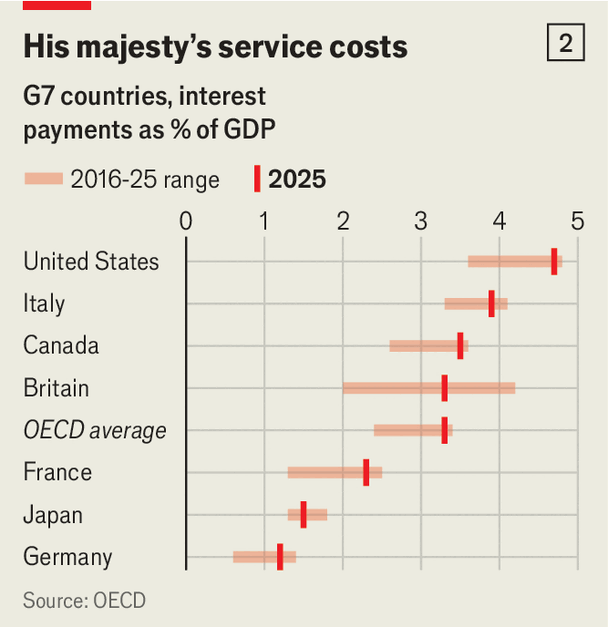
More worrying, borrowing costs are rising at a time when(在……的时候) countries’ debts are higher than ever. Gross(总的;毛的) public debt as a share of GDP in advanced economies stands near 110%, up from around 70% in the early 2000s. In America it has more than doubled over that period; in Britain it has nearly tripled. There is little appetite for belt-tightening(紧缩开支). America is expected to run a deficit(赤字) of around 6% of GDP this year and France of more than 5%.
更令人担忧的是,借贷成本上升之际,各国债务却处于历史最高水平。发达经济体的政府债务总额占GDP比重接近110%,而本世纪初约为70%。同期美国这一比重翻了一倍多,英国则几乎增长了两倍。各国几乎没有紧缩意愿。预计今年美国赤字约占GDP的6%,法国则超过5%。
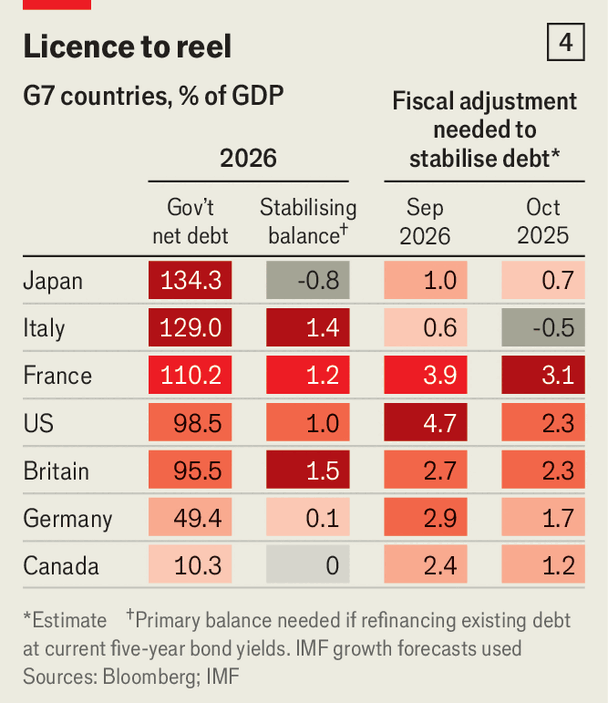
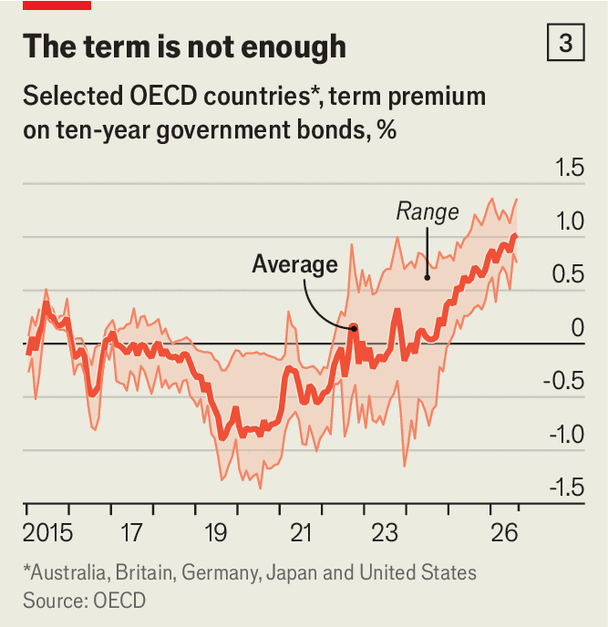
Throughout much of the 2010s politicians could afford to dismiss warnings of a debt reckoning(清算;算总账), thanks to rock-bottom(最低的;谷底的) interest rates. Now rates are rising. On September 16th the Federal Reserve raised its benchmark(基准) rate by a quarter of a percentage point. The European Central Bank (ECB) did so the week before. And the bond market is signalling(发出信号;表明) that the era of cheap government finance is over. Big borrowers are about to discover just how painful those debt piles(债务堆积;债务大山) can be when interest rates can no longer be ignored.
在2010年代的大部分时间里,由于利率处于谷底,政客们可以放心无视债务清算的警告。如今利率正在上升。9月16日,美联储将基准利率上调25个基点。欧洲央行(ECB)此前一周也已加息。债券市场正发出信号:廉价政府融资的时代已经结束。当利率再也无法被忽视时,那些债务大山究竟有多痛,大型借款国即将亲身体会。
The new short-sellers
新型做空者