IN THE SPRING of 2015 the Houthis, an Iran-backed rebel group, swept into(迅速攻入) the port city of Mokha on Yemen’s west coast. They put missiles on nearby Perim island, a rocky outcrop(露出地面的岩层) at the mouth of the Red Sea (see map). Gulf rulers feared the Houthis might use that foothold(立足点、据点) to threaten shipping through the Bab al-Mandab strait(曼德海峡,红海南端的战略咽喉). The Gulf states’ Yemeni allies retook the island six months later. In 2017 the Houthis lost Mokha as well.
2015年春天,伊朗支持的叛军组织胡塞武装攻入也门西海岸港口城市摩卡。他们把导弹部署在附近的丕林岛上——那是红海入口处一块多岩石的凸出陆地(见图)。海湾国家的统治者担心,胡塞武装可能利用这一立足点威胁经曼德海峡的航运。六个月后,海湾国家的也门盟友夺回了该岛。2017年,胡塞武装又丢掉了摩卡。
On September 10th the Houthis once again seized(夺取、占领) Mokha. Perim fell to them the next day. They faced little resistance: anti-Houthi forces fled the battle. It was their largest advance since 2022, when a ceasefire froze the front lines(冻结了前线). They are now preparing offensives(攻势、进攻行动) against the city of Taiz and on Marib(马里卜省,也门石油工业中心), a north-eastern province and the hub of Yemen’s oil industry.
9月10日,胡塞武装再次夺取摩卡。次日,丕林岛也落入他们手中。他们几乎没有遇到抵抗:反胡塞武装力量逃离了战斗。这是他们自2022年停火冻结前线以来最大的一次推进。他们目前正在准备对塔伊兹市以及马里卜省发动攻势——马里卜位于也门东北部,是也门石油工业的中心。
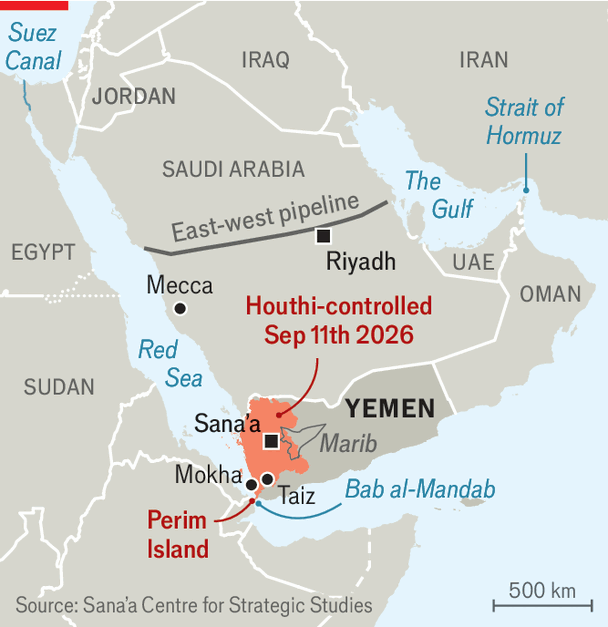
This is a humiliation(羞辱、丢脸) for Saudi Arabia, the main foreign backer of the anti-Houthi coalition. It is also a boost for Iran in its war with America. With the Strait of Hormuz(霍尔木兹海峡,全球最重要的石油咽喉) largely shut since February, the Red Sea has been a vital conduit(通道、管道) for Saudi oil exports. Now Iran and its allies can threaten that waterway too. Brent crude(布伦特原油) climbed by more than 6% after the Houthi offensive, to over $109 a barrel.
这对沙特阿拉伯——反胡塞联盟的主要外国支持者——来说是一种羞辱。对正在与美国交战的伊朗而言,这则是一剂强心针。自2月以来霍尔木兹海峡基本关闭,红海一直是沙特石油出口的重要通道。如今,伊朗及其盟友也能威胁这条水道了。胡塞武装发动攻势后,布伦特原油价格上涨逾6%,突破每桶109美元。