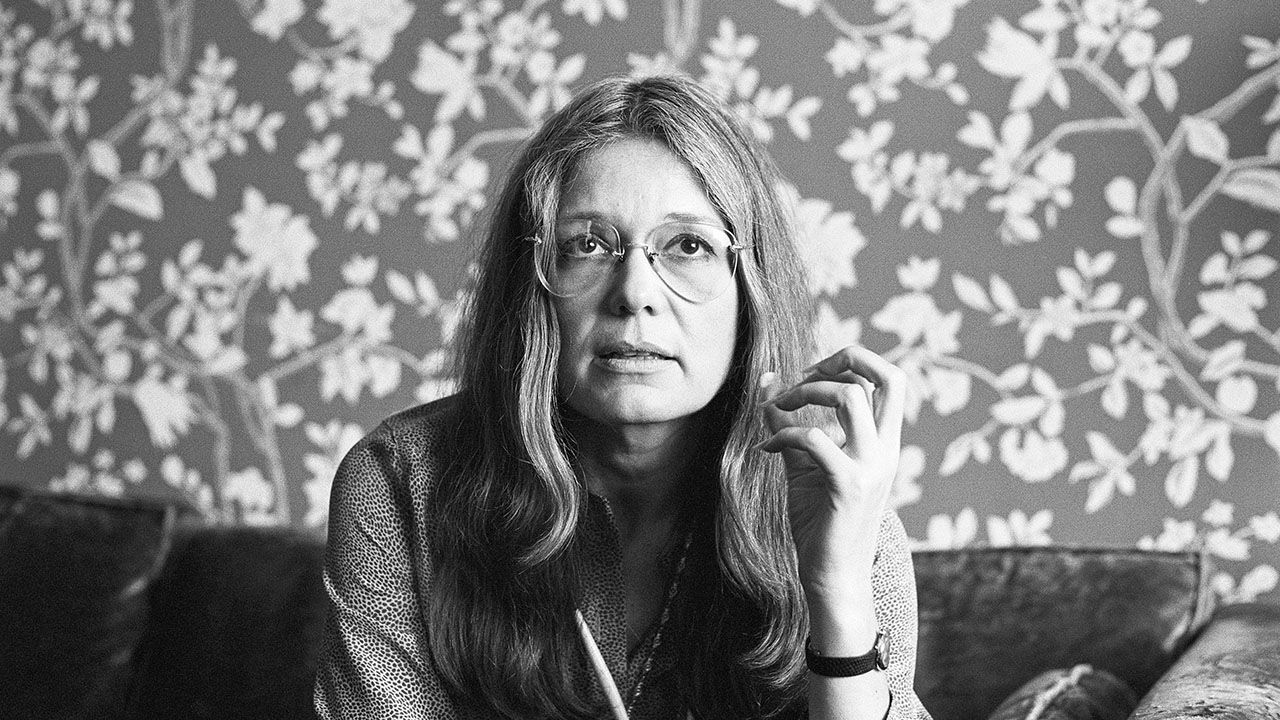
Her blue satin(缎面) costume was a pain. It was so tight that the zip snagged(钩住,刮住) her skin when she was fastened up, and cut so high on the leg that her hip-bones showed. Her dresser(服装师) had pushed a whole plastic dry-cleaning bag down her front, explaining as she did so that “Everybody stuffs.” Stuffed in their tips, she meant, while Gloria Steinem, holding a drinks tray aloft(高高托着饮料托盘) on the palm of her left hand, would bend her knees into the Bunny Dip(兔女郎屈膝礼) and say, pertly(俏皮地), “Sir, you are not allowed to touch the Bunnies.”
她那身蓝色缎面制服简直是个折磨。衣服太紧,拉上拉链时金属齿会刮到皮肤;开衩又太高,髋骨都露了出来。她的服装师往她胸前塞了一整个塑料干洗袋,一边塞一边解释说:“大家都塞东西。”意思是往胸罩里塞小费。而格洛丽亚·斯泰纳姆左手掌心高高托着饮料托盘,屈膝做出“兔女郎屈膝礼”,俏皮地说:“先生,您不可以碰兔女郎。”
Working undercover at the Playboy Club on East 59th Street made a great story for Show magazine in the summer of 1963. It also made her feet so swollen(肿胀的) and sore, on three-inch heels, that she could hardly walk. The ad she had replied to promised earnings of $200-300 a week; for an eight-hour day, she earned precisely $12. She also risked demerits(记过,扣分) for a host of(许多,大量) things including lateness, runs(抽丝) in stockings and crooked(歪的,弯曲的) Bunny ears.
1963年夏天,在位于东59街的花花公子俱乐部卧底工作,为《Show》杂志写出了一个绝佳的故事。但这也让她的双脚穿着三英寸高跟鞋,肿痛得几乎无法走路。她应聘的那则广告承诺每周能赚200到300美元;可实际上,她每天工作八小时,只挣了区区12美元。她还可能因为各种事情被扣分,包括迟到、丝袜抽丝和兔耳朵戴歪。
In retrospect(回想起来), it wasn’t her smartest idea. She had hoped to write a searing(尖锐的,灼热的) exposé(揭露性报道) of women’s exploitation, but many critics thought it frivolous(轻浮的,不严肃的). She was surely just a pretty face(漂亮脸蛋,花瓶), and even her editor and mentor at New York magazine, Clay Felker(克莱·费尔克,《纽约》杂志编辑), had partly hired her for her “great legs”. So it was back to fashion, table lamps and 101 ways with hamburger(汉堡肉饼的101种做法). Yet she hated that beat(报道领域). She burned to write the sharp political stories that were then the province of men, but from the viewpoint of a woman.(她渴望写那些当时属于男性领域的尖锐政治报道,但要从女性的视角出发。) Within a decade, in 1971, she had co-founded a magazine that did exactly that.
回想起来,这并非她最明智的主意。她本想写一篇揭露女性受剥削的犀利报道,但许多评论家认为这不过是轻浮之作。她显然只是个漂亮脸蛋,就连《纽约》杂志的编辑兼导师克莱·费尔克,当初部分也是看中她“漂亮的腿”才雇了她。于是她又回到了时尚、台灯和汉堡肉饼的101种做法这类题材。可她讨厌这种套路。她渴望写那些当时属于男性领域的尖锐政治报道,但要从女性的视角出发。不到十年,1971年,她参与创办了一本正是这样做的杂志。