Xenotransplantation(异种移植) is the insertion of an organ from one species into another. When the organ is an animal’s and the recipient(接受者) human (as with the transplant of pig kidneys into people whose own are failing), the idea is to prolong life. But what about the other way round(反过来)—transplants from human to animal?
异种移植是指把一个物种的器官植入另一个物种体内。当器官来自动物、接受者是人时(比如把猪肾移植给肾功能衰竭的患者),其目的是延长生命。但反过来呢——把人体的器官移植给动物?
With one crucial distinction, that is what Sergiu Pasca of Stanford University and his colleagues have been up to. The distinction is that they have been transplanting, into mice, not actual human organs (which would be both unethical and physically impossible) but “organoids” grown from stem cells that derive, in turn, from human skin.(区别在于,他们移植到小鼠体内的并非真正的人体器官(那既不道德,在物理上也不可能),而是由干细胞培育出的“类器官”,而这些干细胞又来自人的皮肤。) The organoid(类器官)s in question are made of brain cells.
斯坦福大学的塞尔久·帕斯卡及其同事所做的正是这件事,但有一个关键区别。区别在于,他们移植到小鼠体内的并非真正的人体器官(那既不道德,在物理上也不可能),而是由干细胞培育出的“类器官”,而这些干细胞又来自人的皮肤。这里说的类器官由脑细胞构成。
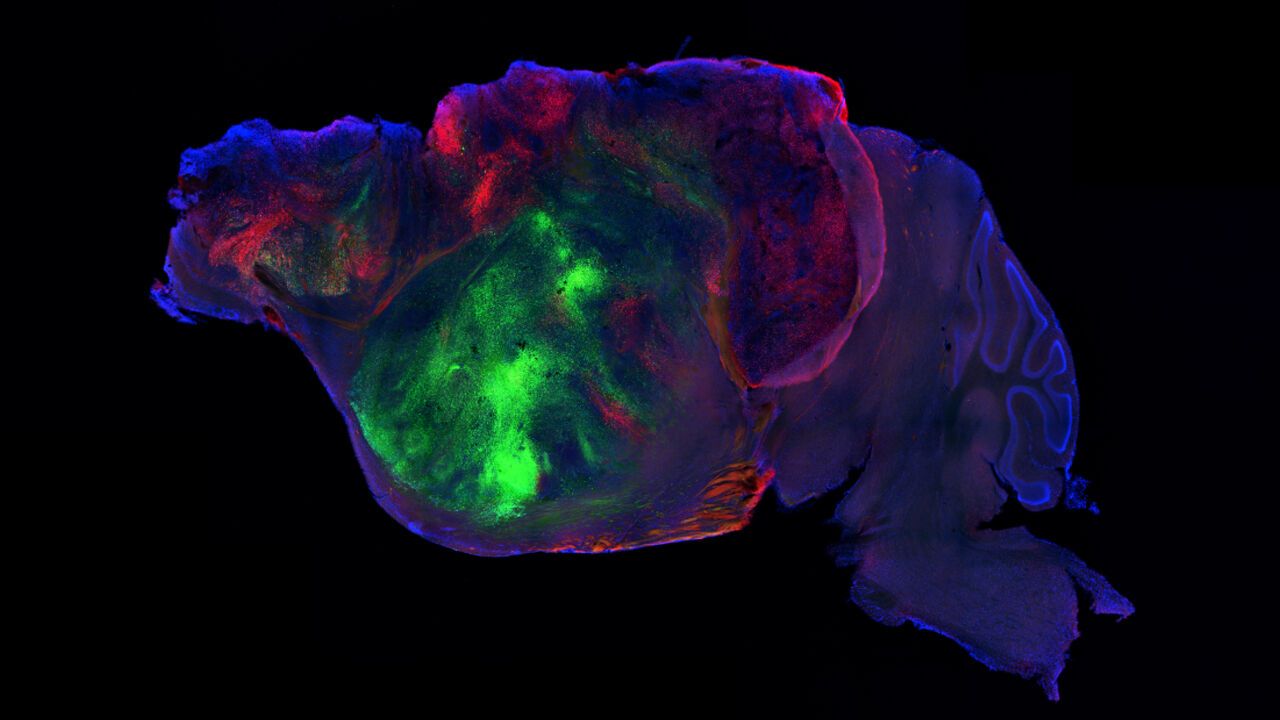
Xenocortication, as Dr Pasca calls this process, and which he and his colleagues describe in a paper just published digitally by Nature, results in rodent(啮齿动物)s that have brains which are, literally, part human. The trick is to make room for(为……腾出空间) the human neurons by engineering a mouse’s genes to stop most of the cells of its cerebral cortex(大脑皮层) and hippocampus(海马体) developing. A human brain organoid composed of appropriate cells is then transplanted, in the first few days after the animal’s birth, into the void thus created. It makes itself at home and connects up with the outside world as if it were mouse tissue.
帕斯卡博士把这一过程称为“异种皮层移植”,他和同事在《自然》杂志刚刚在线发表的一篇论文中对此做了描述。该方法培育出的啮齿动物,其大脑确实有一部分属于人类。诀窍在于,通过基因工程让小鼠大脑皮层和海马体的大部分细胞停止发育,从而为人类神经元腾出空间。随后,在动物出生后的头几天里,由相应细胞构成的人脑类器官被移植进这样造出的空腔中。它安顿下来,并与外界建立连接,仿佛它就是小鼠自身的组织。