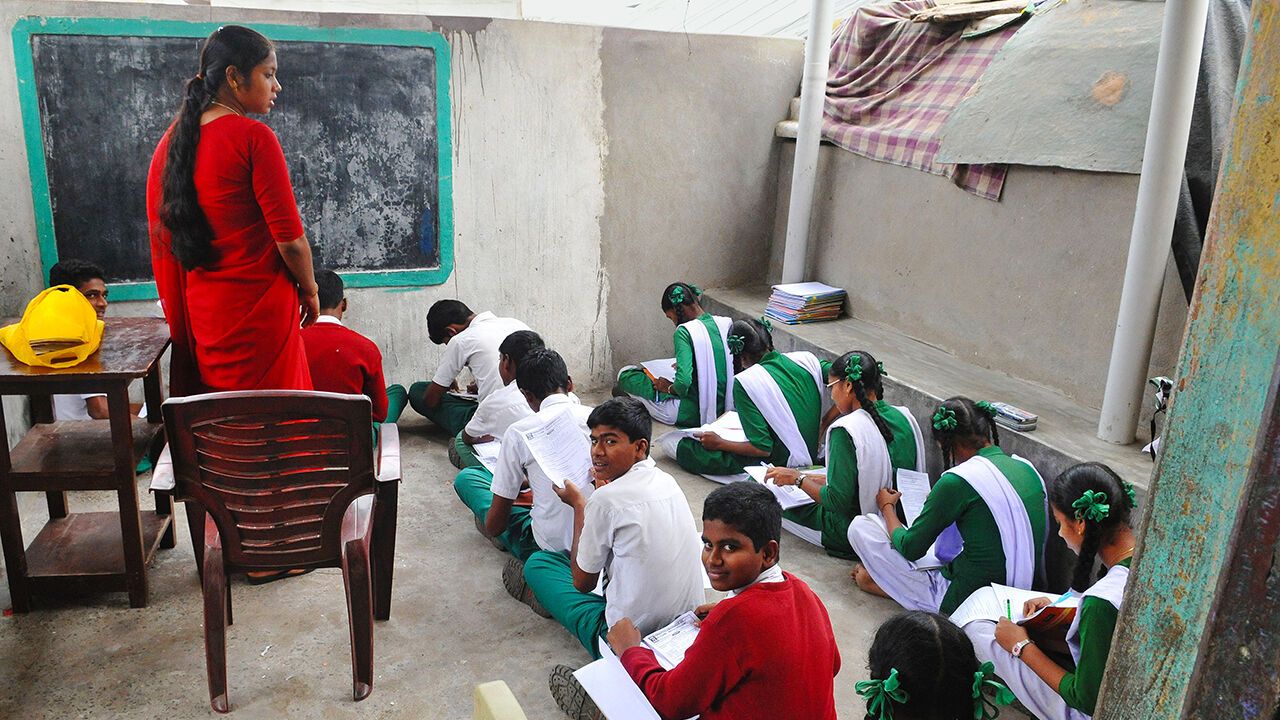
INDIA IS talking about education. After a hot summer dominated by youth protests that topple(推翻,使下台)d the country’s education minister, attention has stayed on the schools, colleges and universities in which almost 300m Indians are enrol(注册,入学)led. The fatal collapse of a student hostel in Delhi on September 6th quickly became another symbol of neglect. Meanwhile the Cockroach Janta Party (CJP)(领导抗议的“蟑螂人民党”), which led the protests, has encouraged its supporters to report on schools across the country, turning the gaze of millions(数百万人的目光) on social media onto the shoddy(劣质的,粗制滥造的) conditions in which Indian children are supposed to learn.
印度正在谈论教育。一个被青年抗议主导的炎热夏天推翻了该国的教育部长,此后公众的目光一直停留在学校、学院和大学上——近三亿印度人在这些机构就读。9月6日德里一栋学生宿舍的致命坍塌,迅速成为又一个被忽视的象征。与此同时,领导抗议的“蟑螂人民党”(CJP)鼓励支持者举报全国各地的学校,使数百万社交媒体用户的视线聚焦于印度儿童本应学习其中的破败环境。
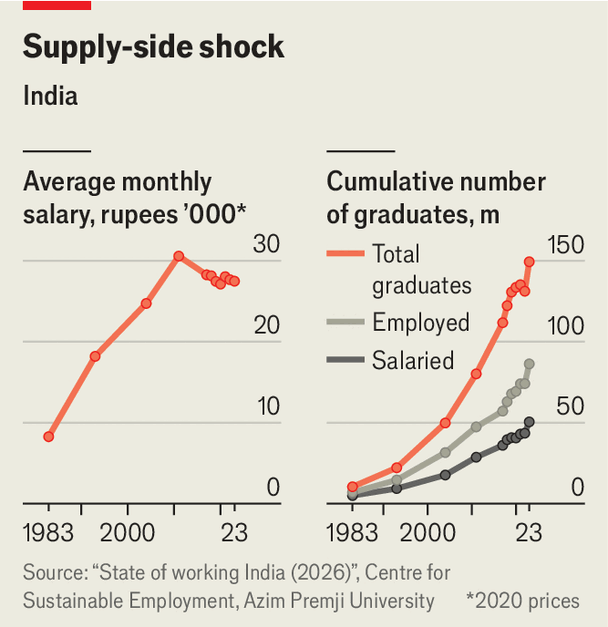
The spark of street action was an exam leak. But the fuel was rage at a system that has become what Yamini Aiyar of Brown University calls a “misery machine(苦难机器)”. In what are probably the world’s most selective exams, tens of millions of poorly taught students compete for a tiny number of golden tickets into elite universities and government jobs.(在可能是全球竞争最激烈的考试中,数千万接受劣质教育的学生争夺极少数通往精英大学和政府工作的黄金门票。) Their families fork out(掏钱,不情愿地支付) for private coaching, schools and colleges. But for most it ends in disappointment. Only 7% of graduates find a formal job within a year, according to Azim Premji University in Bangalore. Most are unemployed for years, thanks to a yawning gap(巨大鸿沟) between the numbers of graduates and jobs (see chart).
街头行动的导火索是考试泄题,但真正的燃料是对一个体系的愤怒——布朗大学的亚米尼·艾亚尔称之为“苦难机器”。在可能是全球竞争最激烈的考试中,数千万接受劣质教育的学生争夺极少数通往精英大学和政府工作的黄金门票。他们的家庭为私人补习、学校和学院掏空腰包,但对大多数人来说,结局是失望。根据班加罗尔阿齐姆·普莱姆基大学的数据,只有7%的毕业生能在一年内找到正式工作。大多数人多年失业,原因在于毕业生数量与工作岗位之间存在巨大鸿沟(见图表)。
Poor education is not the main reason that India is failing to create enough jobs—weak governance and bad rules that hamper the private sector are more obvious maladies.(教育质量差并非印度无法创造足够就业的主因——治理薄弱和阻碍私营部门的糟糕规则是更明显的弊病。) But it does not help. Even as the country churns out graduates, many firms struggle with hiring. India is “producing people with degrees, not skills,” says Karthik Muralidharan of the University of California, San Diego. For three decades Indian education has expanded at breakneck speed(以极快的速度). That has spawn(催生,引发)ed new problems.
教育质量差并非印度无法创造足够就业的主因——治理薄弱和阻碍私营部门的糟糕规则是更明显的弊病。但教育问题也帮不上忙。即便印度源源不断地输出毕业生,许多企业仍难以招到合适的人。加州大学圣迭戈分校的卡尔蒂克·穆拉利达兰说,印度“生产的是有学位的人,而不是有技能的人”。三十年来,印度教育以极快的速度扩张,这催生了新的问题。
The rush to go private
涌向私立教育