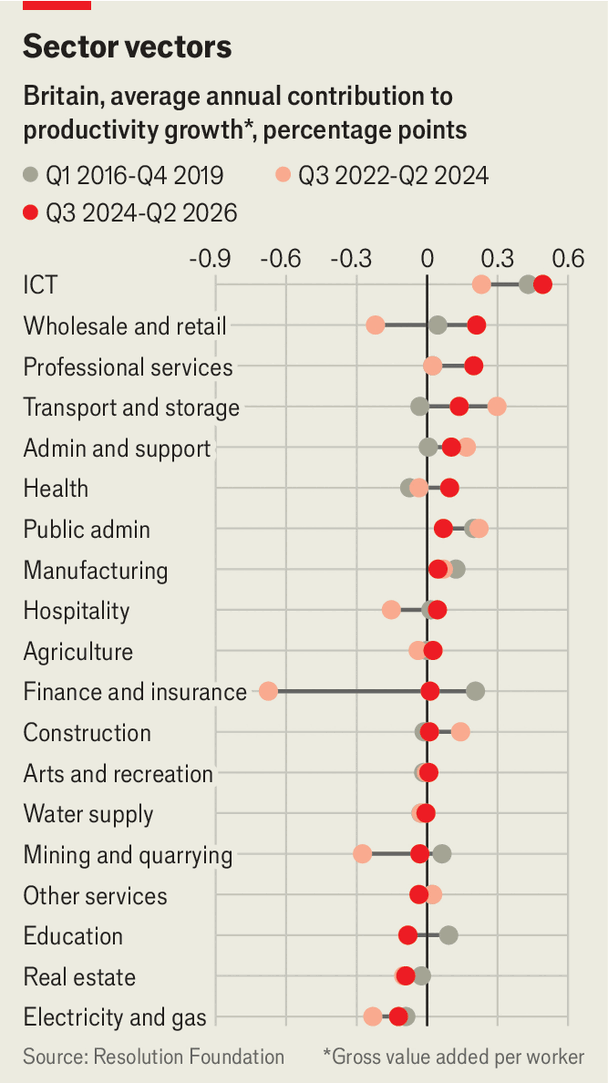
John Healey is determined to be a sunny man. Britain’s new chancellor(财政大臣) has learned from the mistakes of Rachel Reeves, his predecessor(前任). In her first speech on the job she complained of inheriting “the worst set of circumstances since the second world war”.(她在上任后的首次演讲中抱怨自己接手的是“二战以来最糟糕的局面”。) That left voters dejected(沮丧的). Mr Healey is more hopeful. In a recent speech he insisted that Britain is “turning a corner(迎来转机)”. Its growth was “the fastest in the G7 in the first half of this year”. Even productivity(生产率) is “finally ticking up(小幅回升)” after stagnating(停滞) since 2008. Is he right? The latest results do seem promising. But it is too soon to be confident of a lasting shift.(但现在就确信这是一场持久转变还为时过早。)
约翰·希利决心做一个乐观的人。这位英国新任财政大臣从前任蕾切尔·里夫斯的错误中吸取了教训。里夫斯上任后的首次演讲中抱怨自己接手的是“二战以来最糟糕的局面”,这让选民倍感沮丧。希利则更有信心。在最近的一次演讲中,他坚称英国正在“迎来转机”,增长是“今年上半年七国集团中最快的”,连生产率也在2008年以来长期停滞后“终于开始回升”。他说得对吗?最新数据看起来确实令人鼓舞,但现在就确信这是一场持久转变还为时过早。
The Office for National Statistics (ONS)(英国国家统计局) reported that the economy grew by 1% in the first half of 2026. This beat the rest of the G7(七国集团) group of big rich countries (America was second with 0.9%). Some of Britain’s vitality(活力) can be attributed to(归因于) technological progress: computing-related services grew by 8.9% in the seven months to the end of July, and output(产出) of computing and electrical equipment rose by 10.6%. Business investment grew strongly, too.
英国国家统计局(ONS)报告称,2026年上半年经济增长1%,超过了七国集团其他大型富裕国家(美国以0.9%位居第二)。英国的活力部分可归功于技术进步:截至7月底的七个月里,计算机相关服务增长8.9%,计算机和电气设备产出增长10.6%。商业投资也增长强劲。
But the results are probably flattered(被美化) by seasonal quirks(怪癖、特殊因素). The ONS smooths out(平滑掉) fluctuations(波动) that recur each year—think Christmas shopping splurges(挥霍、大笔消费)—so that its statistics track underlying GDP(反映潜在GDP趋势). Since the pandemic, though, Britain’s seasonal patterns have shifted: more activity now falls in the early months, especially business investment. The ONS’s methodology has not yet fully caught up, which makes growth in the first half look better than it was.(国家统计局的方法尚未完全跟上这一变化,这使得上半年的增长看起来比实际更好。)
但这些结果很可能被季节性因素美化了。国家统计局会平滑掉每年重复出现的波动——比如圣诞购物狂潮——以便统计数据能反映潜在的GDP趋势。然而自疫情以来,英国的季节性模式已经改变:更多经济活动如今集中在年初几个月,尤其是商业投资。国家统计局的方法尚未完全跟上这一变化,这使得上半年的增长看起来比实际更好。