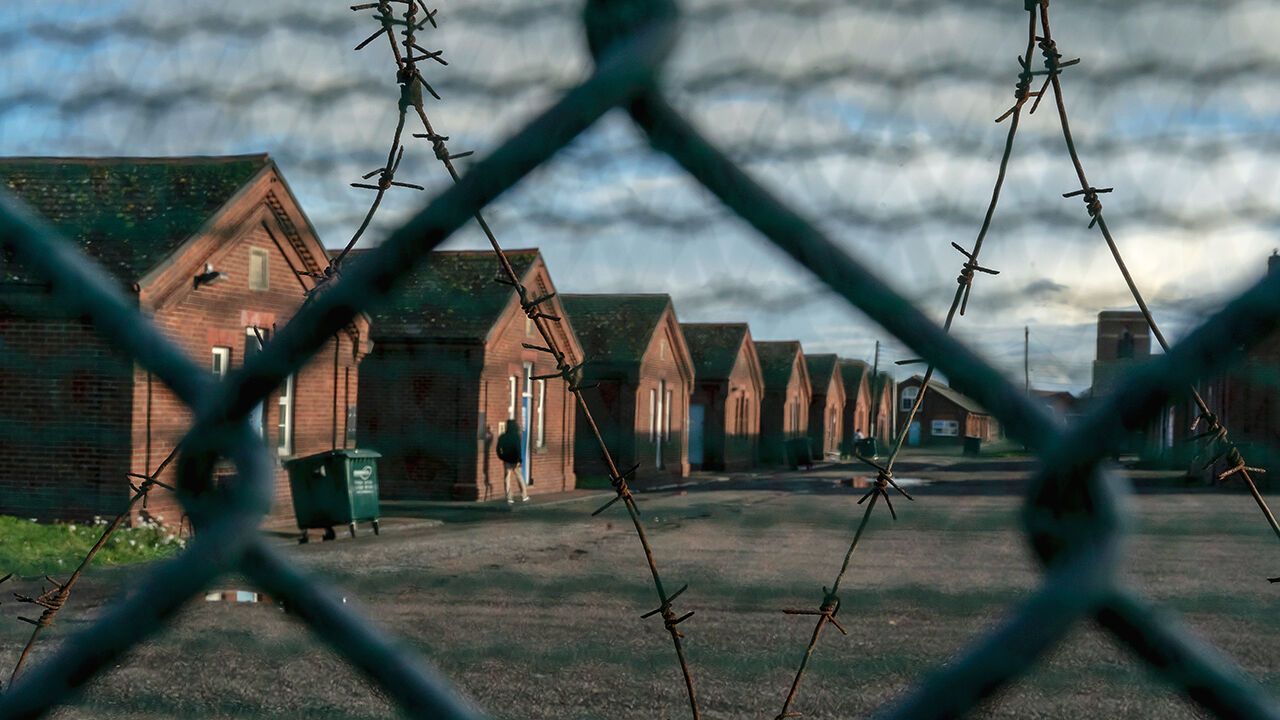
Last summer a Somali asylum-seeker(寻求庇护者) was sent to Napier barracks(军营,兵营), an old military site in southern England. It looked dismal(凄凉的,阴沉的). Paint peel(剥落)ed from the walls. Men were cram(塞满,挤满)med into dormitories, separated by boards and curtains. “You forget about privacy,” he says. After a few months he was moved to a shared house with other refugees—and came to miss some things about the barracks.
去年夏天,一名索马里寻求庇护者被送往英格兰南部的旧军事基地内皮尔军营。那里看上去一片凄凉:墙上的油漆剥落,男人们挤在宿舍里,只用木板和帘子隔开。“你会忘记隐私这回事,”他说。几个月后,他被转移到与其他难民合住的房子——却开始怀念军营里的某些东西。
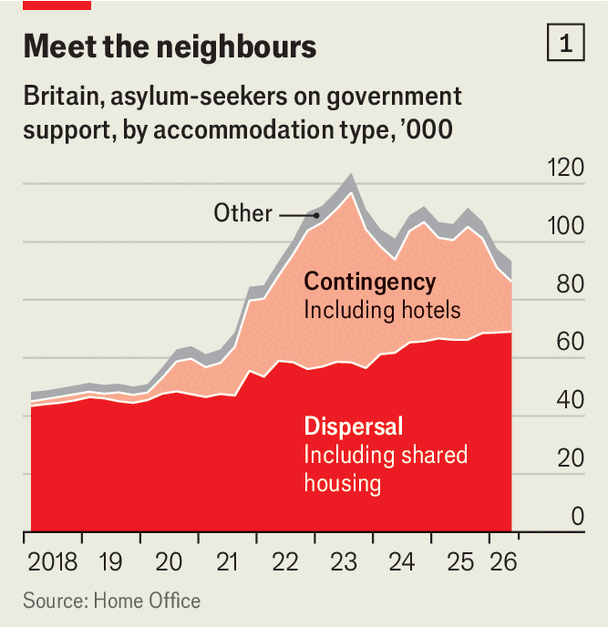
Housing asylum-seekers is fraught(充满(问题)的,棘手的), owing to the fear and loathing(厌恶,憎恨) directed at them. Hotels, which accommodate(容纳,为……提供住宿) about 16,000 of the 93,000 asylum-seekers who receive support from the government, have attracted frequent protests and violent mob(暴民,乌合之众)s. But accommodation also matters to asylum-seekers. Most people who seek protection in Britain end up staying, largely because the state accepts their claims but also because many failed claimant(申请人,索赔人)s cannot be deport(驱逐出境)ed. They are highly likely to become citizens in time(最终,迟早). How and where they are housed for the first few months may help determine how quickly, or indeed whether, they will become well-adjusted, productive Britons.(最初几个月他们如何被安置、安置在哪里,可能决定他们多快——甚至是否——能成为适应良好、有生产力的英国公民。)
安置寻求庇护者是一件棘手的事,因为他们招致恐惧和厌恶。在政府资助的9.3万名寻求庇护者中,约1.6万人住在酒店,这些酒店频频引发抗议和暴力骚乱。但住宿对寻求庇护者本身也很重要。大多数在英国寻求保护的人最终会留下来,这主要是因为国家批准了他们的申请,也因为许多申请失败者无法被驱逐出境。他们极有可能最终成为公民。最初几个月他们如何被安置、安置在哪里,可能决定他们多快——甚至是否——能成为适应良好、有生产力的英国公民。
In 2016 Linda Bakker, now at the University of Applied Sciences in Utrecht, studied a large survey of refugees in Britain. She and her colleagues showed that people who had lived in state accommodation while waiting for their claims to be heard had markedly worse mental health and social links than those who had lived with family or friends, after controlling for personal characteristics.(她和同事证明,在等待申请审理期间住在国家提供的住所里的人,其心理健康和社会联系明显差于与家人或朋友同住的人——这是在控制了个人特征之后得出的结论。) Their housing may have hobble(阻碍,束缚)d them.
2016年,现就职于乌得勒支应用科技大学的琳达·巴克研究了英国一项大型难民调查。她和同事证明,在等待申请审理期间住在国家提供的住所里的人,其心理健康和社会联系明显差于与家人或朋友同住的人——这是在控制了个人特征之后得出的结论。他们的住房可能拖了他们的后腿。
Unsplendid isolation
并不光彩的孤立