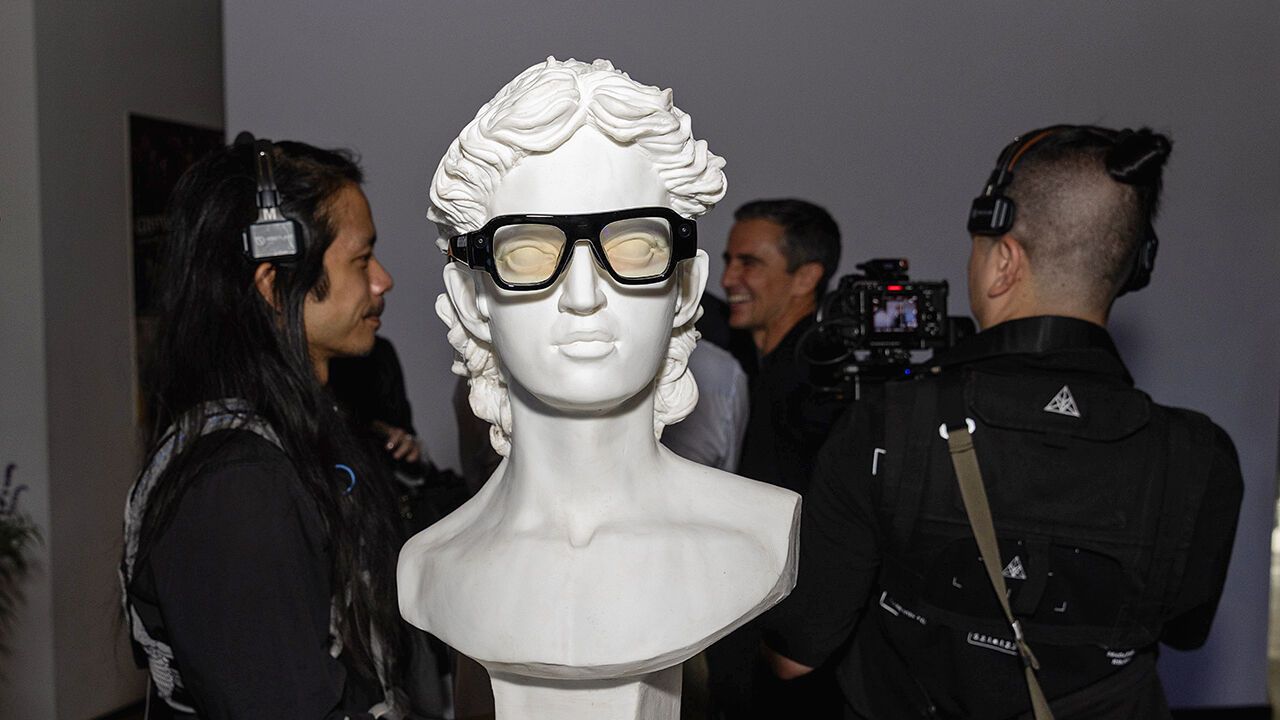
A year ago your correspondent(记者,通讯员) lost the charging case for his Ray-Ban Meta smart glasses and, with some relief(带着几分宽慰), had to stop using their camera, audio and artificial-intelligence features. He still wore them as shades. But this summer, during an open-air performance of “A Midsummer Night’s Dream”, a parent of a member of the young cast accused him of covertly(偷偷地,暗中地) filming the event. Since then, he has felt creepy(令人毛骨悚然的) using them even in dumb mode(处于非智能模式).
一年前,本刊记者弄丢了雷朋Meta智能眼镜的充电盒,于是不得不停用其拍照、音频和人工智能功能——他反倒松了口气。他仍然把它当墨镜戴。但今年夏天,在一场露天演出的《仲夏夜之梦》上,一位小演员的家长指责他偷偷拍摄演出。自那以后,即便只是把它当普通眼镜用,他也觉得心里发毛。
He is not alone. In recent months, after videos emerged of men using the glasses to secretly record and harass(骚扰,侵扰) women, some have referred to Ray-Ban Metas, sold by Mark Zuckerberg’s social-media giant in conjunction with(与……合作,连同) EssilorLuxottica(全球最大眼镜制造商依视路陆逊梯卡), a Franco-Italian eyewear-maker, as “pervert glasses”. Luca Solca of Bernstein, an investment firm, said that it reminded him of the “Glasshole(谷歌眼镜用户被贴的贬义标签)” epithet(贬称,绰号) tabloid(小报,通俗报纸)s slapped on users of Google’s short-lived(短暂的,昙花一现的) smart glasses in 2014.
有这种感受的不止他一人。近几个月,在出现男性用这款眼镜偷拍并骚扰女性的视频后,一些人把雷朋Meta眼镜称为“色狼眼镜”。这款眼镜由马克·扎克伯格的社交媒体巨头与法意眼镜制造商依视路陆逊梯卡合作销售。投资公司伯恩斯坦的卢卡·索尔卡表示,这让他想起2014年小报给谷歌短命智能眼镜用户贴上的“眼镜混蛋”标签。
In response, developers have produced free apps such as Nearby Glasses and ZuckOff that use Bluetooth signals to help people detect(探测,察觉) the devices, even though only a few are known to misuse(滥用,误用) them. Those relish(享受,乐见)ing the backlash(强烈抵制,反弹) may include investors, in both Meta and EssilorLuxottica, who hope it will derail(使脱轨,使受挫) what some see as a margin-shredding vanity project(吞噬利润的面子工程).
作为回应,开发者推出了Nearby Glasses和ZuckOff等免费应用,利用蓝牙信号帮助人们探测这类设备,尽管已知滥用者只是少数。乐见这场抵制的人中或许包括Meta和依视路陆逊梯卡的投资者,他们希望抵制能叫停这个被一些人视为“吞噬利润的面子工程”的项目。