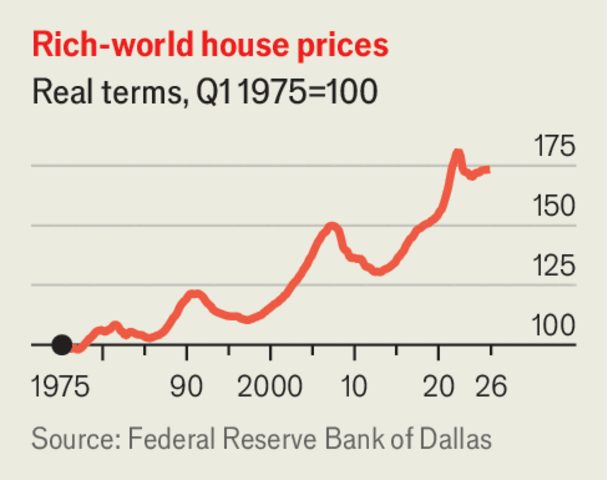
LIKE MANY politicians, Donald Trump dreams of having his cake and eating it(鱼与熊掌兼得). In January he told his cabinet that he wanted to make houses more affordable, but also “to drive housing prices up for people that own their homes”. A government that could do both would be a true cakeistocracy(蛋糕政体(作者生造词)). In the real world, only homeowners have been gorging(狼吞虎咽、大快朵颐): house prices are near record highs in many rich countries. Homebuyers have gone hungry, especially after post-covid inflation pushed up bond yields in 2022-23, making mortgages more expensive.(购房者却在挨饿,尤其是在疫情后通胀于2022-23年推高债券收益率、令房贷变得更贵之后。)
和许多政客一样,唐纳德·特朗普梦想着鱼与熊掌兼得。今年1月,他告诉内阁,他既想让住房更可负担,又想“为有房者推高房价”。一个能同时做到这两点的政府,堪称真正的“蛋糕政体”。但在现实世界里,只有房主在大快朵颐:许多富裕国家的房价已接近历史高点。而购房者却在挨饿,尤其是在疫情后通胀于2022-23年推高债券收益率、令房贷变得更贵之后。
Now bond yields are rising again, and mortgage rates with them, as central banks raise interest rates to fight stubborn(顽固的、难消除的) inflation while governments suffer from debt bloat(债务膨胀) and fiscal heartburn(财政灼痛(财政压力)). The average rate on a new 30-year home loan in America is nudging(接近、逼近) 7%, up from a bit over 6% a year ago and nearly double what it was before the pandemic. Borrowing costs are rising in other wealthy countries, too. This time, however, the result may be lower house prices. This is something that, for all their cakeist proclivities, politicians should welcome.(尽管政客们有“蛋糕主义”的癖好,这却是他们应当欢迎的事。)
如今债券收益率再度攀升,房贷利率也随之上涨,因为各国央行正加息以对抗顽固的通胀,而政府则饱受债务膨胀和财政灼痛之苦。美国新的30年期住房贷款平均利率正逼近7%,高于一年前略高于6%的水平,几乎是疫情前的两倍。其他富裕国家的借贷成本也在上升。然而这一次,结果可能是房价下跌。尽管政客们有“蛋糕主义”的癖好,这却是他们应当欢迎的事。
The latest bout(一轮、一阵) of interest-rate rises is not yet as acute(严重的、剧烈的) as the previous one. But the housing market today is less resilient(有韧性的、能恢复的) than it was. As variable-rate mortgages have spread across the rich world, the prospect of higher monthly payments may deter buyers, particularly now that households have mostly run down their covid-era savings.(随着浮动利率房贷在富裕国家普及,月供可能上升的前景或许会吓退买家,尤其是在家庭疫情期间的储蓄已基本耗尽的当下。) Meanwhile, the supply of houses is up a bit compared with the 2010s.
最新一轮利率上涨尚未达到上一轮那样严重的程度。但如今的住房市场已不如从前有韧性。随着浮动利率房贷在富裕国家普及,月供可能上升的前景或许会吓退买家,尤其是在家庭疫情期间的储蓄已基本耗尽的当下。与此同时,与2010年代相比,住房供给略有增加。