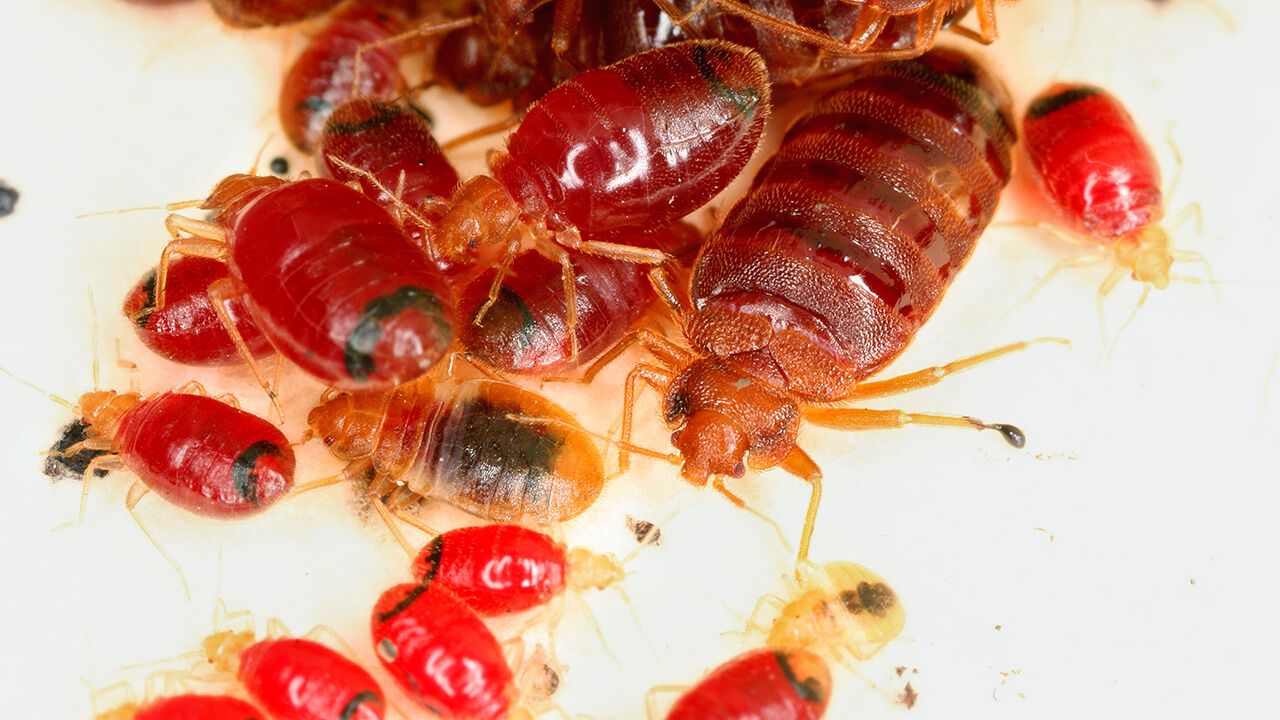
The bedtime blessing, “Good night, sleep tight, don’t let the bed bugs bite”, had pretty much lost its true meaning by the 1980s, for good reason(有充分理由). After supping(吸食;进食) on sleeping humans for millennia, bed-bug populations had collapsed in rich countries in the face of modern pesticides. In mere decades the insects had gone from scourge(灾祸;祸害) to myth.
到20世纪80年代,那句睡前祝福语“晚安,睡个好觉,别让臭虫咬”几乎已经失去了它真正的含义——而且理由充分。在吸食熟睡人类的血液数千年之后,面对现代杀虫剂,富裕国家的臭虫种群数量急剧崩溃。短短几十年间,这种昆虫便从一场灾祸变成了一个传说。
Then came their nightmare comeback. During the late 1990s bed-bug infestations(侵扰;大量滋生) surged in Australia, Europe, North America and parts of Asia. Air travel, the theory went, was shuttling them around and fuelling the rise of an insecticide-resistant global super-pest, as bugs that had survived exposure to different pesticides in different places mixed their genes.(当时的理论认为,航空旅行把它们四处搬运,并助推了一种抗杀虫剂的全球超级害虫的兴起,因为在不同地方接触过不同杀虫剂而存活下来的臭虫会交换彼此的基因。)
接着便是它们噩梦般的回归。20世纪90年代末,臭虫侵扰在澳大利亚、欧洲、北美和亚洲部分地区激增。当时的理论认为,航空旅行把它们四处搬运,并助推了一种抗杀虫剂的全球超级害虫的兴起——因为在不同地方接触过不同杀虫剂而存活下来的臭虫,会交换彼此的基因。
It was a great theory. So great, in fact, that nobody got around to(抽出时间去做) checking it. That is until Warren Booth, an entomologist(昆虫学家) at the Virginia Polytechnic Institute(弗吉尼亚理工学院,美国著名公立研究型大学), realised that modern genetic methods had simplified a task that was tricky and expensive in the 1990s. He reasoned that if bed bugs’ resurgence had been caused by insects from around the world sharing resistance genes, then they should have become much more genetically similar to one another by the late 2000s.(他推断,如果臭虫的复兴是由世界各地共享抗药基因的昆虫造成的,那么到2000年代末,它们彼此之间在遗传上应该变得相似得多。)
这是个很棒的理论。棒到事实上根本没人去验证它。直到弗吉尼亚理工学院的昆虫学家沃伦·布斯意识到,现代遗传学方法已经简化了这项在20世纪90年代既棘手又昂贵的任务。他推断,如果臭虫的复兴是由世界各地共享抗药基因的昆虫造成的,那么到2000年代末,它们彼此之间在遗传上应该变得相似得多。