At the heart of British politics lies a paradox.(英国政治的核心存在一个悖论。) Tax is forecast(预测;预报) to reach 38% of GDP(国内生产总值) by 2030-31, the highest level since the 1940s. Yet most British workers do not pay much of it. The average single earner in Britain pays less tax on their earnings than most of their peers in the OECD(经合组织), a rich-country club. They also pay less than they used to. How does the Treasury make the sums add up(使账目平衡;使收支相抵)?
英国政治的核心存在一个悖论。预计到2030-31年,税收将占GDP的38%,为1940年代以来的最高水平。然而,大多数英国工人并未缴纳多少税。英国普通单身劳动者在收入上缴纳的税,比大多数富裕国家俱乐部——经合组织中的同行都要少。他们缴的税也比过去少。那么,财政部是如何让账目平衡的呢?
For answers, look to(求助于;指望;关注) Sue, Henry and Walter. Sue, a Standard Undertaxed Earner, is the median(中位数的;中间的) taxpayer, earning £18,700 ($23,100) in 2022. She wins from the current system. New research by Arun Advani, an economist, and his co-authors finds that her average effective tax rate(有效税率) fell from 17% to 12% between 2008 and 2022 (it will have since risen a bit due to stealthy(隐蔽的;悄悄的) recent tax rises).
要寻找答案,请看苏、亨利和沃尔特。苏是“标准低税劳动者”,属于中位数纳税人,2022年收入为18,700英镑(23,100美元)。她是从现行制度中获益的人。经济学家阿伦·阿德瓦尼及其合著者的新研究发现,2008年至2022年间,她的平均有效税率从17%降至12%(此后由于近期隐蔽的增税,该税率应略有上升)。
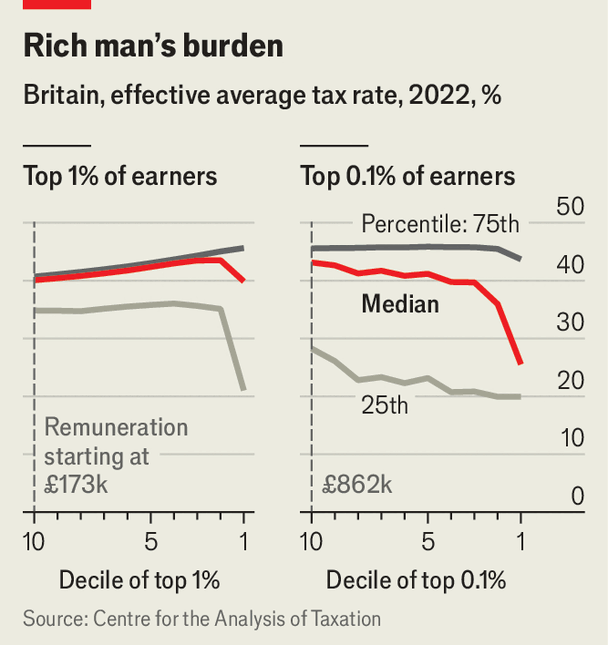
Sue is able to enjoy high state spending only thanks to(由于;多亏) the contributions of her richer friends, Henry and Walter. The top 10% of taxpayers (earning over £51,000) in 2022 received 40.5% of taxable income but paid 60% of income-related taxes. The top 1% (over £173,000) paid an effective average rate of 36% on their remuneration(报酬;酬金), up from(高于;从……上升) 33% in 2008.
苏之所以能享受高额的政府支出,全靠她更富有的朋友亨利和沃尔特的贡献。2022年,收入最高的10%纳税人(收入超过51,000英镑)获得了40.5%的应税收入,却缴纳了60%与收入相关的税。收入最高的1%(超过173,000英镑)为其报酬缴纳的平均有效税率为36%,高于2008年的33%。