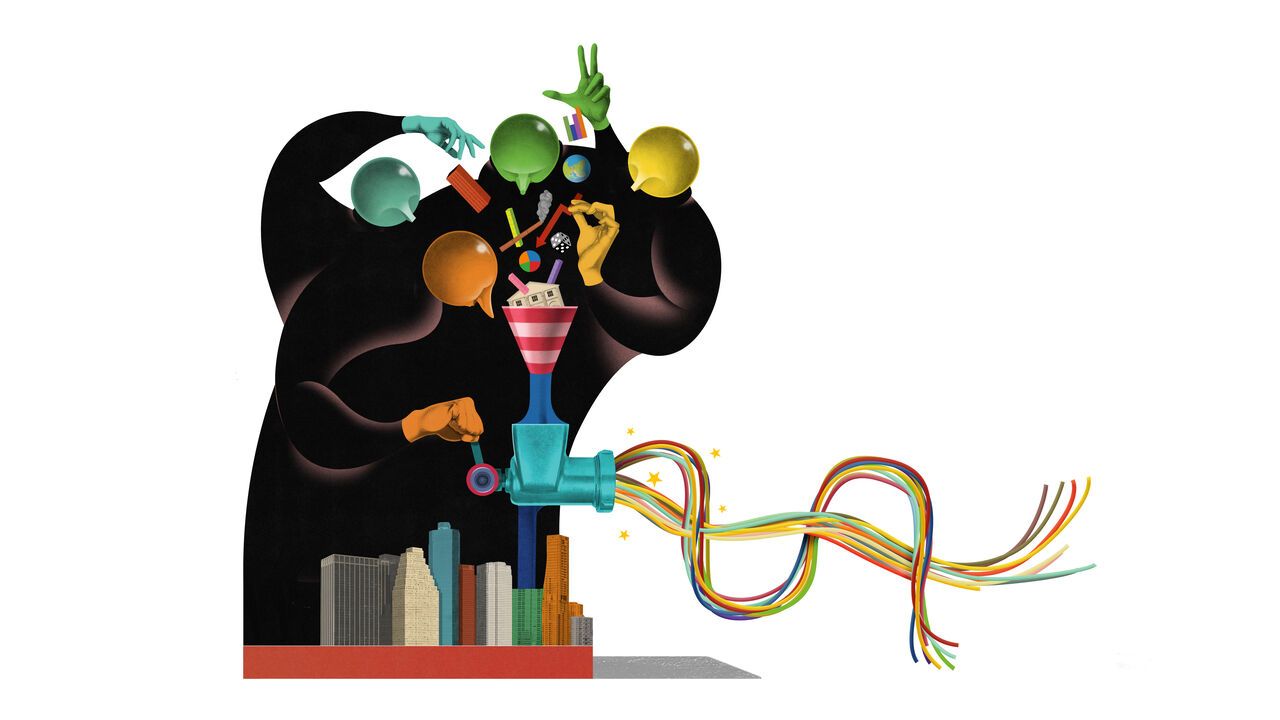
In the past year American markets have digested(消化、吸收) the largest-ever initial public offering (SpaceX), equity raise by a public company (Google) or a foreign firm (SK Hynix), private-funding round (OpenAI) and private-debt deal (Broadcom), as well as most of the biggest bond issue in history (Amazon). There was the first $1trn exchange-traded fund, or ETF (Vanguard), a record-breaking cash pile (Berkshire Hathaway) and stock-buyback programme (Nvidia), and the consummation(完成、达成) of the largest-ever leveraged buyout (Electronic Arts). Then there are the enormous mergers in railways (Union Pacific and Norfolk Southern), utilities (NextEra and Dominion Energy) and media (Paramount and Warner Bros Discovery)—the last of which led, this week, to the largest ever junk-bond offering, beating a record set only last week (SoftBank). New markets have been created out of thin air(凭空、无中生有) (for compute) or become much bigger (for predictions). Worries about massive corporate scandals (First Brands) and hedge-fund blow-ups (Situational Awareness), which would have once occupied investors’ attention for months, are steamrollered by the relentless, totalising and extraordinarily flexible machine that is American finance.(对大规模企业丑闻和对冲基金爆仓的担忧,过去会让投资者关注数月之久,如今却被美国金融这台无情、无所不包且极其灵活的机器碾得粉碎。)
过去一年,美国市场消化了史上规模最大的首次公开募股(SpaceX)、上市公司股权融资(谷歌)和外国公司股权融资(SK海力士)、私募融资轮(OpenAI)和私募债务交易(博通),以及历史上最大规模债券发行中的大部分(亚马逊)。还出现了首只规模达1万亿美元的交易所交易基金(先锋集团)、创纪录的现金储备(伯克希尔·哈撒韦)和股票回购计划(英伟达),以及史上最大杠杆收购的完成(艺电)。此外还有铁路(联合太平洋与诺福克南方)、公用事业(新纪元能源与道明尼能源)和媒体(派拉蒙与华纳兄弟探索)领域的巨额并购——其中媒体并购本周催生了史上最大规模的垃圾债券发行,打破了仅上周才创下的纪录(软银)。新市场凭空诞生(算力市场),或者变得大得多(预测市场)。对大规模企业丑闻(第一品牌)和对冲基金爆仓(情境意识)的担忧,过去会让投资者关注数月之久,如今却被美国金融这台无情、无所不包且极其灵活的机器碾得粉碎。
One nation under NASDAQ
纳斯达克之下的合众国
The great powers of this system increasingly defy categorisation(难以归类). Old distinctions—between the state and the market, individuals and firms, financial and non-financial firms, public and private markets, investment and gambling—have bent under their weight. What, for instance, is Nvidia? A company, certainly (the world’s most valuable); a venture-capital investor (arguably Silicon Valley’s most important); a source of American power (run by a showman(表演者、爱作秀的人) with the ear of the president(能直达总统、受总统垂听)); and a lender, with plans to backstop(为……提供担保、托底) loans made by the likes of Goldman Sachs and Apollo. And what, pray tell(请问、倒要请教), are they? Goldman Sachs is best known for trading and giving advice on mergers, but increasingly resembles a giant asset manager, having just bought two firms that issue ETFs. And Apollo? Part life-insurer, part private-equity fund.
这个体系中的各大力量越来越难以归类。国家与市场、个人与企业、金融与非金融企业、公开与私募市场、投资与赌博之间的旧有界限,已在它们的重压之下弯曲。比如,英伟达是什么?当然是一家公司(全球市值最高);也是一家风险投资机构(可以说是硅谷最重要的);还是美国实力的来源(由一位能直达总统的表演者经营);同时还是贷款人,计划为高盛和阿波罗等机构发放的贷款提供担保。那么,请问它们又是什么?高盛以交易和并购咨询闻名,但越来越像一家巨型资产管理公司,刚刚收购了两家发行 ETF 的公司。阿波罗呢?一半是人寿保险公司,一半是私募股权基金。
Every actor in the American economy is best understood by its position in the country’s wager(赌注、豪赌) on artificial intelligence. Maintaining the technological lead over China and keeping stock prices high are the main tasks of government; opposing government mostly involves opposing AI data centres. As in a war economy, the obligations of enterprise are ambiguous (bosses recently signed a “morally binding” accord on AI safety) and the balance-sheets of the biggest companies have been requisitioned(被征用) for the cause(为了这项事业). As well as borrowing heavily in bond markets, Amazon, Google, Meta and Microsoft have $2.4trn of binding spending commitments, mostly tied to data-centre projects, lurking in the footnotes of their financial reports—or “off balance-sheet”.(除了在债券市场大举借债,亚马逊、谷歌、Meta 和微软还有 2.4 万亿美元具有约束力的支出承诺,大多与数据中心项目相关,潜伏在其财务报告的脚注中——也就是“表外”。)
理解美国经济中的每一个参与者,最好的方式就是看它在美国对人工智能这场豪赌中的位置。维持对中国的技术领先和保持高股价是政府的主要任务;反对政府,主要就是反对 AI 数据中心。如同战时经济,企业的义务变得模糊(老板们最近签署了一份关于 AI 安全的“道德约束性”协议),最大型公司的资产负债表已被征用于这项事业。除了在债券市场大举借债,亚马逊、谷歌、Meta 和微软还有 2.4 万亿美元具有约束力的支出承诺,大多与数据中心项目相关,潜伏在其财务报告的脚注中——也就是“表外”。