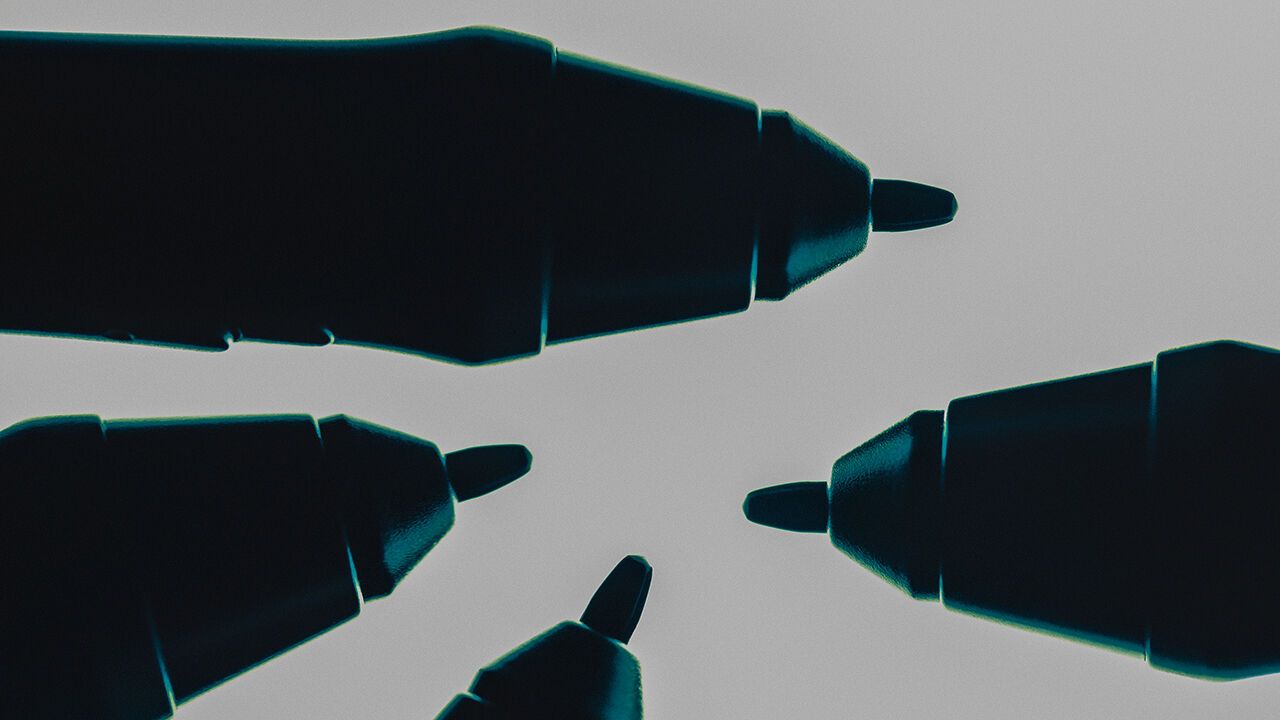
The Pen. By Simon Garfield(英国知名非虚构作家). Crown; 304 pages; $33. Canongate Books; £20
《钢笔》。西蒙·加菲尔德著。Crown出版社;304页;33美元。Canongate Books出版社;20英镑。
It was November 1944. German soldiers were blocking the entranceways to the charming medieval town of Metz, in northern France. Meanwhile, just outside Metz, and less charmingly, a piece of German mortar was blocking the airway of an American soldier who was, his companion recalled, “thrashing around” and “gasping for breath”.(与此同时,就在梅斯城外,不那么迷人的一幕正在上演:一块德军迫击炮弹片堵住了一名美军士兵的气道,据他的战友回忆,那人当时“拼命挣扎”“喘不上气”。) The companion acted swiftly. He took the soldier’s fountain pen and said “I don’t like to do this.” Then he slit(割开,切开) the man’s throat open with a knife, popped the fountain pen in(把钢笔插进去)—and the soldier started to breathe. And a pen legend began.
那是1944年11月。德军正封锁着法国北部迷人的中世纪小镇梅斯的各个入口。与此同时,就在梅斯城外,不那么迷人的一幕正在上演:一块德军迫击炮弹片堵住了一名美军士兵的气道,据他的战友回忆,那人当时“拼命挣扎”“喘不上气”。战友迅速行动。他拿起那名士兵的钢笔,说了句“我真不想这么做”。然后他用刀割开对方的喉咙,把钢笔插了进去——士兵开始呼吸了。一段钢笔传奇就此诞生。
There is, as Simon Garfield, a journalist, points out in an engaging(引人入胜的) new book, a pen paradox(悖论,自相矛盾的现象). Pens have changed the course of history(改变历史进程), competing with “the wheel, steam engine and microchip” as “our most important tool of progress”. Pens make history in the literal sense (the second world war was postponed by pen in Munich; Hermann Göring, a Nazi, committed suicide using poison—possibly—smuggled into his cell in a pen).(钢笔在字面意义上创造历史(二战在慕尼黑因钢笔而推迟;纳粹分子赫尔曼·戈林用——可能——藏在钢笔里偷带进牢房的毒药自杀)。) And pens make history in the literary sense too, since “to write history” is, as the philosopher Michael Oakeshott(英国哲学家) pointed out, “the only way of making it”.
正如记者西蒙·加菲尔德在一本引人入胜的新书中所指出的,钢笔存在一个悖论。钢笔改变了历史进程,与“车轮、蒸汽机和微芯片”并列为“人类最重要的进步工具”。钢笔在字面意义上创造历史(二战在慕尼黑因钢笔而推迟;纳粹分子赫尔曼·戈林用——可能——藏在钢笔里偷带进牢房的毒药自杀)。钢笔也在文学意义上创造历史,因为正如哲学家迈克尔·奥克肖特所指出的,“书写历史”是“创造历史的唯一方式”。