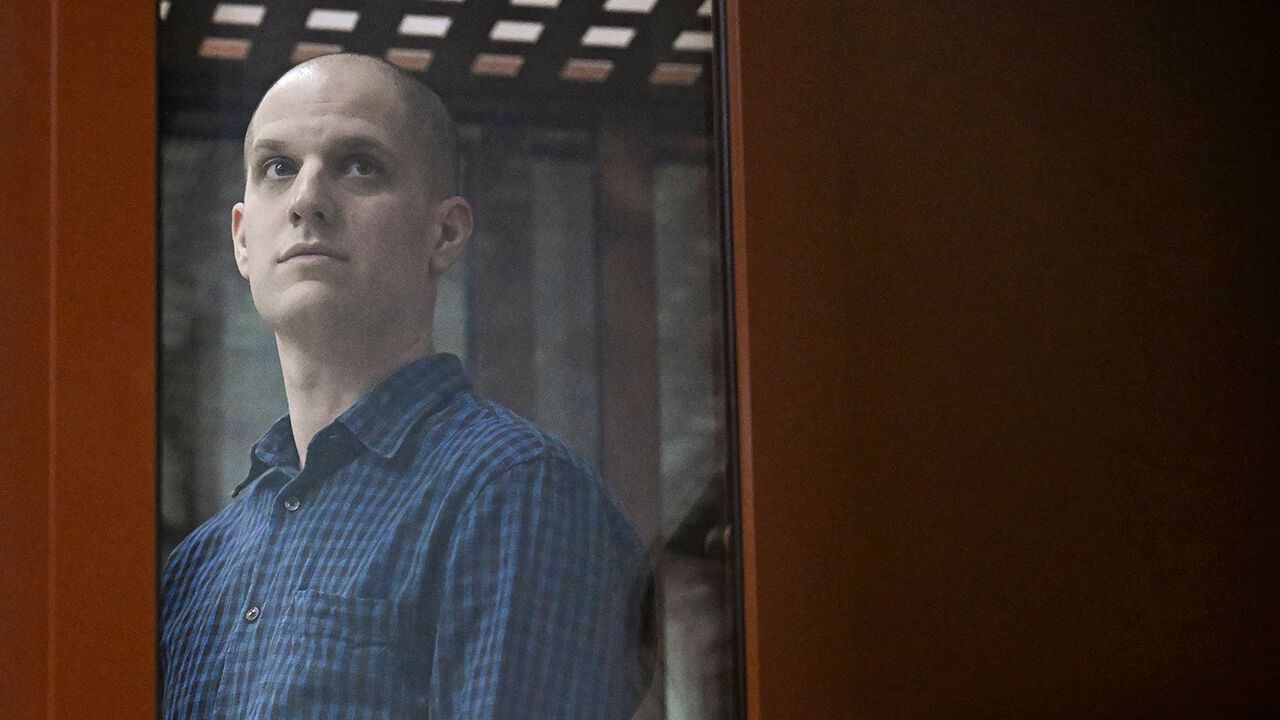
There are three types of people in Russia, runs an old joke: those who have been in prison, those who are currently in prison—and those who will be. Under capricious(反复无常的) rulers, incarceration(监禁) is an ambient(无处不在的) risk, which can be a mark of virtue rather than degeneracy(堕落). For Dostoyevsky(陀思妥耶夫斯基) and others, it incubated(孕育) moral clarity and spiritual rebirth. In his new memoir Evan Gershkovich, an American journalist, quotes a character of Tolstoy(托尔斯泰)’s: “The only suitable place for an honest man in Russia…is prison.”
俄罗斯有一句老笑话:人分三种——坐过牢的、正在坐牢的,以及将来会坐牢的。在反复无常的统治者治下,监禁是一种无处不在的风险,它甚至可能成为美德的标志,而非堕落的印记。对陀思妥耶夫斯基等人而言,牢狱孕育了道德清明与精神重生。美国记者埃文·格什科维奇在新回忆录中引用了托尔斯泰笔下人物的话:“在俄罗斯,诚实的人唯一合适的地方……就是监狱。”
A son of Russian-speaking Soviet emigrants to America, Mr Gershkovich is now in the first of those three carceral(监狱的) categories. He spent 16 months in Russian custody, an ordeal(磨难) he chronicles(记录) in “This Cursed Beautiful Land”. Prison, it shows, is still a barred window onto(了解……的带铁栏的窗口) the truths of an inescapable(无法逃避的) country.
格什科维奇是讲俄语的苏联移民之子,如今他属于上述三类人中的第一类——坐过牢的人。他在俄罗斯被关押了16个月,这段磨难记录在《这片被诅咒的美丽土地》一书中。这本书表明,监狱仍是一扇带铁栏的窗户,透过它可以看到这个无法逃离的国家的真相。
He moved to Russia in 2017 to work for the Moscow Times, later joining the Wall Street Journal. It seemed, initially, that the old rules of post-Soviet journalism still applied: that foreign reporters enjoyed a licence which their beleaguered(处境艰难的) Russian counterparts lacked. In bygone days, if an official criticised your coverage, it was generally a bid to(为了……的企图) extract(索取) a bung(贿赂) (or a bottle). “I am sick,” a minder(陪同人员) once complained to The Economist, “and nobody has brought me any medicine.”
他于2017年移居俄罗斯,为《莫斯科时报》工作,后来加入《华尔街日报》。起初,后苏联时代的新闻业旧规则似乎仍然适用:外国记者享有某种许可,而处境艰难的俄罗斯同行则没有。在过去,如果官员批评你的报道,通常是为了索要贿赂(或一瓶酒)。“我病了,”一位陪同人员曾向《经济学人》抱怨,“却没人给我带药。”