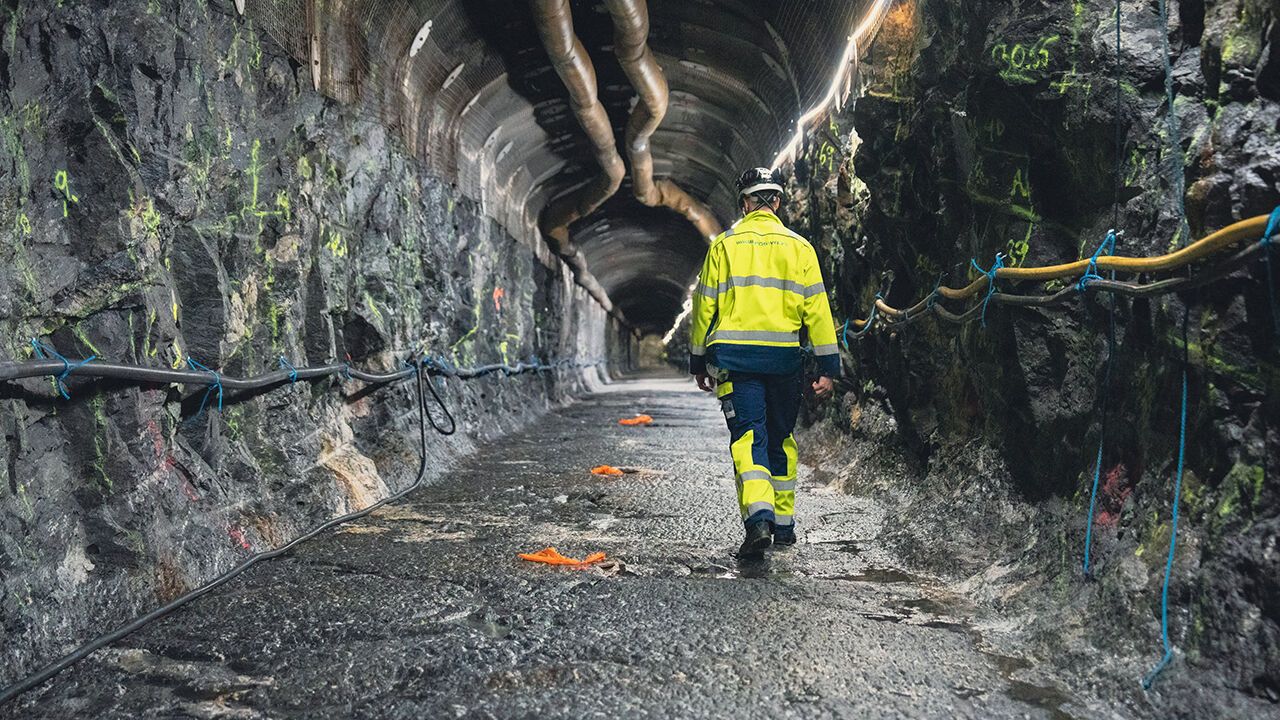
After four and a half decades of planning, it took only ten hours to drill through the 1.9bn-year-old bedrock(基岩). Final digging began last month at Onkalo, a geological disposal facility (GDF) in Finland. It will be the resting place(安息之地,长眠之所) for 6,500 tonnes of hazardous(危险的,有害的) nuclear waste. Sealed 400 metres beneath the earth, its radiation will remain contained for over 100,000 years.(废料被密封在地下400米深处,其辐射将被隔离十万年以上。)
经过长达四十五年的规划,钻透19亿年历史的基岩却只用了十个小时。上个月,芬兰的翁卡洛(Onkalo)地质处置库(GDF)开始了最后的挖掘工作。这里将成为6500吨高危核废料的安息之地。废料被密封在地下400米深处,其辐射将被隔离十万年以上。
Since the infancy(初期,摇篮期) of nuclear power, scientists have debated how to safely dispose of(处理,处置) its waste. GDFs are the gold standard(黄金标准,最佳典范), and Onkalo will be the first on Earth. Posiva, the firm that runs it, aims to have it ready by year’s end. It comes at a time of renewed enthusiasm for the nuclear industry, driven by the desire for carbon-free electricity and wars that have disrupted fossil-fuel supplies. Global nuclear-power output will double by 2050, reckon(估计,认为)s the UN’s International Atomic Energy Agency. France, Sweden and Slovakia are building reactors. Belgium, Italy and Poland hope to as well.
自核电诞生之初,科学家们就一直在争论如何安全处置核废料。地质处置库是黄金标准,而翁卡洛将成为全球首座。运营该设施的波西瓦公司(Posiva)计划在年底前让它准备就绪。此时正值核工业热情重燃之际,驱动力来自对无碳电力的渴望,以及战争对化石燃料供应的扰乱。联合国国际原子能机构估计,到2050年全球核电发电量将翻一番。法国、瑞典和斯洛伐克正在建设反应堆。比利时、意大利和波兰也跃跃欲试。
About 70% of the world’s nuclear waste is currently held in cooling pools or in dry storage. These are vulnerable(脆弱的,易受影响的) to decay and unstable weather. The volume of waste created is small: a typical reactor produces 25-30 tonnes of spent fuel(乏燃料) per year, about 0.5% of Onkalo’s capacity. For Europe, pooling waste in a handful of shared GDFs would be most efficient.(对欧洲而言,把废料集中到少数几个共享的地质处置库中效率最高。) But most countries’ regulations make this impossible. Finnish legislation(法律,法规) bar(禁止,阻止)s Onkalo from taking waste from plants outside Finland. Instead, 14 European countries are currently planning to build their own GDFs.
目前全球约70%的核废料存放在冷却池或干式储存设施中。这些设施容易受到衰变和不稳定天气的影响。产生的废料量其实很小:一座典型反应堆每年产生25至30吨乏燃料,仅占翁卡洛容量的约0.5%。对欧洲而言,把废料集中到少数几个共享的地质处置库中效率最高。但大多数国家的法规让这无法实现。芬兰法律禁止翁卡洛接收来自芬兰境外核电站的废料。于是,14个欧洲国家目前正计划各自建设处置库。