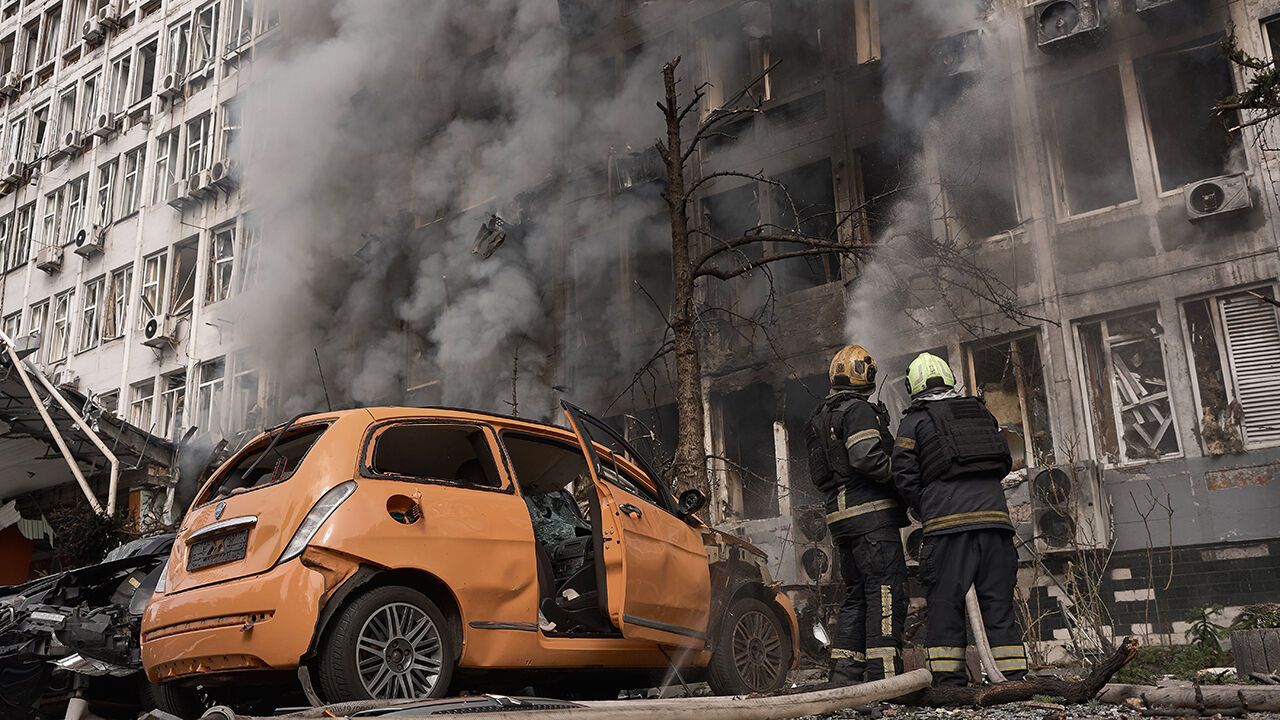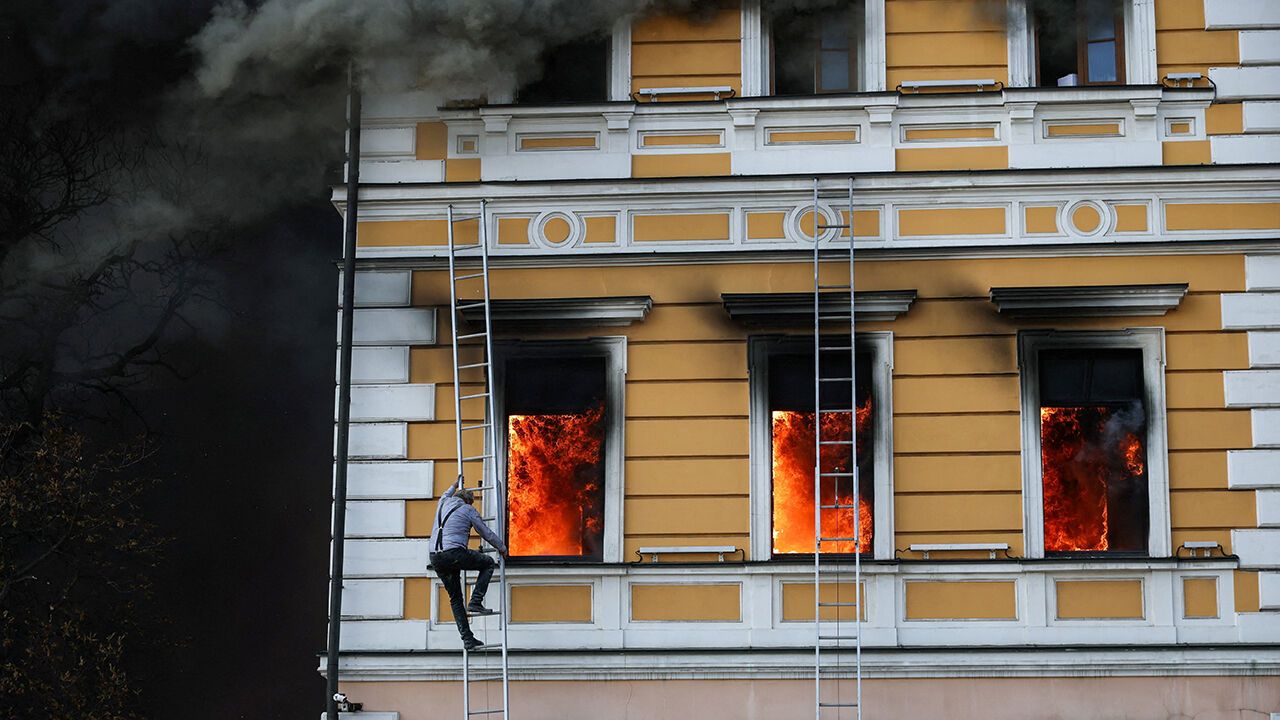
IN THE Russian revolution in 1917(1917年俄国革命) Vladimir Lenin went for high-level strategic(战略性的) targets: the telephone exchange, telegraph, railway stations and bridges. More than four and a half years into his full invasion of Ukraine, Vladimir Putin is setting his sights lower(把目标放低). Over the past week his drones have hit supermarkets, data centres and playgrounds. On Monday they struck a hospital and Ukraine’s National Academy of Sciences(国家科学院) in central Kyiv, killing at least two. Survivors dangled(悬荡,悬垂) from the burning academy building’s windows as rescuers worked below.
1917年俄国革命中,弗拉基米尔·列宁瞄准的是高层战略目标:电话局、电报站、火车站和桥梁。而弗拉基米尔·普京对乌克兰发动全面入侵四年半有余,如今却把目光投向了更低的目标。过去一周,他的无人机袭击了超市、数据中心和游乐场。周一,无人机击中了基辅市中心的一家医院和乌克兰国家科学院,造成至少两人死亡。幸存者从燃烧的科学院大楼窗户中悬垂而下,救援人员在下方施救。
The escalation(升级,加剧) of terror against civilians has not come as a surprise(令人意外) to Ukrainian intelligence services. They warn that worse is to come. Days before the latest wave of attacks, two senior Ukrainian officials told The Economist their intelligence indicated Russia was launching a three-pronged(三管齐下的) campaign of bombing, sabotage(破坏,蓄意破坏) and political chaos against the capital. One specifically identified data centres and supermarkets as the immediate targets. “Putin has gone even crazier,” that official said in mid-September. “He ordered attacks on everything civilian. They want people to be afraid of going to the supermarket.” Both officials expected the Russian campaign to intensify well before winter, with efforts to destabilise(使不稳定) Kyiv peaking by November(在11月达到顶峰).
针对平民的恐怖升级并未让乌克兰情报部门感到意外。他们警告说,更糟的还在后头。在最新一波袭击发生前几天,两名乌克兰高级官员告诉《经济学人》,他们的情报显示俄罗斯正对首都发动一场三管齐下的攻势,包括轰炸、破坏和政治混乱。其中一人明确指出数据中心和超市是当前目标。“普京已经变得更疯狂了,”这位官员在九月中旬说,“他下令攻击一切民用设施。他们想让人们害怕去超市。”两位官员都预计,俄罗斯的攻势将在冬季前大幅加剧,破坏基辅稳定的行动将在11月达到顶峰。
The Kremlin has not abandoned its standard winter playbook(战术手册,策略). In parallel, it has already begun targeting key nodes of electricity, water and sewerage(排污系统), in particular pumping systems. Russia’s most destructive threat remains its hard-to-intercept ballistic missiles(弹道导弹), made more dangerous by the dwindling(逐渐减少) of Ukraine’s supply of American-made Patriot interceptors(拦截弹,拦截器). But the biggest recent shift is the mass introduction of a new generation of cheap, pilot-guided jet-powered drones, which are able to hunt their targets in real time.(但近期最大的变化是,俄军大规模投入了新一代廉价、由飞行员制导的喷气动力无人机,它们能够实时追踪目标。) These are doing most of the damage right now. Ukraine is still months away from producing effective interceptors in the needed numbers. A security official says Russia has “thousands” of drones stockpiled(囤积,储备), and is also building up supplies of ballistic missiles, with plans “to use the entire stock in the next two months”.
克里姆林宫并未放弃其惯用的冬季战术。与此同时,它已开始瞄准电力、供水和排污系统的关键节点,尤其是泵送系统。俄罗斯最具破坏力的威胁仍是难以拦截的弹道导弹,而乌克兰美制“爱国者”拦截弹供应日益减少,使这些导弹更加危险。但近期最大的变化是,俄军大规模投入了新一代廉价、由飞行员制导的喷气动力无人机,它们能够实时追踪目标。目前造成大部分破坏的正是这些无人机。乌克兰距离生产出足够数量的有效拦截弹还有数月之遥。一名安全官员称,俄罗斯已囤积了“数千架”无人机,同时还在增加弹道导弹储备,计划“在未来两个月内倾巢而出”。