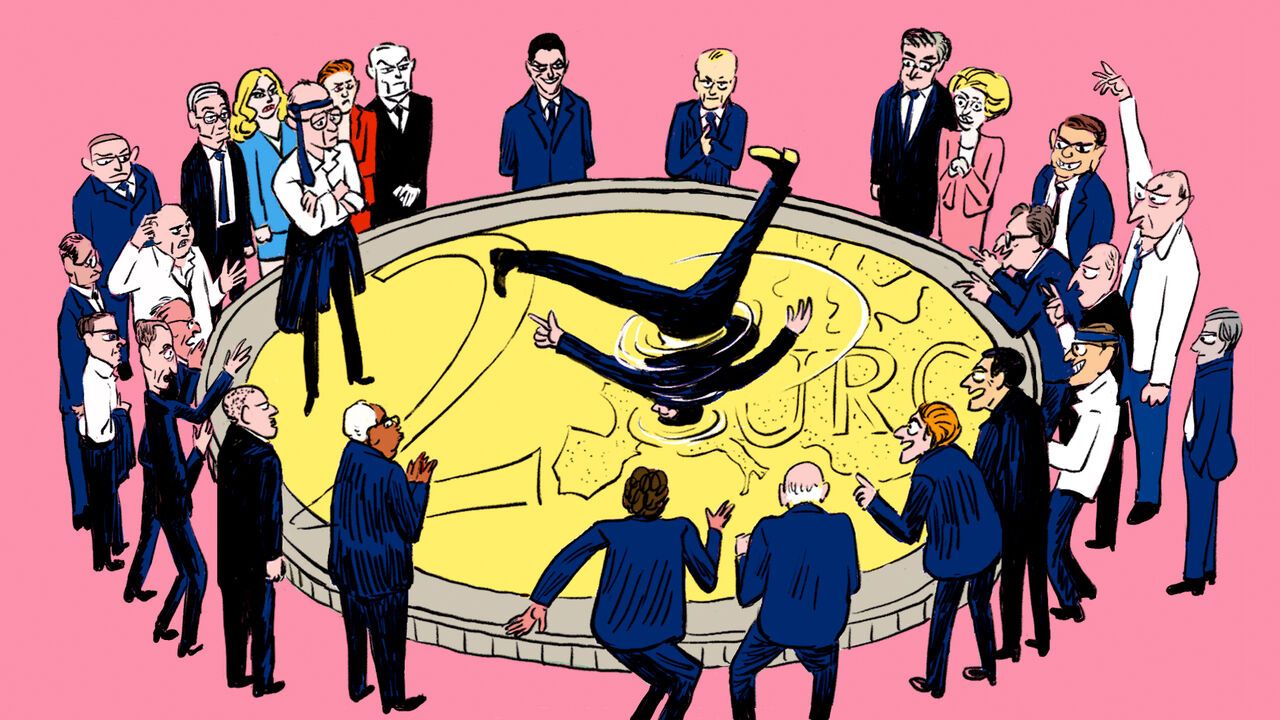
Nobody knows when it will happen exactly, yet everybody knows it will be ugly when it comes. At a European Union summit some time within the next 12 months, the bloc’s 27 national leaders will engage in the modern political equivalent of hand-to-hand combat(肉搏战): agreeing on the EU’s seven-year budget. Veterans of the ritual will arrive in Brussels with a half-dozen shirts at the ready, and whatever stimulants they need to get through it all. In 2013 the process was relatively painless, requiring just 26 hours to seal a deal. The most recent iteration(版本;轮次) still sends shivers down many a Eurocrat’s spine(让许多欧盟官员脊背发凉). At the height of the pandemic in the summer of 2020, presidents and prime ministers started talks at mid-morning on a Friday—and emerged from their windowless summit room at sunrise on Tuesday. The modern-day gladiators were so addled after four days and four nights of haggling that no one could tell who had won.(这些当代角斗士经过四天四夜的讨价还价后神志恍惚,以至于没人说得清谁赢了。)
没有人确切知道它何时会发生,但人人都知道,一旦来临,场面必定难看。在未来12个月内的某次欧盟峰会上,这个集团的27位国家领导人将展开一场现代政治版的肉搏战:就欧盟的七年预算达成一致。这场仪式的老手们会带着半打衬衫和一切能撑过全程的兴奋剂抵达布鲁塞尔。2013年,这一过程相对轻松,仅用26小时就敲定了协议。而最近一轮谈判至今仍让许多欧盟官员脊背发凉。2020年夏天疫情最严重时,各国总统和总理在周五上午十点左右开始谈判——直到周二日出时分才从没有窗户的峰会会议室里走出来。这些当代角斗士经过四天四夜的讨价还价后神志恍惚,以至于没人说得清谁赢了。
To say that this is madness is an insult to the clinically insane.(说这是疯狂,简直是对临床精神病人的侮辱。) Europeans have plenty of worthwhile disagreements over money; they happen in any polity(政体;政治实体). Yet their fiercest one concerns surprisingly little dosh(钱). Public spending in EU countries typically runs to the equivalent of 50% of GDP. In contrast, the EU budget amounts to not much more than 1%. (A union that includes 450m people thus spends less than the government of Denmark, a country of just 6m.) Yet carving up this modest slice of outlays(瓜分这一小部分支出) takes two years of behind-the-scenes preparations. During this time, nominal allies gel into rival factions tearing strips from each other(互相撕扯). The “frugal(节俭的)” countries, led by Germany, are pitted against(与……对立) the supposedly spending-mad “friends of cohesion(凝聚力之友)”, such as Italy and Spain. Outside football tournaments, Europe never looks more divided.
说这是疯狂,简直是对临床精神病人的侮辱。欧洲人在金钱上有大量值得争论的分歧;任何政体都难免如此。然而他们最激烈的争执涉及的金额却少得惊人。欧盟国家的公共支出通常相当于GDP的50%。相比之下,欧盟预算不过略高于1%。(一个拥有4.5亿人口的联盟,其支出竟低于仅有600万人口的丹麦政府。)然而,瓜分这微不足道的一小块支出,却需要两年的幕后筹备。在此期间,名义上的盟友凝结成对立的派系,互相撕扯。“节俭”国家以德国为首,与据称挥霍无度的“凝聚力之友”如意大利和西班牙针锋相对。除了足球赛事之外,欧洲从未显得如此分裂。
A budget that will run through to the mid-2030s should be a chance for the EU to look forward, to forge a common vision of how a group of middling(中等的) powers might navigate a more dangerous world together. Instead it will be a festival of squabbling(争吵). Surely another way is possible. It is not just the hysteria(歇斯底里) of the negotiating process: the way the bloc gathers its funds, and the way it spends them, are both hopelessly out of date(过时的). What would a rational EU budget look like, without all the Sturm und Drang(狂飙突进)?
一份将延续到2030年代中期的预算,本应是欧盟展望未来、凝聚共同愿景的机会——一群中等强国如何携手在一个更危险的世界中前行。然而,它却将沦为一场争吵的盛宴。肯定还有别的出路。问题不仅在于谈判过程的歇斯底里:这个集团筹集资金的方式和花掉资金的方式,都已无可救药地过时。如果没有那些“狂飙突进”式的戏剧性,一份理性的欧盟预算会是什么样子?