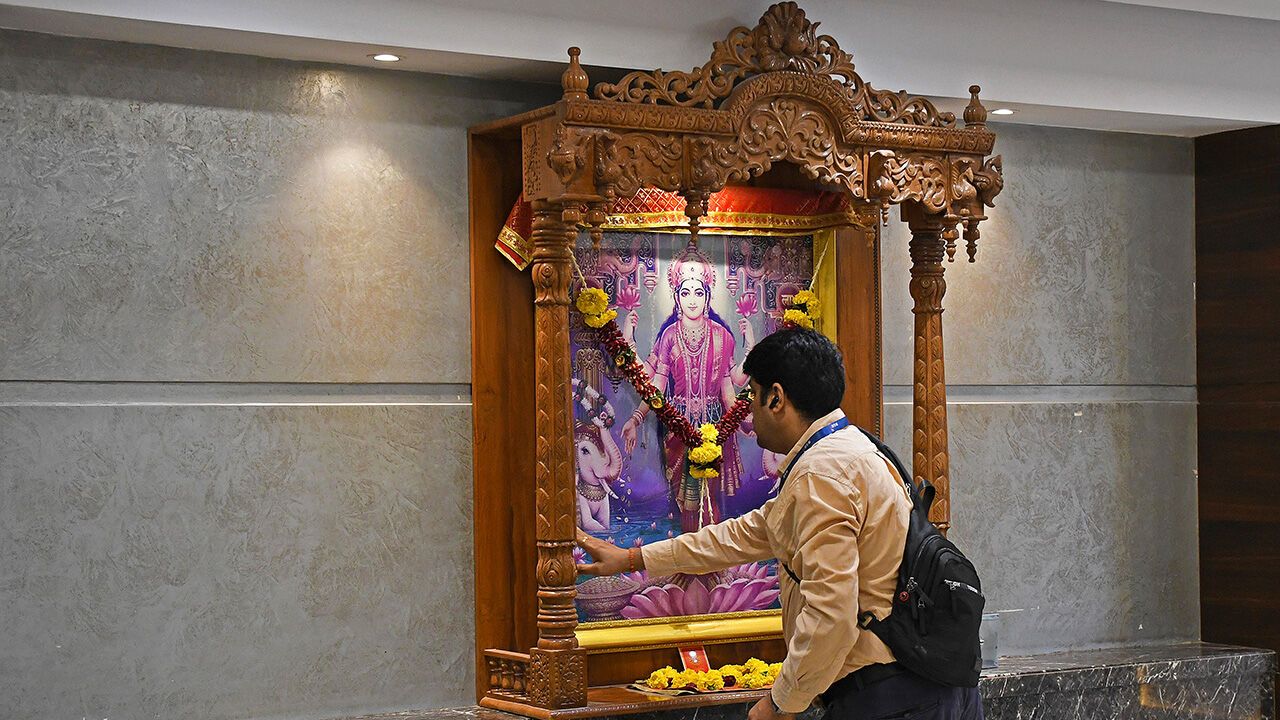
DURING DIWALI, a Hindu festival that falls in November this year, India’s stockbrokers and their families gather for an especially auspicious(吉利的) one-hour trading session in which they place symbolic trades to usher in(开启,迎来) prosperity. They perform “puja(普迦(印度教仪式))” rituals to Lakshmi(财富女神拉克希米), the goddess of wealth, whose likeness hangs in the lobby of the Bombay Stock Exchange. Business-TV channels host astrologers who chart the movement of planets(绘制行星运行图) alongside fund managers speculating about earnings and interest rates.
今年11月,印度教节日排灯节期间,印度的股票经纪人和家人会聚在一起,参加一场特别吉利的、长达一小时的交易时段,进行象征性交易以祈求繁荣。他们向财富女神拉克希米举行“普迦”仪式,孟买证券交易所大厅里就悬挂着她的画像。商业电视频道会邀请占星家与基金经理一同亮相,前者绘制行星运行图,后者则推测盈利和利率走势。
Traders everywhere are a superstitious(迷信的) lot—no wonder(难怪), given how random markets can seem. Americans have lucky ties; Japanese stock-market investors look for omen(预兆)s in the first auction of the year; some Asian businesses pay premiums for things containing auspicious numbers. John Pierpont Morgan, the eponymous(同名的) founder of a big American bank, is said to have subscribed to an astrology newsletter (even if he probably did not really say that “millionaires don’t use astrology; billionaires do”). “Technical analysis”, reading the runes(解读符文(喻指解读图表)) of stock charts and searching for patterns such as “heads and shoulders(头肩顶(技术分析形态))” or a “rising wedge(上升楔形(技术分析形态))”, has a cult-like following(狂热追随者) on many Western trading floors.
各地的交易员都相当迷信——考虑到市场看起来如此随机,这也不足为奇。美国人有幸运领带;日本股市投资者从年度首次拍卖中寻找预兆;一些亚洲企业为含有吉利数字的东西支付溢价。美国大银行摩根大通的同名创始人约翰·皮尔庞特·摩根据说订阅过一份占星通讯(尽管他很可能并未真的说过“百万富翁不用占星;亿万富翁才用”)。在西方许多交易大厅,“技术分析”——解读股票图表的符文,寻找“头肩顶”或“上升楔形”等形态——拥有一种近乎狂热的追随者。
In India, this professional propensity(倾向) meets an astrology market with $7bn in annual revenues. According to a survey by Pew Research Centre, 44% of Indian adults believe in astrology. Horoscopes are drawn up the moment newborns tumble forth(涌出,呱呱坠地). Doctors try to perform C-sections in a priest-appointed lucky time-window. Cars and motorbikes are delivered to buyers at propitious(吉利的,有利的) moments. Why should finance be any different?(金融又怎能例外呢?)
在印度,这种职业倾向与年收入达70亿美元的占星市场相遇。皮尤研究中心的一项调查显示,44%的印度成年人相信占星术。婴儿呱呱坠地的那一刻,星盘就已绘好。医生会尽量在祭司指定的吉时窗口进行剖腹产。汽车和摩托车也会在吉时交付给买家。金融又怎能例外呢?