
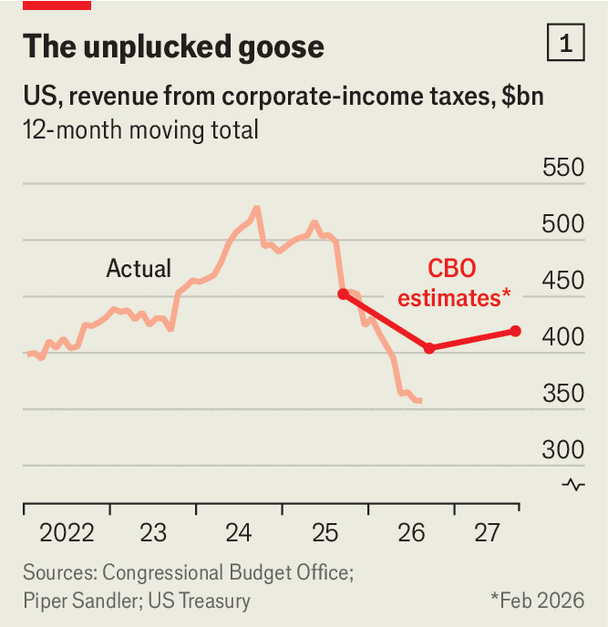
VAST SPENDING on AI infrastructure has created a profit boom. In the past year American pre-tax(税前的) corporate earnings have grown by $1.2trn, or 30%. Companies in the S&P 500 index are handily(轻松地) beating forecasts. And yet Uncle Sam(美国政府的代称) is seeing little of the benefit. Taxes on corporate profits have collapsed (see chart 1l). Government bean-counters(统计人员,会计) did expect lower receipts this year, owing to changes that let firms write off(注销,冲销) more investments against their tax bills. But the scale of the drop has surprised even them, as unusually profitable tech giants are writing off unusually high capital spending. The episode hints at how AI may upend(颠覆,颠倒) tax systems across the world.
人工智能基础设施的巨额支出造就了一轮利润繁荣。过去一年,美国企业税前利润增长了1.2万亿美元,增幅达30%。标普500指数成分股公司的业绩轻松超出预期。然而,美国政府却几乎没能从中分得一杯羹。企业利润税收入已经崩塌(见图表1l)。政府统计人员原本预计今年税收会减少,因为新规允许企业将更多投资从应纳税额中扣除。但下降幅度之大,连他们自己也感到意外——异常赚钱的科技巨头正在注销异常高额的资本支出。这一现象暗示,人工智能可能颠覆全球税收体系。
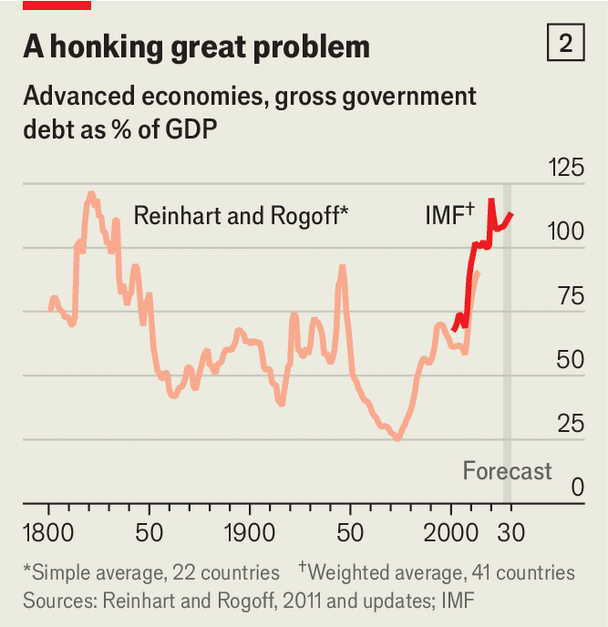
You might think of AI as a godsend(天赐之物,福音) for governments, many of which are accumulating vast debts (see chart 2). Economists expect AI to lift productivity growth, which should create a bigger economy. In a recent paper Karen Dynan, Douglas Elmendorf and Louise Sheiner, three economists, model the potential effects of AI on America’s debt. Higher economic growth could reduce the debt-to-GDP ratio after 30 years by 50% or so of GDP, relative to where it would be otherwise.(更高的经济增长率可能使30年后的债务与GDP之比,相对于原本的水平下降约50%的GDP。)
你或许会认为人工智能是各国政府的福音,毕竟许多政府正在累积巨额债务(见图表2)。经济学家预计人工智能将提升生产率增长,从而做大经济蛋糕。在最近的一篇论文中,三位经济学家Karen Dynan、Douglas Elmendorf和Louise Sheiner模拟了人工智能对美国债务的潜在影响。更高的经济增长率可能使30年后的债务与GDP之比,相对于原本的水平下降约50%的GDP。
Good news? Kind of. America’s debt ratio keeps rising—just less quickly than before. Even in an America where AI turbocharge(大力推动,加速)s the economy, by the 2050s the government could be much more indebted(负债的) than today. The risk is that tax receipts continue to lag behind(落后于) spending, sometimes by many trillions of dollars. It is even possible that AI may not reduce budget deficit(赤字)s, but widen them.
好消息?算是吧。美国的债务比率仍在上升——只是比以前慢了一些。即便在人工智能为经济注入强劲动力的美国,到2050年代政府负债也可能远高于今天。风险在于,税收收入持续落后于支出,有时差距高达数万亿美元。甚至可能出现这种情况:人工智能非但没能缩减预算赤字,反而将其扩大。
Now my advice for those who die
现在给那些将死之人的忠告
Declare the pennies on your eyes
申报你眼中的便士