ON SEPTEMBER 26TH Donald Trump rejected an Iranian ceasefire proposal that would have reopened the Strait of Hormuz within seven days.(唐纳德·特朗普拒绝了一项伊朗提出的停火方案,该方案本可在七天内重新开放霍尔木兹海峡。) Iran wants a deal because it is “losing so badly(输得太惨),” said the president. Mr Trump and many of his advisers reckon that America has more to gain by waiting(等待能获得更多好处).
9月26日,唐纳德·特朗普拒绝了一项伊朗提出的停火方案,该方案本可在七天内重新开放霍尔木兹海峡。总统表示,伊朗之所以想要达成协议,是因为它“输得太惨了”。特朗普及其许多顾问认为,美国等待下去能获得更多好处。
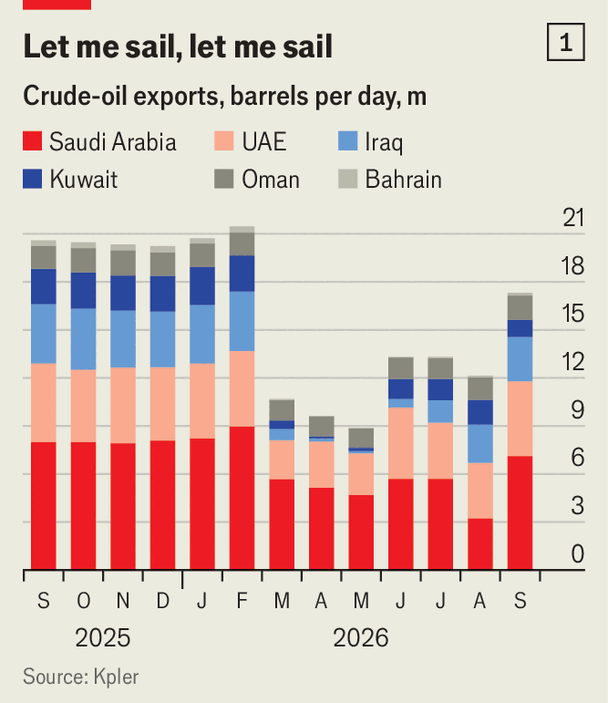
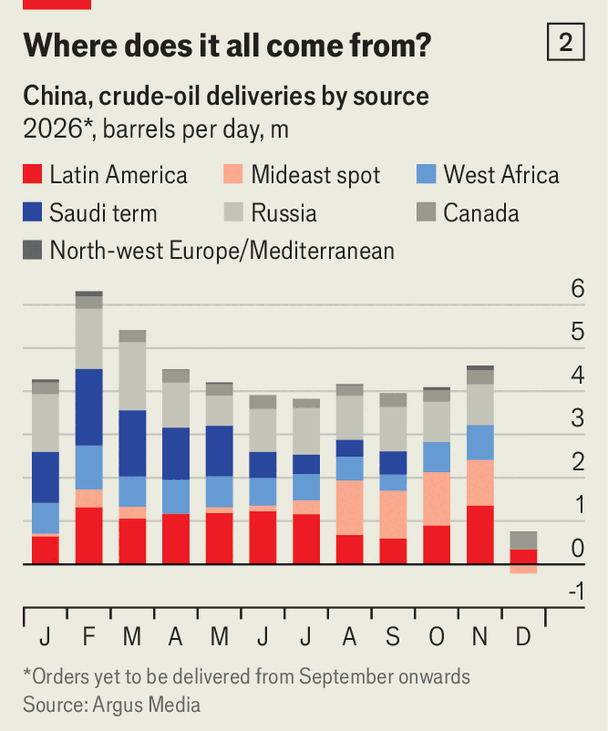
The volume of oil coming out of the Gulf would seem to prove him right(证明他是对的). Kpler, a shiptracker, estimates that the region’s Arab states have shipped, on average, 17m barrels per day (bpd) of crude oil and refined products so far in September, if flows through Hormuz and those bypassing it via pipelines are included.(船舶追踪机构 Kpler 估计,若将经霍尔木兹海峡的运输量和通过管道绕行的运输量都计算在内,该地区阿拉伯国家9月迄今平均每日出口1700万桶原油和成品油。) That is the highest volume since February and close to the pre-war daily total of 21m (see chart 1). Iran, by contrast(相比之下), is exporting just 200,000 bpd, less than a tenth of what it shipped before the conflict began. From Washington, 7,000 miles away, Iran’s chokehold(钳制、扼制) on Gulf oil appears to be loosening.
海湾地区的石油出口量似乎证明了他的判断。船舶追踪机构 Kpler 估计,若将经霍尔木兹海峡的运输量和通过管道绕行的运输量都计算在内,该地区阿拉伯国家9月迄今平均每日出口1700万桶原油和成品油。这是2月以来的最高水平,接近战前每日2100万桶的总量(见图表1)。相比之下,伊朗每日仅出口20万桶,不到冲突爆发前出口量的十分之一。从7000英里外的华盛顿来看,伊朗对海湾石油的钳制似乎正在松动。
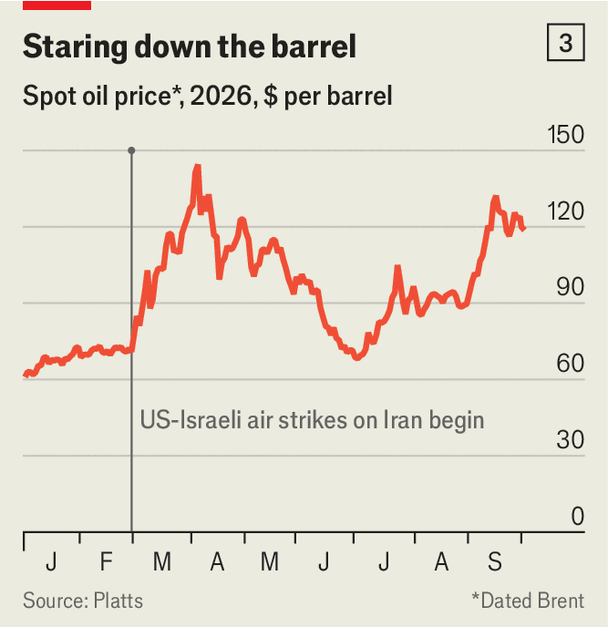
But is that right? Brent crude, the global benchmark, remains stuck at around $100 a barrel—around 40% higher than in June, when America and Iran sealed a (temporary) deal, even though export volumes were a quarter lower then.(全球基准布伦特原油仍徘徊在每桶100美元左右——比6月美国和伊朗达成(临时)协议时高出约40%,尽管当时的出口量比现在低四分之一。) The problem is not eye-watering(令人咋舌的) freight costs: rates for charter(租赁)ing tankers are at record levels, but Brent futures are quoted “free-on-board(离岸价)”, reflecting the price of crude at loading, not delivery. Instead, three explanations stand out(尤为突出): crude supply still lags behind demand; the prospect of an American diesel-export ban is distorting markets; and fears are growing that Iran may attack ships or energy infrastructure again.
但真是这样吗?全球基准布伦特原油仍徘徊在每桶100美元左右——比6月美国和伊朗达成(临时)协议时高出约40%,尽管当时的出口量比现在低四分之一。问题不在于令人咋舌的运费:租船费率处于历史高位,但布伦特期货报价为“离岸价”,反映的是装货时的原油价格,而非交货价。相反,有三个解释尤为突出:原油供应仍落后于需求;美国可能实施柴油出口禁令正在扭曲市场;以及人们越来越担心伊朗可能再次袭击船只或能源基础设施。