ON THE NIGHT of the midterm elections(中期选举) in 2018, Nancy Pelosi(南希·佩洛西,美国众议院前议长), preparing to reclaim her position as the Speaker of the House of Representatives, said Democrats’ victory was about two things: restoring Congress as a check to Donald Trump, then in his first term, and stopping “assaults” on health care. The year before, Republicans had attempted to repeal(废除) Barack Obama’s signature health-care law, the Affordable Care Act (ACA)(《平价医疗法案》,又称奥巴马医改). Democrats jumped on the issue(抓住该议题大做文章); one analysis found that it was the most common topic of their ads in the months before the election.
2018年中期选举之夜,南希·佩洛西准备重新夺回众议院议长之位,她表示民主党的胜利关乎两件事:恢复国会作为对当时第一任期的唐纳德·特朗普的制衡,以及阻止对医疗保健的“攻击”。前一年,共和党人曾试图废除巴拉克·奥巴马的标志性医疗法案——《平价医疗法案》(ACA)。民主党人抓住这一议题大做文章;一项分析发现,在选举前的几个月里,这是他们广告中最常见的主题。
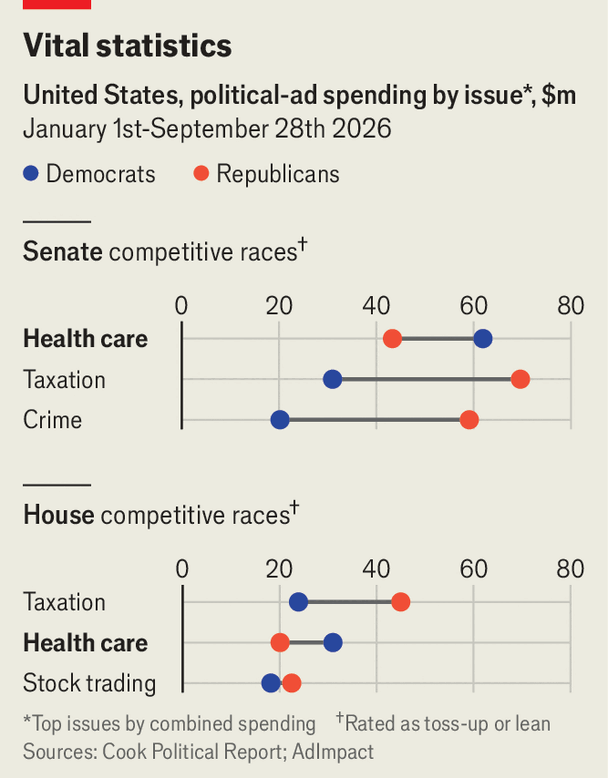
This year, health care is once again a vulnerability(软肋,弱点) for Republicans. In one July poll from KFF(凯撒家庭基金会,美国健康政策研究机构), a health-research outfit, more Americans reported being anxious about affording health care than petrol, housing or food. In a March poll from Gallup, 61% of Americans said they worried a great deal about the availability and affordability(可负担性) of health care, more than about the economy or inflation. So, as part of a broader message on affordability, health care is again the most common issue in Democrats’ campaign ads. Candidates have varied ideas of how to respond—the progressive wing has renewed its push for universal coverage, while moderates want more incremental reform.(候选人们对如何应对有不同想法——进步派重新推动全民医保,而温和派则希望更渐进的改革。) But they are hoping that anxiety over health costs will be enough to secure victory.
今年,医疗保健再次成为共和党的软肋。健康研究机构KFF七月的一项民调显示,更多美国人表示担心负担不起医疗保健,其比例超过了对汽油、住房或食物的担忧。盖洛普三月的一项民调中,61%的美国人表示非常担心医疗保健的可及性和可负担性,比例高于对经济或通胀的担忧。因此,作为更广泛的“可负担性”信息的一部分,医疗保健再次成为民主党竞选广告中最常见的议题。候选人们对如何应对有不同想法——进步派重新推动全民医保,而温和派则希望更渐进的改革。但他们希望,对医疗成本的焦虑足以确保胜利。
Unlike in 2018, the ACA is now unravelling(瓦解,崩溃), due to Republicans’ cuts to subsidies(补贴) for insurance bought on its exchanges and to Medicaid(美国医疗补助计划,为低收入人群提供医保), a health-care programme for the poor. However, there are broader pressures on health care, too. Insurance prices in 2026 rose at their fastest rate in 15 years, driven by expensive new treatments for obesity and cancer, as well as the rapid growth in artificial-intelligence tools that help hospitals and clinics maximise charges.(2026年,保险价格以15年来最快的速度上涨,推动因素包括昂贵的肥胖和癌症新疗法,以及帮助医院和诊所最大化收费的人工智能工具的迅速增长。) The outlook may darken in October, when the half of the population that obtains insurance through their jobs will receive notices of costs for 2027. Marsh’s, a consultancy(咨询公司), expects prices for employer-sponsored health insurance(雇主提供的医疗保险) to rise by an average of 8%, even faster than this year.
与2018年不同,由于共和党削减了在ACA交易市场上购买的保险以及针对穷人的医疗补助计划(Medicaid)的补贴,ACA如今正在瓦解。然而,医疗保健还面临更广泛的压力。2026年,保险价格以15年来最快的速度上涨,推动因素包括昂贵的肥胖和癌症新疗法,以及帮助医院和诊所最大化收费的人工智能工具的迅速增长。10月前景可能更加黯淡,届时通过工作获得保险的那一半人口将收到2027年的费用通知。咨询公司Marsh预计,雇主提供的医疗保险价格平均将上涨8%,比今年还要快。