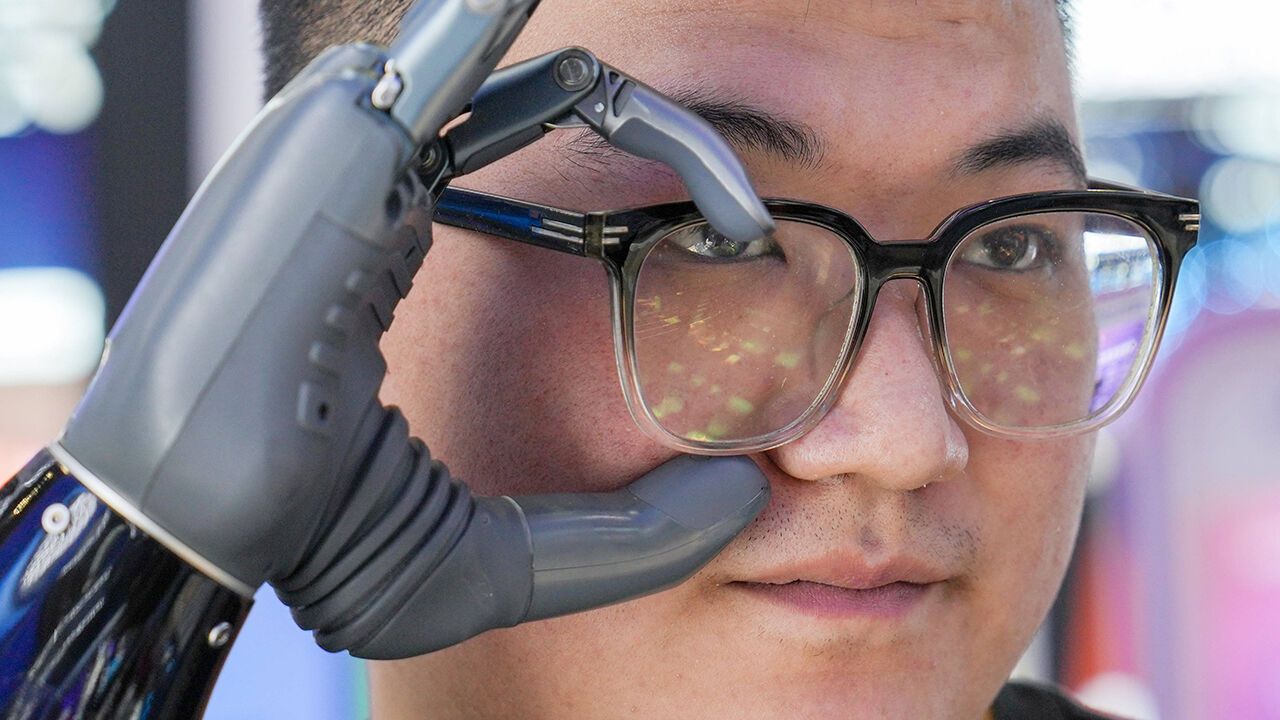
The exhibition hall at BrainCo, a “neuro-tech” startup based in the city of Hangzhou, showcases just how much its wearable devices are capable of. At one exhibit an amputee(截肢者) plays the piano before easily removing a bionic(仿生的) arm that can be attached without surgery. Elsewhere another amputee with an artificial leg paces back and forth, challenging onlooker(旁观者)s to guess which limb is mechanical. BrainCo’s devices are not only for victims of serious accidents. At another station, your correspondent is asked to lie down and don(戴上) a mask that pumps low-amplitude(低振幅的) electrical micro-currents into his frontal lobe(额叶), supposedly to induce(诱导,引起) relaxation.
位于杭州的“神经科技”初创公司BrainCo的展厅,充分展示了其可穿戴设备的能力。在一个展位上,一位截肢者弹奏钢琴,随后轻松卸下一条无需手术即可安装的仿生手臂。在另一处,另一位戴着义肢的截肢者来回踱步,让围观者猜猜哪条腿是机械的。BrainCo的设备并非只面向严重事故的受害者。在另一个展台,本刊记者被要求躺下,戴上一个面罩,它向他的额叶输送低振幅电微电流,据称可以诱导放松。
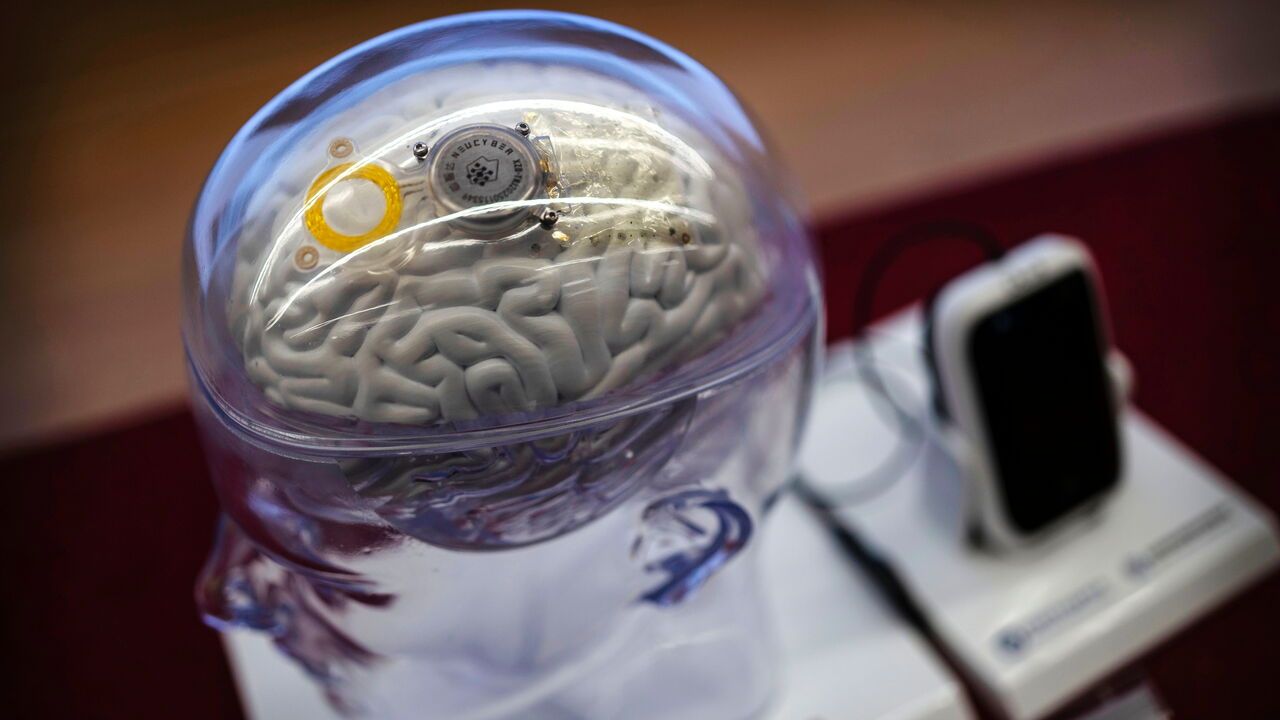
For the past decade “brain-computer interface(脑机接口)s” (BCIs)—machines that can deliver signals to and receive them from the human brain—have been closely associated with Neuralink, an American startup founded by Elon Musk in 2016. Neuralink was the first company to conduct trials of wireless brain implants that allow severely disabled people to control computers for long periods of time with only their thoughts and no additional hardware.(Neuralink是第一家开展无线脑植入物试验的公司,这些植入物能让重度残疾人士仅凭意念、无需额外硬件,就能长时间控制电脑。)
过去十年,“脑机接口”(BCI)——一种能向人脑发送信号并从中接收信号的机器——一直与Neuralink紧密联系在一起。Neuralink是埃隆·马斯克于2016年创立的美国初创公司。它是第一家开展无线脑植入物试验的公司,这些植入物能让重度残疾人士仅凭意念、无需额外硬件,就能长时间控制电脑。
China, however, is eager to catch up. The central government’s latest five-year plan, released earlier this year, includes neuro-tech as one of the industries of the future that China will seek to dominate, alongside others such as quantum computing, robotics and fusion power.(今年早些时候发布的中央政府最新五年规划,将神经科技列为中国力求主导的未来产业之一,与量子计算、机器人技术和聚变能等并列。) Already the state had been channelling resources to companies, universities and regulatory bodies in an effort to bridge the gap(缩小差距) with America. In 2024 ethical guideline(伦理准则)s for BCI research were put in place by the ministry for science and technology. In 2025 standard national fees and billing code(计费代码)s were introduced in hospitals to make it easier for the technology to be adopted for medical purposes. This autumn the first class of undergraduate(本科生)s majoring in BCI technology will commence(开始) classes at Tianjin University, the first in the world to offer such a programme.
然而,中国急于追赶。今年早些时候发布的中央政府最新五年规划,将神经科技列为中国力求主导的未来产业之一,与量子计算、机器人技术和聚变能等并列。国家一直在向企业、高校和监管机构输送资源,以缩小与美国的差距。2024年,科技部制定了脑机接口研究的伦理准则。2025年,医院引入了全国统一收费标准和计费代码,以便该技术更容易用于医疗目的。今年秋季,首批脑机接口技术专业的本科生将在天津大学开课,该校是全球首个开设此类专业的高校。