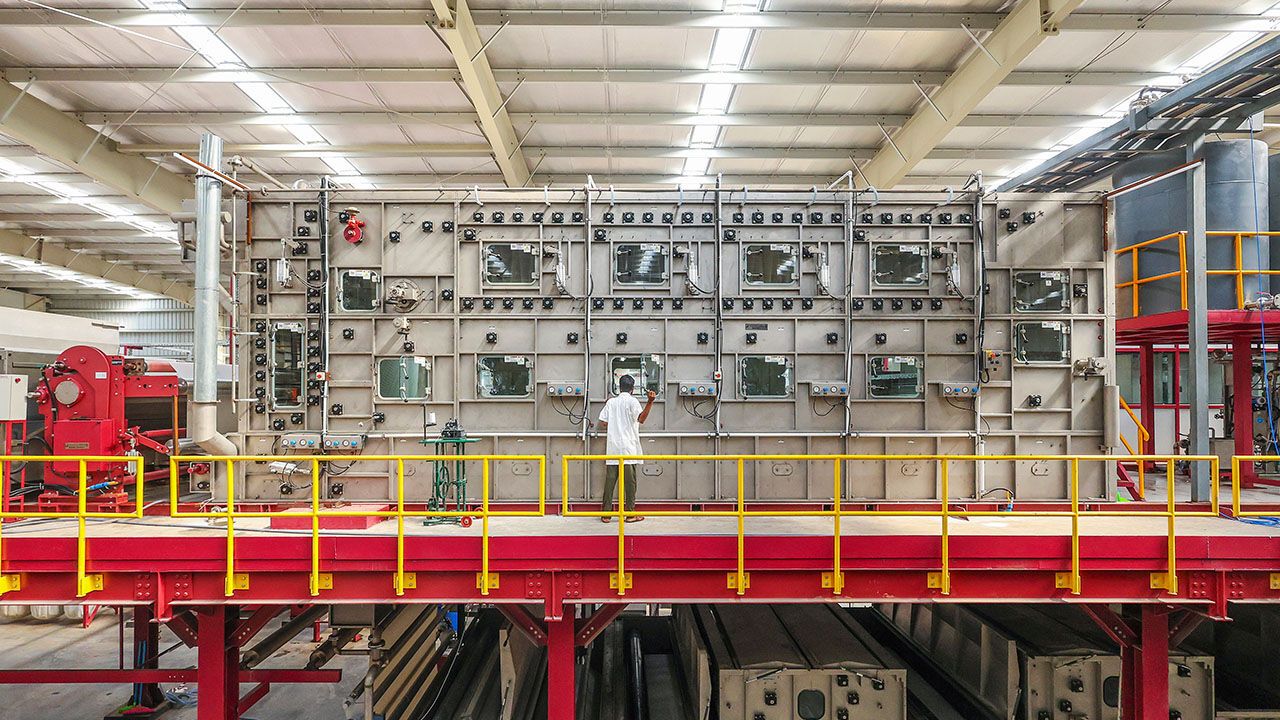
The newest factory of Raghuvir Exim, an Indian textile manufacturer, is a sight to behold(叹为观止的景象). The plant, which makes bedding for export, covers around 200 acres (80 hectrares) on the outskirts(郊区,市郊) of Ahmedabad, in the western state of Gujarat. Raghuvir Exim has built dormitories(宿舍) to house the 5,000 workers that will be needed when the site is at full capacity(满负荷运转). Women, few of whom in India work, have been actively recruited.(女性——在印度很少外出工作——已被积极招募。) The factory uses top-quality European machines, rather than cheaper Chinese ones. And it is mostly powered by solar energy.
印度纺织制造商拉古维尔出口公司的最新工厂令人叹为观止。这座生产出口床上用品的工厂位于西部古吉拉特邦艾哈迈达巴德市郊,占地约200英亩(80公顷)。拉古维尔出口公司已修建宿舍,以容纳工厂满负荷运转时所需的5000名工人。公司还积极招募女性员工——在印度,女性就业者寥寥无几。工厂采用欧洲顶级机器,而非更便宜的中国设备,并且主要依靠太阳能供电。
Yet it had a rocky start(艰难的开端) after opening in August last year. The factory initially operated at only 15% or so of its capacity, according to Hardik Agarwal, part of the family company’s third generation. A 50% tariff on Indian exports imposed by America around the same time hit sales hard.(美国大约同时征收的50%关税沉重打击了销售。)
然而,该工厂自去年8月开业以来起步艰难。据家族企业第三代成员哈迪克·阿加瓦尔透露,工厂最初产能利用率仅为15%左右。与此同时,美国对印度出口商品征收50%的关税,严重打击了销售。
The recent history of Indian manufacturing has involved many such disappointments. In 2014 Narendra Modi, the prime minister, unveiled a programme of deregulation and infrastructure investment, called “Make in India”, declaring that by 2022 the country would earn a quarter of national income from manufacturing.(2014年,总理纳伦德拉·莫迪推出了一项名为“印度制造”的放松管制和基础设施投资计划,宣称到2022年制造业将贡献国民收入的四分之一。) As of last year the share was 16%, having barely budge(移动,改变)d over the preceding decade.
印度制造业的近期历史充满了许多这样的失望。2014年,总理纳伦德拉·莫迪推出了一项名为“印度制造”的放松管制和基础设施投资计划,宣称到2022年,制造业将贡献国民收入的四分之一。然而截至去年,这一比例仅为16%,在过去十年中几乎停滞不前。
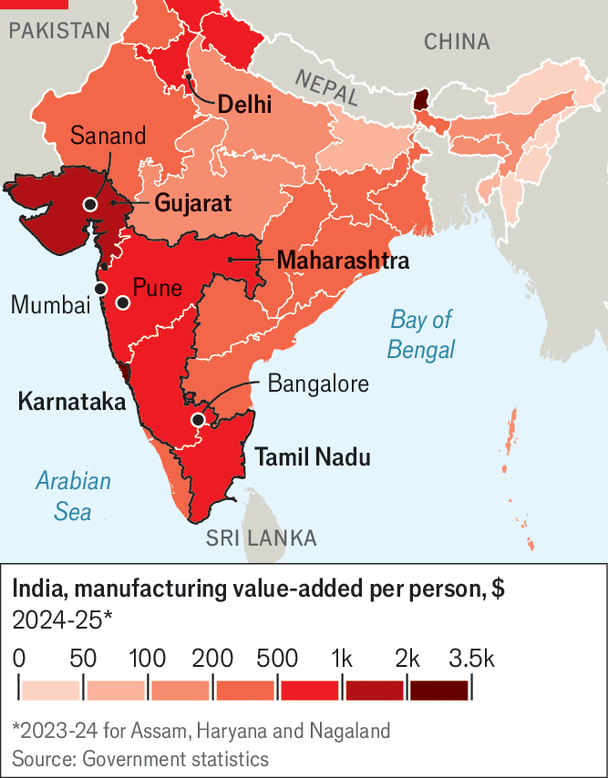
Elephantine ambitions
大象般的雄心