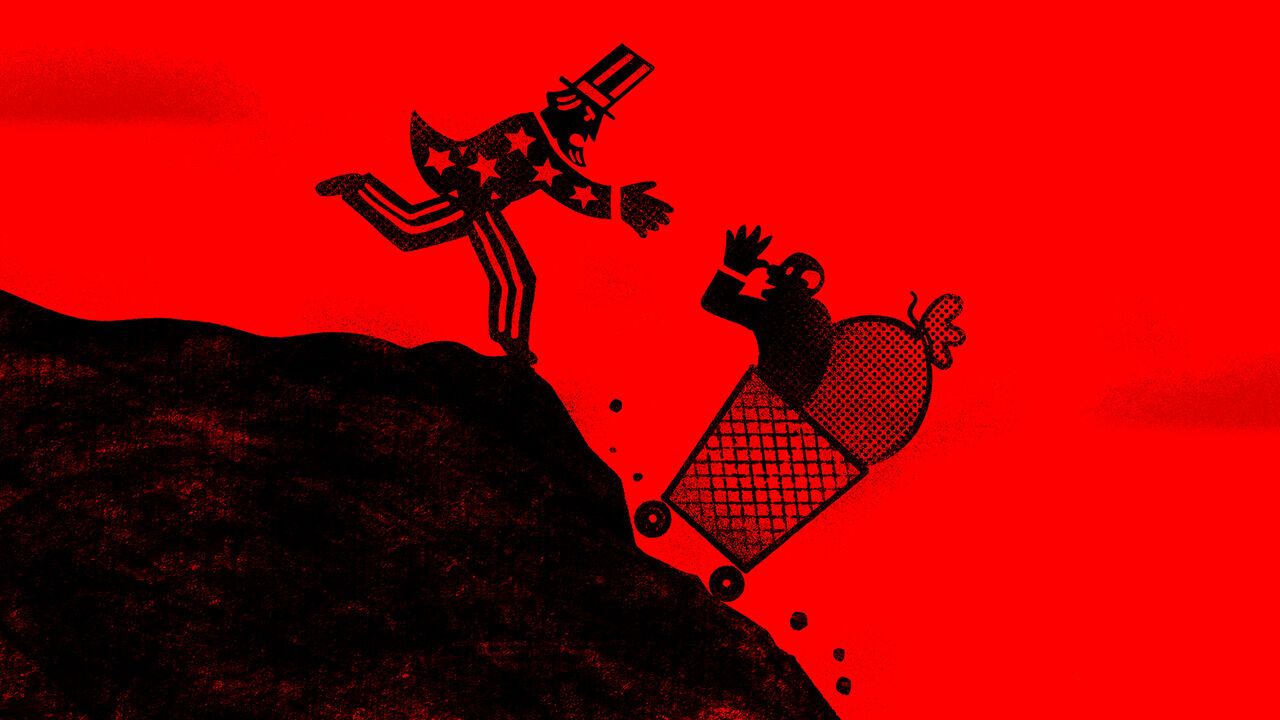
Few things irk(使恼火,使厌烦) the rich—and, for that matter(就此而言,同样地), the not so rich—more than paying taxes. Many people would rather lose money backing a lame horse than hand it to the government. The pain of such payments once moved Americans to revolution. It still moves New Yorkers to head for Florida, or middle-ranking bankers to decamp to Milan.(这种纳税之痛如今仍驱使纽约人迁往佛罗里达,或让中层银行家远走米兰。)
最让富人——以及不那么富的人——恼火的,莫过于缴税。许多人宁可把钱赔在一匹瘸腿马上,也不愿交给政府。这种纳税之痛曾促使美国人揭竿而起,如今仍驱使纽约人迁往佛罗里达,或让中层银行家远走米兰。
Recently this tax-aversion has given rise to America’s hottest investment strategy: tax-aware investing, or “tax alpha”. Whereas “alpha” usually refers to extra returns over some benchmark, tax alpha refers to clever use of America’s labyrinthine(错综复杂的,迷宫般的) tax code. It often means creating losses to set against(抵消,与……相抵) gains elsewhere, in order to reduce what is due to the Internal Revenue Service (IRS)(美国国税局,负责征收联邦税并执行税法). It has long featured in the richest investors’ portfolios. Lately it has become more sophisticated(精密的,复杂高级的) and more widespread.
近来,这种避税心理催生了美国最热门的投资策略:税务感知投资,即“税务阿尔法”。通常“阿尔法”指超越某一基准的超额收益,而税务阿尔法指的是巧妙利用美国错综复杂的税法。它往往意味着制造亏损,用以抵消其他地方的收益,从而减少应向美国国税局(IRS)缴纳的税款。这一策略长期存在于最富有投资者的投资组合中,近来则变得更为精细,也更为普及。
Tax-aware investing “for babies((此处指)入门版、最简单的版本)” (not literally: for that, see last week’s Buttonwood) involves choosing investment vehicle((投资)工具,载体)s for their tax benefits, says Brent Sullivan of Tax Alpha Insider, a blog. An investor might shift from mutual fund(共同基金)s, which generate taxable gains frequently, to exchange-traded funds (ETFs) that time((动词)安排……的时点) payouts strategically.
博客“税务阿尔法内幕”的布伦特·沙利文说,“婴儿版”税务感知投资(并非字面意思,字面版本请见上周的梧桐树专栏)指的是根据税收优惠来选择投资工具。投资者可能会从频繁产生应税收益的共同基金,转向策略性安排派息时点的交易所交易基金(ETF)。