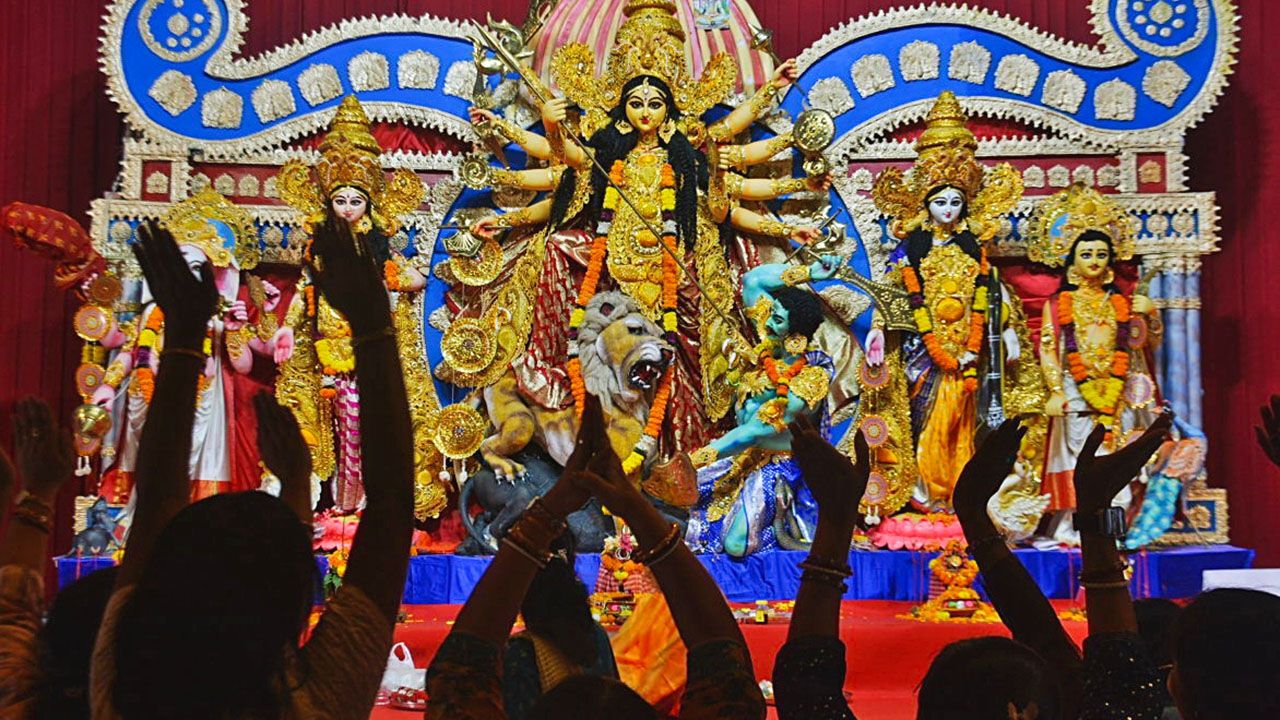
Mumbai’s festive season kicks off(开始) with Ganesh Chaturthi(象头神节), which this year fell in September. Hindus bring idols of the elephant-headed god into their homes. He stays for up to ten days before the often-colossal(巨大的) statues are immersed(浸入) in the Arabian Sea. Mumbaikars also feast on his favourite food: dumplings stuffed with grated coconut and jaggery(粗糖) (set sugar-cane juice). Then come nine nights of dancing and fasting for Navratri(九夜节), celebrating nine avatars(化身) of the goddess Durga. On the eighth day young girls representing aspects of Durga are given suji ke halwe, a mix of semolina, ghee and sugar.
孟买的节日季以象头神节拉开帷幕,今年该节日落在九月。印度教徒将象头神的塑像迎入家中,神像会停留长达十天,之后这些往往巨大的雕像会被浸入阿拉伯海。孟买人还会享用象头神最爱的食物:用磨碎的椰子和粗糖(熬煮过的甘蔗汁)做馅的饺子。接着是为期九夜的九夜节,人们跳舞、斋戒,庆祝杜尔迦女神的九种化身。在第八天,代表杜尔迦不同化身的年轻女孩会收到苏吉哈尔瓦——一种由粗粒小麦粉、酥油和糖混合而成的甜食。
Next is Dussehra(十胜节), marking Lord Ram’s victory over the demon king Ravana—feted(庆祝) across northern India with tens of millions of jalebiya, deep-fried batter coils soaked in syrup. The sugar rush(糖分兴奋) peaks with Diwali(排灯节), the festival of lights, as families and offices exchange elaborate(精美的) gift boxes of mithaiyan, traditional sweets.
接下来是十胜节,纪念罗摩神战胜魔王罗波那——印度北部各地会制作数千万个杰莱比来庆祝,这是一种浸泡在糖浆中的油炸面糊圈。糖分带来的兴奋在排灯节达到顶峰,这个灯节期间,家庭和办公室之间会互赠包装精美的传统甜食礼盒。
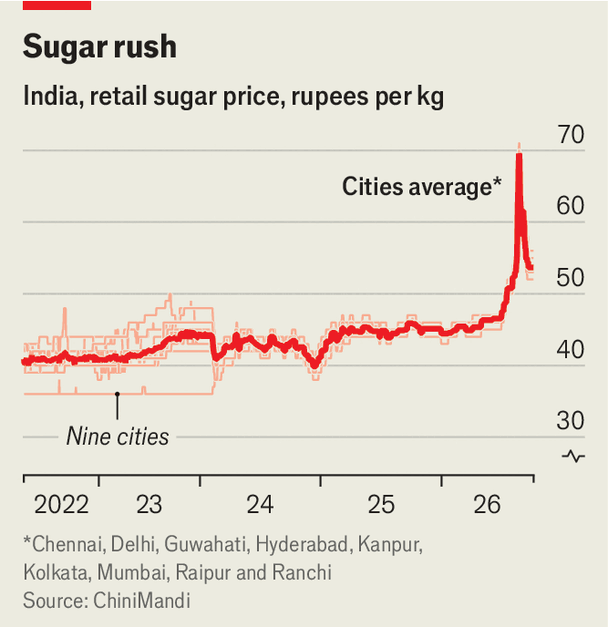
This year such treats may taste bittersweet(苦乐参半的). India’s sugar prices have spiked(飙升). A kilo of sugar now costs 53 rupees (55 cents) in Mumbai, a 15% increase from 46 rupees in June. Anyone trying to beat the festive rush(赶在节日抢购潮之前) was stung(被宰) even more: in late August prices reached 70 rupees in several cities (see chart), a rise of more than 50% in two months. Inflation more broadly, at 4.8%, is above the Reserve Bank of India(印度央行)’s target of 4%, prompting(促使) the first interest-rate rise in four years on October 7th.
今年,这些甜食尝起来可能苦乐参半。印度糖价已经飙升。孟买一公斤糖现在售价53卢比(55美分),比6月的46卢比上涨了15%。任何试图赶在节日抢购潮之前购买的人被宰得更狠:8月底,几个城市的价格达到70卢比(见图表),两个月内涨幅超过50%。更广泛的通胀率为4.8%,高于印度央行4%的目标,促使央行在10月7日进行了四年来首次加息。