NO FORECAST IS ever a complete consensus(共识) in financial markets. But some get close. At the end of 2025 the idea that the dollar would weaken was one. Dollar bulls(看多者、多头) were few. Most big investment banks and asset-management firms made bearish(看空的、悲观的) predictions. So did The Economist: in February we suggested that the greenback might extend last year’s miserable run, as its safe-haven status continued to fade.(《经济学人》也不例外:今年2月,我们曾撰文指出,随着美元的避险地位持续褪色,美元可能延续去年的惨淡走势。)
在金融市场上,从来没有哪一项预测能达成完全共识。但有些预测接近共识。2025年底,“美元将走弱”就是这样一个近乎共识的判断。看多美元的人寥寥无几。大多数大型投资银行和资产管理公司都做出了看空预测。《经济学人》也不例外:今年2月,我们曾撰文指出,随着美元的避险地位持续褪色,美元可能延续去年的惨淡走势。
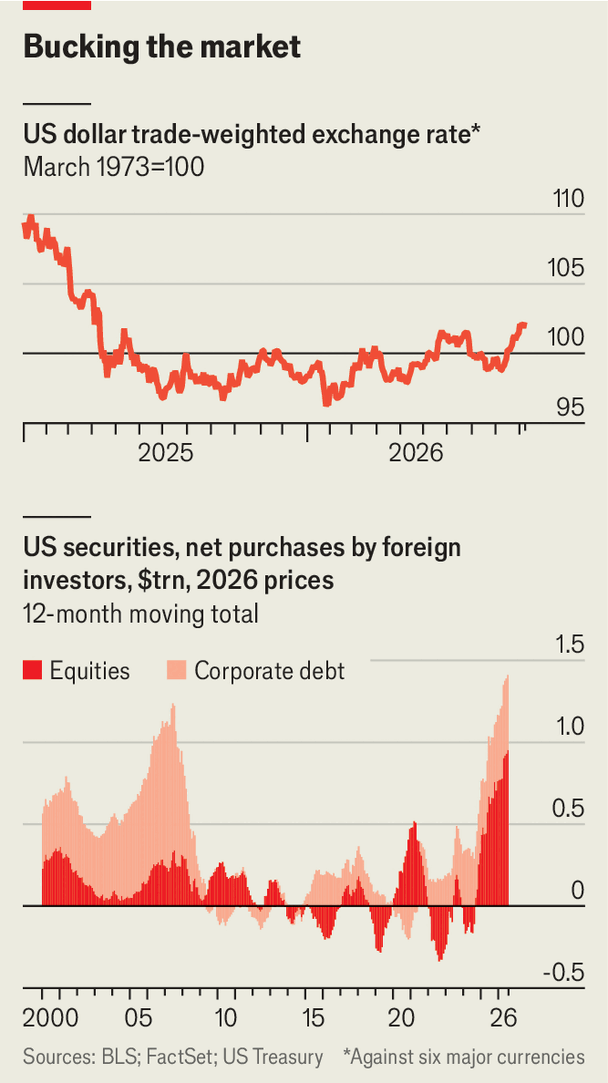
So far, so wrong(到目前为止,大错特错). The DXY(美元指数) index, which measures the dollar against a small basket of rich-world currencies, has risen by 4% in 2026 (see chart). It is at its highest since Donald Trump began his trade world war in April last year. Several factors, not least(尤其是、特别是) global enthusiasm for American stocks, have helped frustrate(挫败、使受挫) the dollar doomsters(末日论者、看空者). But these factors will not support the greenback for ever.
到目前为止,这个预测大错特错。衡量美元对一篮子富裕国家货币汇率的DXY指数,2026年已上涨4%(见图表)。这是自去年4月唐纳德·特朗普发动全球贸易战以来的最高水平。多个因素——尤其是全球对美国股市的热情——让看空美元的人屡屡失算。但这些因素不会永远支撑美元。
The movements of other currencies are part of the explanation. Investors have soured on(对……失去好感、看空) the euro, in particular. It has slid from $1.17 to around $1.12, owing to growing worries about political and fiscal(财政的) stability in Europe’s currency union. The yield(收益率) on French ten-year government bonds has risen from 3.5% to 4.9% this year amid fears of fiscal mayhem(混乱、大破坏), and is now around 1.3-1.4 percentage points above the German equivalent(德国同期国债). Investors dumping euros have only so many places to go: the dollar is an obvious choice (the euro is down against sterling and the yen, too).(抛售欧元的投资者可去之处有限:美元是显而易见的选择(欧元对英镑和日元也下跌了)。)
其他货币的走势是部分原因。投资者尤其对欧元失去了信心。由于对欧洲货币联盟政治和财政稳定性的担忧日益加剧,欧元已从1.17美元跌至约1.12美元。今年,在财政混乱的担忧下,法国十年期国债收益率从3.5%升至4.9%,目前比德国同期国债高出约1.3至1.4个百分点。抛售欧元的投资者可去之处有限:美元是显而易见的选择(欧元对英镑和日元也下跌了)。