Four years ago Europe was scrambling to replace 40% of its gas imports after being cut off from Russian pipelines amid the war in Ukraine.(四年前,乌克兰战争爆发,俄罗斯管道天然气供应中断,欧洲慌忙设法填补其天然气进口中40%的缺口。) It turned to Qatar, then the world’s biggest producer of liquefied natural gas (LNG). “We’ve been reliable for more than 26 years,”the Gulf state’s energy minister, Saad al-Kaabi(卡塔尔能源大臣), boasted at the time in his gilded(镀金的、金碧辉煌的) office. “We have never missed a shipment.”
四年前,乌克兰战争爆发,俄罗斯管道天然气供应中断,欧洲慌忙设法填补其天然气进口中40%的缺口。它转向了卡塔尔——当时全球最大的液化天然气(LNG)生产国。“我们可靠了超过26年,”这个海湾国家的能源大臣萨阿德·卡比当时在他金碧辉煌的办公室里夸口道,“我们从未漏发过一船货。”
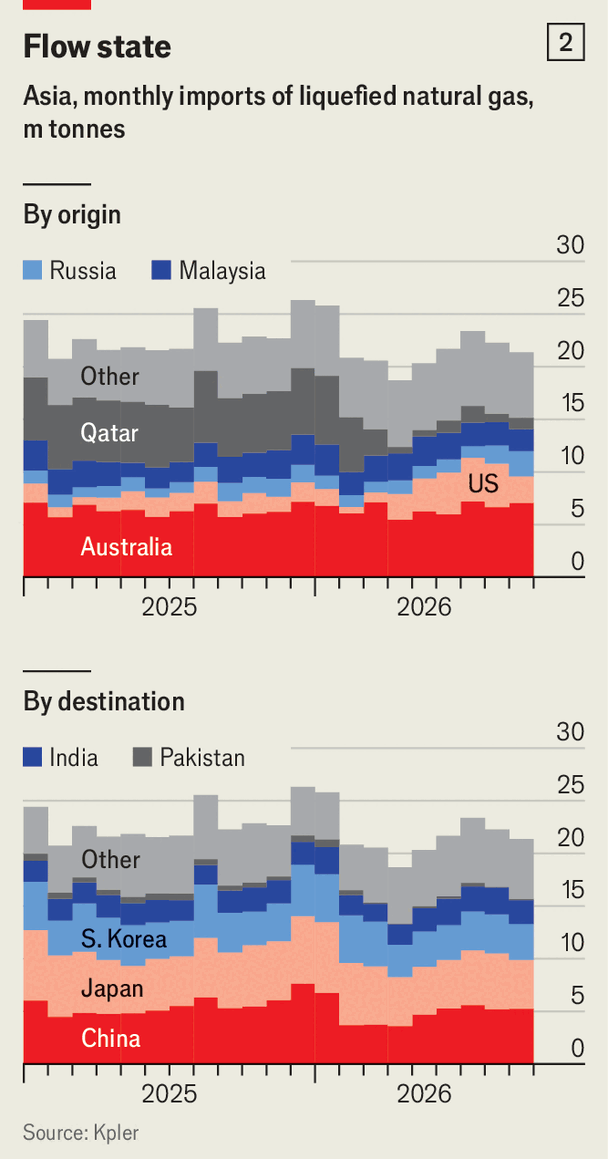
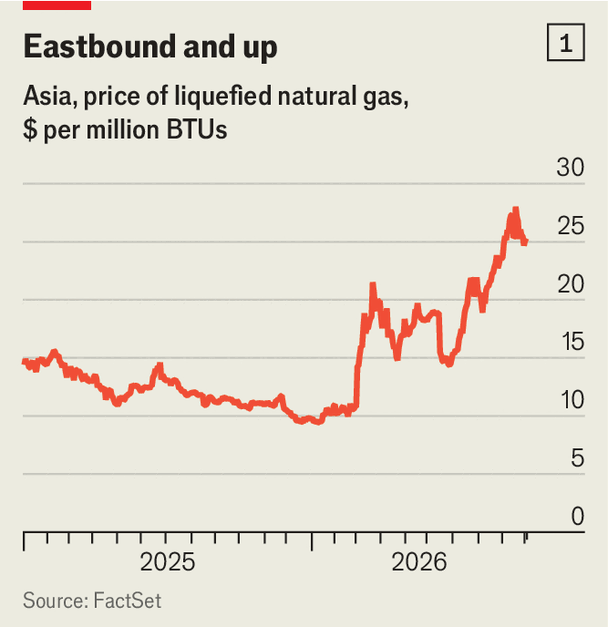
Today the boast rings hollow(听起来空洞无力). In March, when Iran shut the Strait of Hormuz(霍尔木兹海峡) after being attacked by America and Israel, Qatar declared force majeure(不可抗力) and told buyers it could not fulfil its contracts. It has since shipped just 98 cargoes, 536 fewer than in the same period in 2025. The shortfall(缺口、短缺) is 39m tonnes, 9% of global supply last year, and counting(而且还在增加). At around $25 per million British thermal units(英热单位) (mmBtu), LNG prices in Asia are 140% higher than before the war (see chart 1 ).
如今,这番豪言听起来空洞无力。今年3月,伊朗在遭到美国和以色列攻击后封锁了霍尔木兹海峡,卡塔尔随即宣布不可抗力,告知买家无法履行合同。此后它仅发出98船货,比2025年同期少了536船。缺口达3900万吨,相当于去年全球供应量的9%,而且还在扩大。亚洲LNG价格约为每百万英热单位25美元,比战前高出140%(见图表1)。
Optimists, or whoever passes for(算得上、被当作) one in the circumstances, point out that this is still far below the peak of $70 in 2022—even though a sixth of the world’s supply is out of action(停摆、无法运作). Asia, which used to receive over 80% of Qatari exports, has managed to secure almost as much as it typically needs from America, Australia, Malaysia, Nigeria and other producers.(亚洲过去接收卡塔尔出口量的80%以上,如今已设法从美国、澳大利亚、马来西亚、尼日利亚等生产国获得几乎与往常需求相当的数量。) Asian LNG imports of 193m tonnes so far in 2026 are just 7m lower than in the same period last year (see chart 2). Politicians seem more worried about diesel(柴油) than about gas.
乐观者——或者说在这种形势下还算得上乐观的人——指出,当前价格仍远低于2022年每百万英热单位70美元的峰值,尽管全球六分之一的供应已经停摆。亚洲过去接收卡塔尔出口量的80%以上,如今已设法从美国、澳大利亚、马来西亚、尼日利亚等生产国获得几乎与往常需求相当的数量。2026年迄今,亚洲LNG进口量为1.93亿吨,仅比去年同期少700万吨(见图表2)。政客们似乎更担心柴油而非天然气。