Bankers used to say that countries, unlike companies, can’t go bust(破产,倒闭). They repeated that comforting slogan until a wave of Latin American countries defaulted in the 1980s.(他们一直重复着这句令人宽慰的口号,直到20世纪80年代一波拉美国家相继违约。) Might a similar shock soon puncture(戳破,刺穿) the rich world’s hubris(傲慢,狂妄自大)?
银行家们过去常说,国家不像公司,是不会破产的。他们一直重复着这句令人宽慰的口号,直到20世纪80年代一波拉美国家相继违约。类似的冲击,会不会很快戳破富裕世界的傲慢?
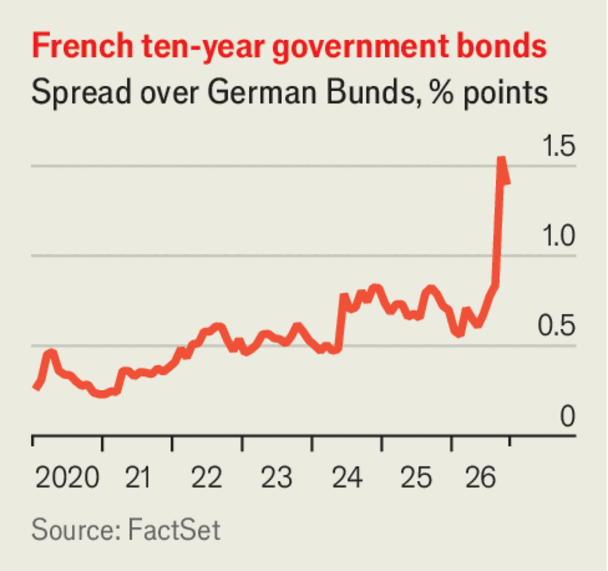
Five years ago borrowing costs were so low that public debt looked almost costless. Today, with investors dumping their bonds(抛售债券), many big rich-world governments pay more to borrow than at any time since the 1990s or 2000s. Because the public debts of big advanced economies are about double, relative to GDP, what they were at the turn of the century, the result is immense pressure on budgets.(由于主要发达经济体的公共债务相对于GDP的规模约为世纪之交的两倍,其结果是预算面临巨大压力。)
五年前,借贷成本极低,公共债务看上去几乎不费分文。如今,投资者纷纷抛售债券,许多富裕大国政府的借贷成本已升至上世纪90年代或2000年代以来的最高水平。由于主要发达经济体的公共债务相对于GDP的规模约为世纪之交的两倍,其结果是预算面临巨大压力。
Even before the latest bond sell-off(抛售,大量卖出), their governments were forecast to spend 8% of tax revenues on net debt interest(净债务利息) this year, as ageing populations and the threat of war are creating pressure to raise spending. Now they must pay still more to refinance(再融资,重新筹措资金) their past debts, while many continue to borrow with little restraint(毫无节制地). At some point investors will revolt(反抗,起义).
甚至在最近这轮债券抛售之前,这些政府今年就被预测要拿出税收收入的8%用于支付净债务利息,因为人口老龄化和战争威胁正不断施压,要求增加支出。如今,它们必须为过去的债务支付更高的再融资成本,而许多政府仍在毫无节制地继续借债。总有一天,投资者会揭竿而起。
Overheating
过热