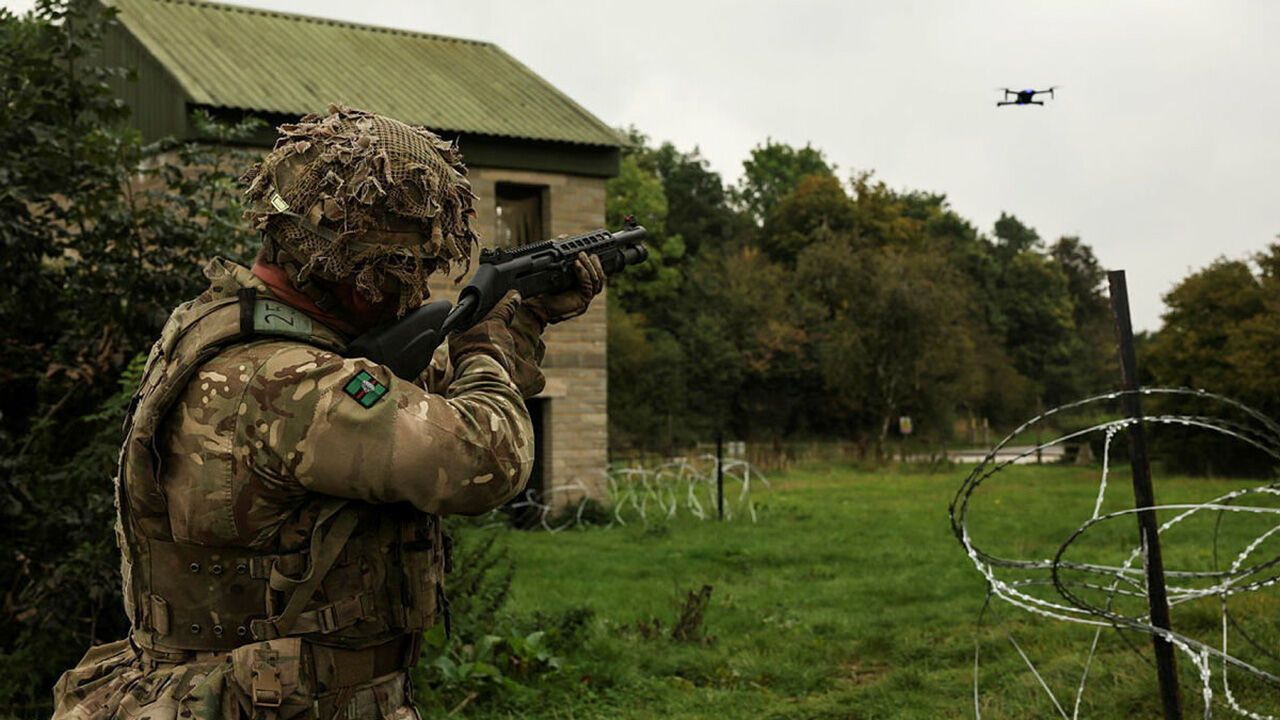
It was a bad day to be a clay pigeon(飞碟;陶土鸽). On a misty morning in Wiltshire(威尔特郡,英格兰南部郡), British soldiers gathered for their annual shooting championship. Around 100 shot at 100 targets each—a massacre(屠杀;惨败). Shotguns boom(发出隆隆声)ed, and neat clay discs were blast(炸毁;猛烈冲击)ed into bright bursts of colour.
对飞碟来说,这天可不是什么好日子。在威尔特郡一个雾蒙蒙的早晨,英国士兵们聚集在一起,参加一年一度的射击锦标赛。大约100人每人射击100个目标——简直是一场屠杀。霰弹枪轰鸣,一枚枚整齐的陶土碟被炸成一片片鲜艳的色彩。
Clay-pigeon shooting was born in the late 1800s to help hunters improve their aim. In the second world war it was used to train fighter pilots. Today Peter Meager(英国陆军飞碟射击队负责人), boss of the army’s clay-target shooting team, hopes it can help prepare soldiers for drone warfare. “I think there are huge transferable(可转移的;可迁移的) skills,” he says.
飞碟射击诞生于19世纪末,初衷是帮助猎人提高瞄准能力。二战期间,它被用来训练战斗机飞行员。如今,陆军飞碟射击队负责人彼得·米格希望它能帮助士兵为无人机战争做好准备。他说:“我认为有大量可迁移的技能。”
Such skills are needed. Drones are behind 80% of the enemy targets Ukraine destroys. In June Britain’s Defence Investment Plan commit(承诺;投入)ted £750m ($950m) to counter-drone(反无人机的) protection. Futuristic solutions include acoustic(声学的;声音的) radars and direct-energy(定向能的) weapons.
这些技能确实需要。乌克兰摧毁的敌方目标中,80%是无人机。今年6月,英国的国防投资计划承诺投入7.5亿英镑(9.5亿美元)用于反无人机防护。未来主义的解决方案包括声学雷达和定向能武器。