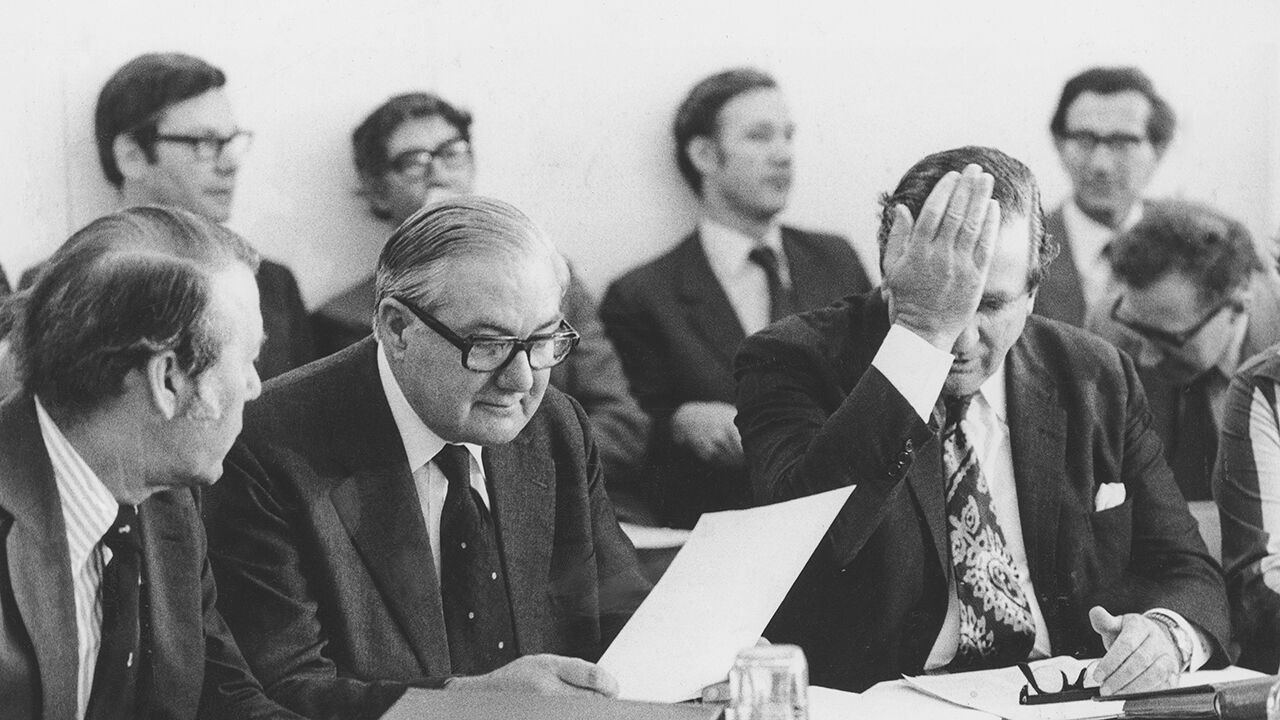
The similarities between 1976 and 2026 are eerie(怪异的,令人毛骨悚然的). Then as now the spectre(幽灵;挥之不去的恐惧) of decline haunted Britain, its economy troubled by energy crises, inflation and a lack of competitiveness. In both years the embattled(处境艰难的,四面楚歌的) Labour Party appointed a new prime minister, despite having won office only two years before. And both leaders then chose chancellors called Healey(两位财政大臣同姓希利).
1976年与2026年之间的相似之处令人毛骨悚然。当年和如今一样,衰落的幽灵萦绕英国,经济饱受能源危机、通货膨胀和竞争力不足的困扰。这两年,处境艰难的工党都在执政仅两年后任命了新首相。而两位新首相选定的财政大臣都姓希利。
As John Healey, today’s chancellor(财政大臣), prepares for the budget on October 28th, he might well worry that he will suffer the fate of Denis Healey, his predecessor in 1976. On September 28th that year, the earlier Healey was about to board a plane when sterling(英镑)’s freefall(自由落体;暴跌) forced him to turn back and apply for an emergency loan from the IMF. A $3.9bn bail-out, agreed upon in December, imposed on the birthplace of the industrial revolution the sort of humiliating conditions normally reserved for the world’s sketchiest economies.(当年12月达成的39亿美元纾困方案,将通常只施加给世界上最不靠谱经济体的屈辱条件,强加到了工业革命的发源地。)
当今日的财政大臣约翰·希利准备10月28日的预算案时,他很可能担心自己会重蹈1976年其前任丹尼斯·希利的覆辙。1976年9月28日,老希利正要登机,英镑的暴跌迫使他折返,向国际货币基金组织申请紧急贷款。当年12月达成的39亿美元纾困方案,将通常只施加给世界上最不靠谱经济体的屈辱条件,强加到了工业革命的发源地。
Kemi Badenoch, the Conservative leader, warned last year that the government was on track once again to go cap in hand to(卑躬屈膝地乞求) the IMF. There are superficial(表面的,肤浅的) echoes of 1976. Then investors revolted, refusing to buy British government bonds (or “gilt(金边债券(英国政府债券))s”) unless they offered much higher yield(收益率)s. Today’s bondholders charge Britain more to borrow than any other G7(七国集团) country.
保守党领袖凯米·巴德诺赫去年警告说,政府再次朝着向IMF乞求援助的方向迈进。表面上看,2026年与1976年确有相似之处。当年投资者群起反抗,除非英国政府债券(即“金边债券”)提供高得多的收益率,否则拒绝购买。如今,债券持有人向英国收取的借款成本高于任何其他七国集团国家。
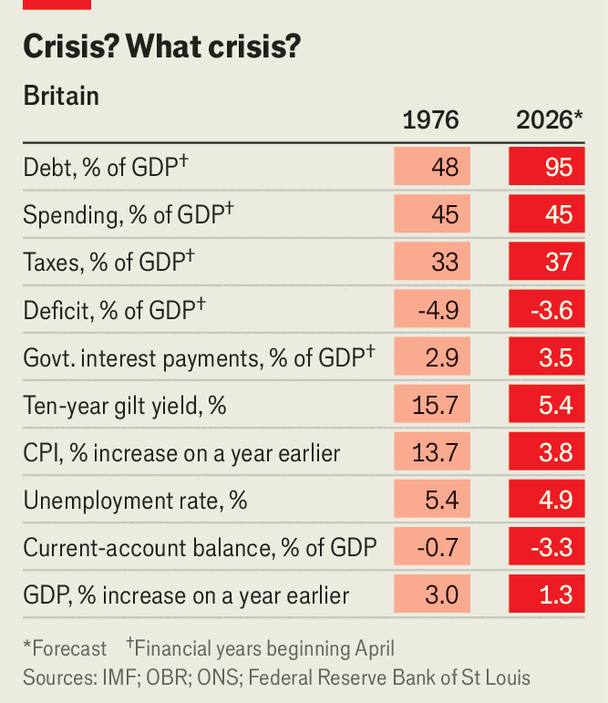
Now and then
今昔对比