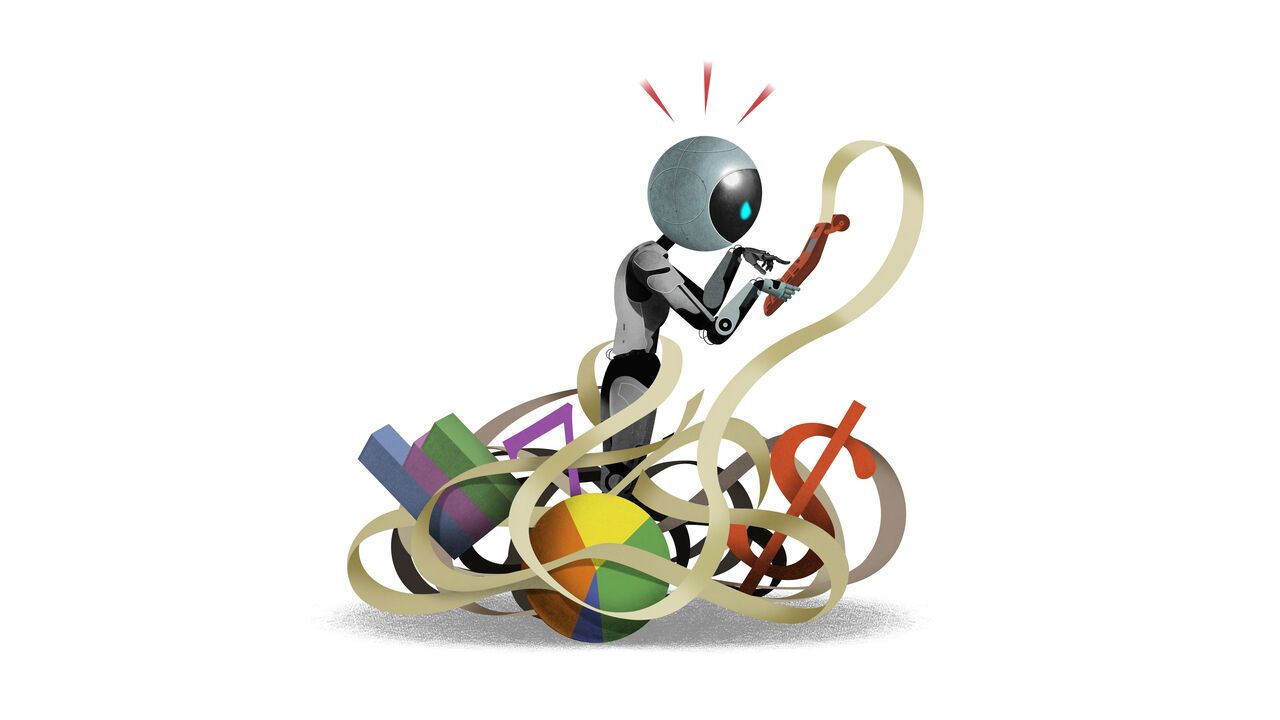
Last week the Financial Times wrote that OpenAI’s revenue was nearing $50bn. A massive number, though massively lower than the $70bn reported by Axios the week before. Tech stocks fell. Journalists were not on top of(掌握;掌控) their figures, cried investors. Tech stocks rose. If investors could be swayed(被左右;被影响) so easily, they were not on top of their investments, cried Hock Tan. The boss of Broadcom, a chipmaker, had compared markets to a casino, wrote Bloomberg. Tech stocks fell—and have continued to do so. Markets may have been flying. But when it comes to the numbers that matter, they have been flying blind(盲飞;在缺乏信息的情况下行动).
上周,《金融时报》报道称 OpenAI 的营收正逼近 500 亿美元。这是个庞大的数字,但比 Axios 前一周报道的 700 亿美元又低了一大截。科技股下跌。投资者高呼:记者们根本没搞懂这些数字。科技股上涨。如果投资者这么容易被左右,那他们根本没搞懂自己的投资——博通(一家芯片制造商)的老板陈福阳如此抨击道。据彭博社报道,他曾把市场比作赌场。科技股下跌,而且跌势延续至今。市场或许一直在高飞,但论及真正重要的数字,它们一直在盲飞。
Radical change has always been hard to count. The merger wave of the 1980s left corporate balance-sheets full of goodwill(商誉), that problematic wedge between the book value of a company’s assets and what it was bought for. Measuring other intangible assets like brands and patents was an even bigger head-scratcher(令人费解的难题) in the 1990s and 2000s. The rise of stock-based compensation in the 2010s further obscured(使模糊;遮蔽) the picture of corporate health, particularly for tech firms. Every investment boom brings with it a rogues’ gallery(一帮臭名昭著的家伙;一群不良分子) of acronyms, adjusted numbers and valuation techniques, sometimes designed to elucidate(阐明;解释清楚) and other times to obscure.
剧烈的变革从来都难以计量。20 世纪 80 年代的并购浪潮让企业资产负债表上堆满了商誉——即公司资产账面价值与其收购价格之间那个棘手的差额。到了 90 年代和 2000 年代,如何计量品牌、专利等其他无形资产更是让人挠头。2010 年代股权激励的兴起,进一步模糊了企业健康状况的图景,科技公司尤甚。每一轮投资热潮都会带来一整套五花八门的缩写、调整后数字和估值手法,有时是为了说清楚,有时则是为了搅浑水。
One problem today is that the reported revenues of OpenAI and Anthropic are not really revenues at all. Rather, they are vague riffs(即兴演绎;变体) on a famously vague Silicon Valley metric: ARR. The “A” is for “annual”, in the sense that(在……意义上;从某种意义上说) it bears some relationship to the Gregorian calendar (monthly sales are multiplied by 12). The first “R” traditionally stands for “recurring(经常性的;反复出现的)”, which means only that the firm hopes they will continue. And “revenue”, the second “R”? Anthropic counts sales of its models made through cloud providers, whereas OpenAI does so only after subtracting its partners’ cut.(Anthropic 把通过云服务商销售其模型的收入也算进去,而 OpenAI 则要扣除合作伙伴的分成后才计入。)
如今的一个问题是,OpenAI 和 Anthropic 所报告的营收根本算不上真正的营收。它们更像是对硅谷一个出了名模糊的指标——ARR——的含糊演绎。"A"代表"年度"(annual),意思是它和公历多少有点关系(月销售额乘以 12)。第一个"R"传统上代表"经常性"(recurring),而这仅仅意味着公司希望这些收入能持续下去。至于第二个"R",也就是"营收"(revenue)呢?Anthropic 把通过云服务商销售其模型的收入也算进去,而 OpenAI 则要扣除合作伙伴的分成后才计入。
ARRrrrrr-gh!
ARRrrrrr——啊!