How to stabilise(稳定) an unstable economy? In much of the 20th century the Keynesians(凯恩斯主义者), followers of John Maynard Keynes, argued that the government could manage the overall level of demand. That would prevent a repeat of the mass unemployment of the Great Depression(20世纪30年代大萧条) in the 1930s. The monetarists(货币主义者), led by Milton Friedman, retorted that(反驳说) the best approach was to fix the money supply. Attempts to boost employment would inevitably lead to ever-rising prices, as in the Great Inflation(20世纪70年代大通胀) of the 1970s.
如何稳定一个不稳定的经济?在20世纪的大部分时间里,凯恩斯主义者——约翰·梅纳德·凯恩斯的追随者——认为政府可以管理总需求水平。这将防止20世纪30年代大萧条时期的大规模失业重演。以米尔顿·弗里德曼为首的货币主义者反驳说,最好的办法是固定货币供应量。试图提振就业将不可避免地导致物价持续上涨,正如20世纪70年代的大通胀那样。
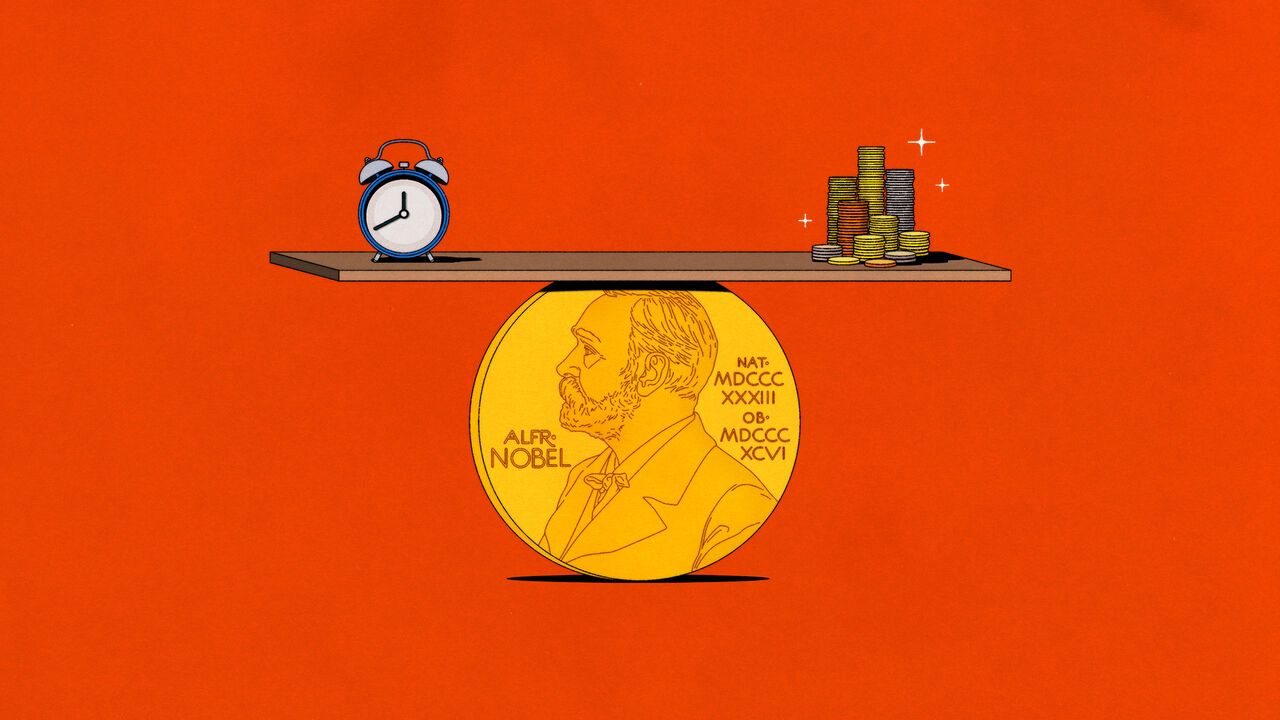
Nowadays most central bankers would place themselves in a third camp(阵营), known as New Keynesians. On October 12th the Nobel memorial prize(诺贝尔纪念奖(经济学奖)), the top gong(奖章,荣誉) in economics, was awarded to two of that movement’s leading lights(领军人物). The glory (and SKr12m, or $1.2m) will be shared by two Americans, Robert Hall of Stanford University and Michael Woodford of Columbia University. Mr Hall is best known for his theory of consumer spending and Mr Woodford for modelling(构建模型) how central banks could use interest rates as the main tool to keep the economy steady.
如今,大多数央行官员会将自己归入第三个阵营,即新凯恩斯主义者。10月12日,经济学界的最高荣誉——诺贝尔纪念奖——被授予该运动的两名领军人物。这份荣耀(以及1200万瑞典克朗,约合120万美元)将由两位美国人分享:斯坦福大学的罗伯特·霍尔和哥伦比亚大学的迈克尔·伍德福德。霍尔以消费者支出理论闻名,伍德福德则以构建模型说明央行如何利用利率作为主要工具来维持经济稳定而著称。
The prize committee credited(归功于) the duo with rebuilding macroeconomics on “microfoundations(微观基础)”: representing economic outcomes as the result of the behaviour of individuals and businesses. That was an intellectual break from the past. The Keynesians and monetarists built their models top-down(自上而下), looking at how those aggregates(总量), in the form of economic statistics, influenced each other (how the total volume of money changed the rate of inflation, say). New Keynesians tried to rebuild the models bottom-up(自下而上) from individual decision-making. This followed a critique(批评) by Robert Lucas(罗伯特·卢卡斯,1995年诺贝尔经济学奖得主), the Nobel laureate in 1995, that any model not based on the deep features of an economy would be a poor guide for policymakers.
颁奖委员会称赞两人在“微观基础”上重建了宏观经济学:将经济结果视为个人和企业行为的结果。这是对过去的一次思想突破。凯恩斯主义者和货币主义者采用自上而下的方式构建模型,考察那些以经济统计数据形式呈现的总量如何相互影响(比如货币总量如何改变通胀率)。新凯恩斯主义者则试图从个体决策出发,自下而上地重建模型。这源于1995年诺贝尔奖得主罗伯特·卢卡斯的批评:任何不基于经济深层特征的模型都无法为政策制定者提供良好指导。
Unsteady as she goes
尽管不稳,继续前行