FOR WEEKS the hottest topic in commodity markets has been the soaring(飙升的) price of diesel. The cause is not a shortage of crude but of refineries(炼油厂) able to turn oil into fuel: most Gulf facilities remain cut off from(与……隔绝) global markets by the war in Iran and many Russian ones are offline owing to Ukrainian strikes. That squeeze(供应紧张;挤压) has a quieter side-effect. Sulphur, a vital input for mining, farming and chipmaking, is a by-product(副产品) of fuel production. So it, too, is in short supply(供应短缺). The damage around the world is only beginning to show.
数周以来,大宗商品市场最热门的话题一直是柴油价格的飙升。原因并非原油短缺,而是有能力把石油炼成燃料的炼油厂短缺:由于伊朗战争,海湾地区大多数炼油设施仍与全球市场隔绝,而俄罗斯的许多炼油厂则因乌克兰的打击而停产。这场供应紧张还带来一个不那么引人注目的副作用。硫磺是采矿、农业和芯片制造的关键投入品,而它正是燃料生产的副产品。因此,硫磺也陷入了供应短缺。它对全球造成的损害才刚刚开始显现。
Whereas the global energy system entered 2026 with ample(充足的) fuel stocks, sulphur markets were tight(吃紧的;紧张的) before the Iran war. Russia had banned exports to preserve supplies for(为……保留供应) its fertiliser and mining firms, cutting shipments(出货量;运输的货物) from 4.8m tonnes in 2025—15% of globally traded volumes—to 1.8m tonnes in 2026 so far. Houthi attacks on the Red Sea(胡塞武装袭击红海航线) route used by some Saudi exports and the threat of American tariffs on Canada have not helped. In February Middle Eastern solid bulk sulphur fetched(卖得(某价格)) $500 a tonne, up from $340 a year ago (see chart, top panel).
2026年初,全球能源系统尚有充足的燃料库存,但硫磺市场在伊朗战争爆发前就已吃紧。俄罗斯此前已禁止硫磺出口,以保障本国化肥和矿业企业的供应,出口量从2025年的480万吨(占全球贸易量的15%)降至2026年迄今的180万吨。胡塞武装袭击部分沙特出口所经的红海航线,加上美国威胁对加拿大加征关税,更是雪上加霜。今年2月,中东固体散装硫磺价格达到每吨500美元,高于一年前的340美元(见图表上半部分)。
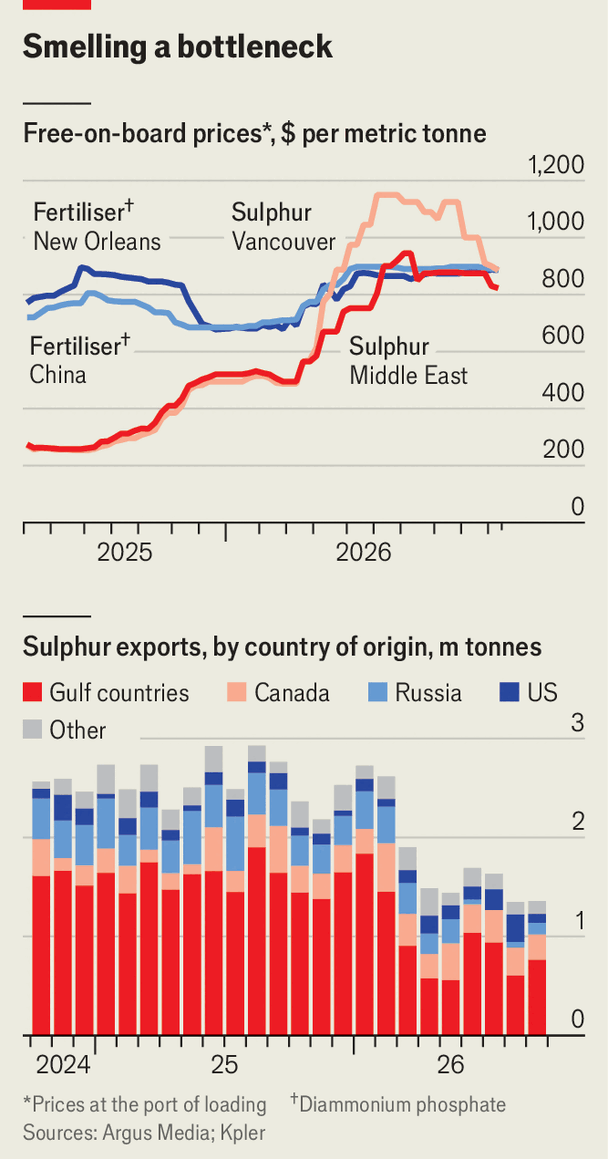
The Hormuz crisis has exacerbated(加剧了) this shortfall. The strait’s closure trapped nearly a quarter of global sulphur production, and half of seaborne(海运的) exports, in the Gulf. Shipments rebounded in June, when a deal between America and Iran freed cargoes stuck amid the fighting, but fell back again when the ceasefire broke down in July.(6月,美伊达成协议,释放了因战事滞留的货物,出货量一度回升,但7月停火破裂后再度回落。) They remain two-thirds below pre-war levels, notes Ishan Bhanu of Kpler, a data firm (see chart, bottom panel).
霍尔木兹危机加剧了这一短缺。海峡的封锁使全球近四分之一的硫磺产量、以及一半的海运出口被困在波斯湾。6月,美伊达成协议,释放了因战事滞留的货物,出货量一度回升,但7月停火破裂后再度回落。数据公司Kpler的伊尚·巴努指出,出货量仍比战前水平低三分之二(见图表下半部分)。