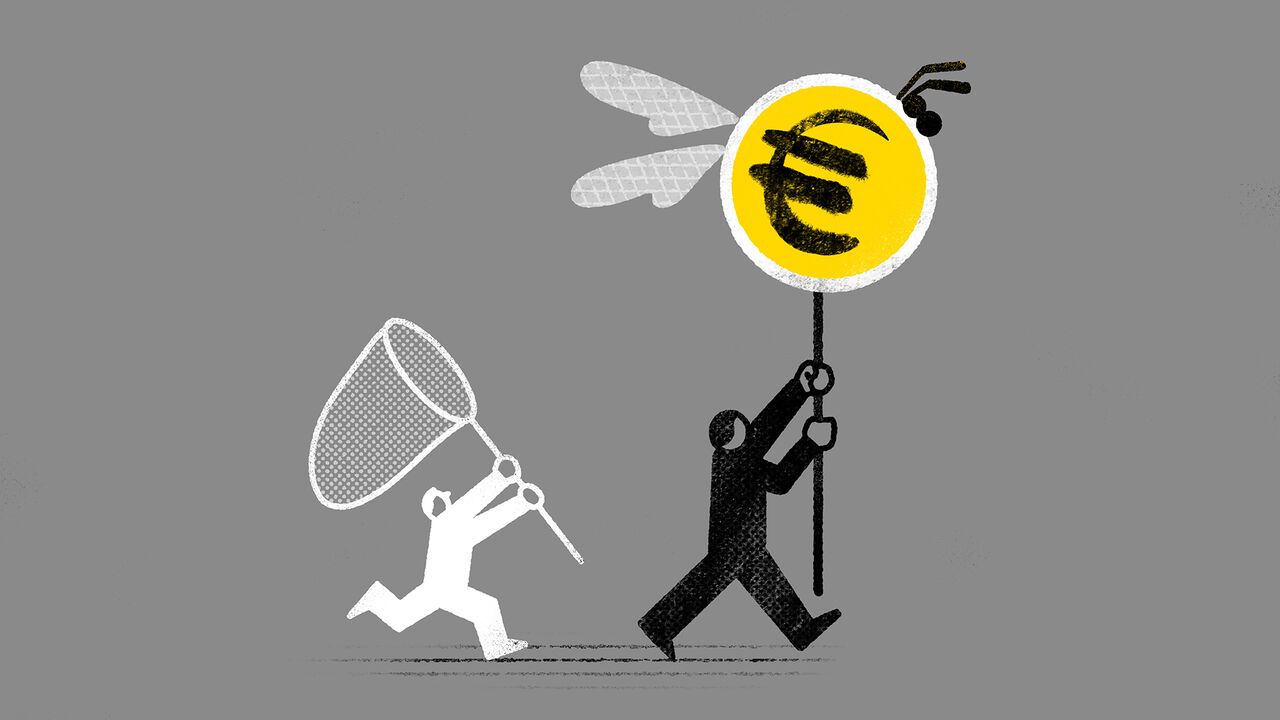
“THE EURO is like a bumblebee(大黄蜂),” noted Mario Draghi, former boss of the European Central Bank (ECB), in 2012. “This is a mystery of nature because it shouldn’t fly but instead it does.” Mr Draghi was a better central banker than entomologist(昆虫学家). In the same speech, he vowed to do “whatever it takes(不惜一切代价) to preserve the euro”, a pledge that ended the acute phase of the crisis that had roil(搅动,使动荡不安)ed the currency union for three years.
“欧元就像一只大黄蜂,”欧洲央行前行长马里奥·德拉吉在2012年指出,“这是自然界的一个谜,因为它本不该飞,却偏偏飞了起来。”德拉吉当央行行长比当昆虫学家更在行。在同一场演讲中,他誓言“不惜一切代价捍卫欧元”,这一承诺终结了那场已搅动欧元区三年的危机的急性阶段。
The recent sell-off(抛售) of French government debt, amid protests in the streets and a yawning(巨大的,张着大口的) hole in the budget, might bring back unhappy memories of the tumult(骚动,动荡). In early October the yield on ten-year bonds was 1.6 percentage points above that on equivalent German bund(德国国债)s, the widest gap since 2011. When borrowing costs in the euro zone drift apart(逐渐分化,渐行渐远), it is a reminder of the currency union’s aerodynamic deficiencies(空气动力学缺陷).
近期法国国债遭抛售,街头抗议不断,预算窟窿巨大,这或许会勾起人们对那场动荡的痛苦回忆。10月初,法国十年期国债收益率比同期限德国国债高出1.6个百分点,为2011年以来最大利差。欧元区各国借贷成本一旦分化,便提醒人们这个货币联盟存在“空气动力学缺陷”。
Europe does not yet face the kind of existential(生死攸关的,存在性的) distress of a decade and a half ago. But that near-death experience holds lessons for speculators thinking of betting against(做空,押注下跌) wobbly(摇摇欲坠的,不稳定的) European bonds. Many traders learned the hard way(付出惨痛代价才明白) that politics can win out over(战胜,胜过) economics. And even understanding the politics is no guarantee of making money.
欧洲尚未面临十五年前那种生死攸关的困境。但那段濒死经历,对想做空脆弱欧洲债券的投机者来说,是一堂值得吸取的课。许多交易员付出了惨痛代价才明白:政治可以战胜经济。而即便看懂了政治,也不保证能赚到钱。