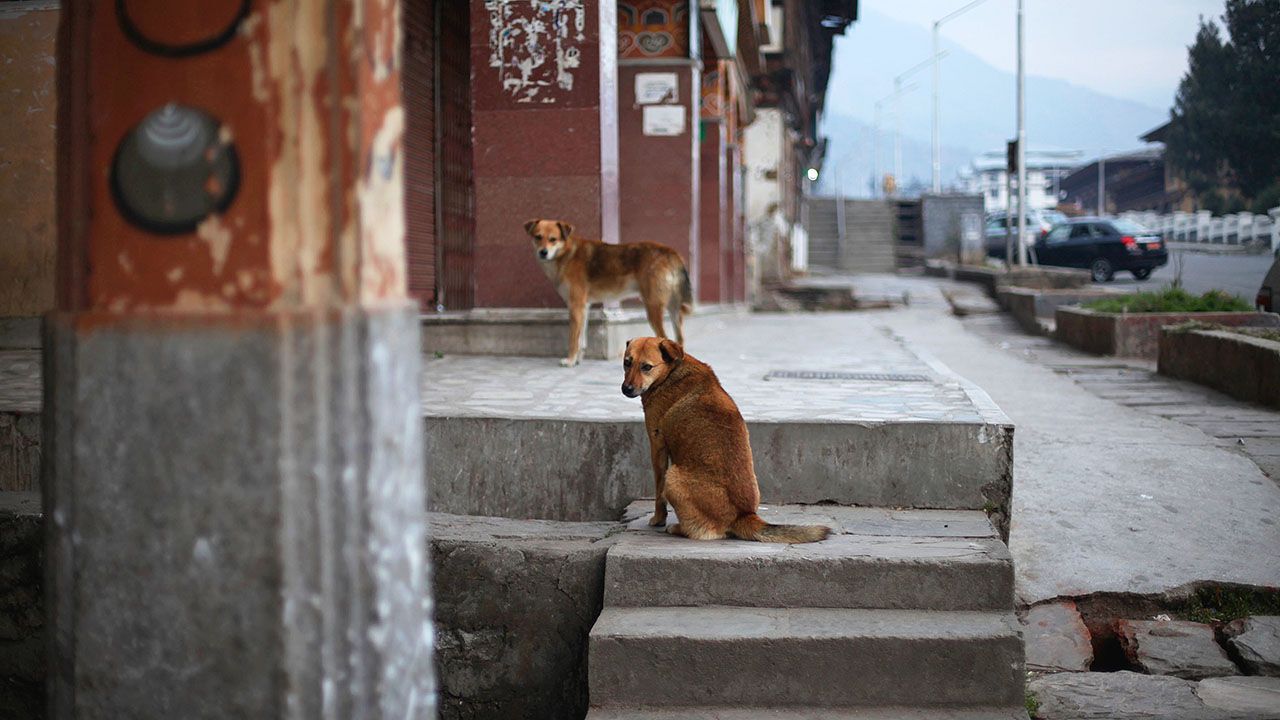
CROSS FROM India into Bhutan at Jomotshangkha and little seems to change. The same hills stretch across(绵延穿过) the border, roadside shops sell mostly identical wares and similar-looking dogs laze(懒洋洋地躺着) on the streets. Yet the observant visitor may notice one difference: the dogs on Bhutan’s side have notched ears.(不过,细心的游客或许会发现一处不同:不丹一侧的狗耳朵上带着缺口。)
从印度经乔莫尚卡口岸进入不丹,一切似乎没什么变化。同样的山峦绵延过境,路边商店出售的商品大同小异,模样相似的狗在街上懒洋洋地躺着。不过,细心的游客或许会发现一处不同:不丹一侧的狗耳朵上带着缺口。
Those marks signify(表示,意味着) sterilisation and vaccination against rabies. The tiny Himalayan kingdom has sterilised its entire stray-dog population. With mass vaccination and free treatment for people who’ve been bitten, this has helped eliminate human rabies carried by dogs, making Bhutan just one of three countries to do so.(再加上大规模疫苗接种和为被咬伤者提供免费治疗,这帮助消除了由狗传播的人类狂犬病,使不丹成为全球仅有的三个做到这一点的国家之一。) The disease, a global scourge(祸患,灾难), is especially deadly in South Asia. In India rabies kills some 5,700 people a year, by one estimate(据一项估计). Bhutan’s last human death from it was in 2023.
这些标记意味着已接受绝育和狂犬病疫苗接种。这个喜马拉雅小王国已对全部流浪狗实施绝育。再加上大规模疫苗接种和为被咬伤者提供免费治疗,不丹成功消除了由狗传播的人类狂犬病,成为全球仅有的三个做到这一点的国家之一。狂犬病是全球性祸患,在南亚尤为致命。据一项估计,印度每年约有5700人死于狂犬病。而不丹最近一例人死于该病是在2023年。
Like its much bigger neighbours, Bhutan has long grapple(努力应对)d with stray mutts. In the 1980s marksmen(射手,神枪手) used dart-guns from the UN’s World Health Organisation to shoot dogs in public. In some places dogs were fed raw meat laced with(掺有,混有) strychnine(士的宁,马钱子碱). The campaign appalled(使震惊,使惊骇) Bhutan’s people, most of whom are Buddhist. Nor did it work: dog numbers kept rising.
与体量大得多的邻国一样,不丹长期以来一直在应对流浪狗问题。20世纪80年代,射手使用联合国世界卫生组织提供的麻醉枪在公共场合射杀狗。有些地方还给狗喂食掺有士的宁的生肉。这场运动令不丹民众震惊,因为大多数人信奉佛教。而且它也没有奏效:狗的数量持续上升。