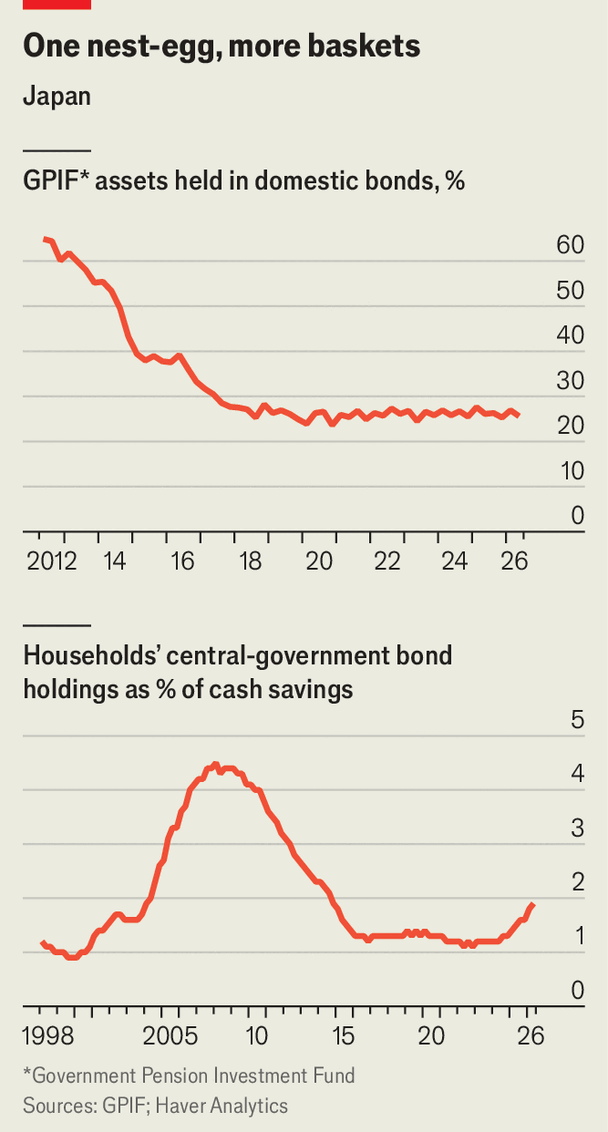
OF THE MANY reinventions(重塑,重新塑造) of Suzuki Airi, a singer-turned-model-turned-actress(歌手转型模特再转型演员), one stands out. In an ad campaign released earlier this year by Japan’s finance ministry, an all-pink Ms Suzuki hawks(推销,兜售) government debt. Perched(栖息,停歇) on her shoulder are the official mascots(吉祥物) of its “retail government bonds plus” programme: Kokusai-sensei, a cartoon professor shaped like part of the Japanese word for government bond, and Koko-chan, his girlish companion. The pair encourages savers to “add peace of mind” with “plus-plus”.
在铃木爱理——这位从歌手转型模特、再转型演员的多重身份中,有一次重塑格外引人注目。在今年早些时候日本财务省发布的一则广告宣传中,一身粉色的铃木爱理推销起了政府债券。她肩上停着“零售国债Plus”项目的官方吉祥物:国斋老师,一个卡通教授,形状取自日语中“国债”一词的一部分;以及他少女模样的伙伴可可酱。这对吉祥物鼓励储户通过“Plus-Plus”来“增添安心”。
Peace of mind is in short supply(供应不足,稀缺) for those trading Japanese government bonds (JGBs) for a living. Last month the yield(收益率) on ten-year JGBs passed 3% for the first time since 1996, up from 2% in January. Investors worry about persistent inflation—a novelty in a country until recently plagued by years of falling prices.(投资者担心持续通胀——这对一个直到最近还饱受多年物价下跌困扰的国家来说是个新鲜事。) This makes them less keen on government debt at a time when lots of bonds are hitting the market.
对于以交易日本国债(JGB)为生的人来说,安心可是稀缺品。上月,十年期日本国债收益率自1996年以来首次突破3%,高于1月份的2%。投资者担心持续通胀——这对一个直到最近还饱受多年物价下跌困扰的国家来说是个新鲜事。这让他们在大量债券涌入市场之际,对政府债务不那么热衷了。
Takaichi Sanae, the prime minister, has pledged(承诺,保证) ¥120trn ($700bn, or 18% of last year’s GDP) in new public investment by 2040. She is backing strategic industries, from shipbuilding to chipmaking, while raising spending on defence and cutting sales taxes on food. Her promises to do all this without funding government budget deficits through new bonds are taken with a generous dash of soy sauce(需加大量酱油才能下咽(难以信服)). Goldman Sachs, a bank, expects that a “primary” deficit (before interest payments) of 1.5% of GDP will raise total JGB issuance(发行) by ¥19trn in fiscal year 2027. And investors also have their pick of corporate bonds, a record ¥17trn-worth of which was sold in the 12 months to March.(而且投资者还可以选择公司债券,截至3月的12个月内售出了创纪录的17万亿日元公司债。)
首相高市早苗承诺到2040年新增120万亿日元(约7000亿美元,相当于去年GDP的18%)的公共投资。她支持从造船到芯片制造的战略产业,同时增加国防开支并削减食品销售税。她承诺在不通过新发债券为政府预算赤字融资的情况下完成这一切,但这番话得配上大量酱油才能咽下(意即难以信服)。高盛银行预计,占GDP 1.5%的“基本”赤字(付息前)将在2027财年使日本国债总发行量增加19万亿日元。而且投资者还可以选择公司债券,截至3月的12个月内售出了创纪录的17万亿日元公司债。