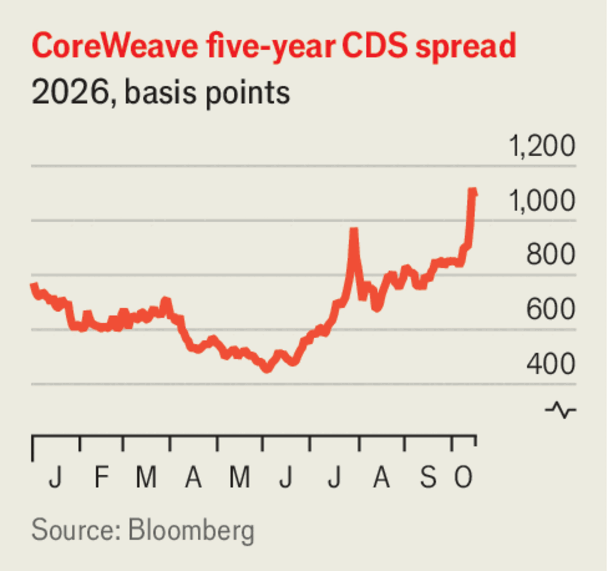
Two SPECTRES stalk(潜行跟踪;在此喻为“游荡、肆虐”) financial markets. One is the fear that surging bond yields(飙升的债券收益率) will make the rich world’s shaky public finances unsustainable(不可持续的), triggering a nasty fiscal crisis(引发一场严重的财政危机). The other is the worry that the revenues from artificial intelligence needed to keep the data-centre boom going will fail to arrive. As we report, that would devastate(摧毁,重创) credit markets and cause a big fall in stocks, too.
两个幽灵在金融市场上游荡。其一是恐惧:债券收益率飙升将使富裕国家摇摇欲坠的公共财政难以为继,引发一场严重的财政危机。其二是担忧:维持数据中心繁荣所需的人工智能收入将无法兑现。正如我们报道的那样,这将重创信贷市场,并导致股市大幅下跌。
The good news is that only an Ichabod Crane(伊卡博德·克兰:胆小怕事、轻信鬼怪的人物) would think that both these scenarios could strike at once(同时发生;同时袭击). Instead, investors must decide which story is scarier. For now, The Economist is more worried about sovereign debt(主权债务,政府债务).
好消息是,只有伊卡博德·克兰才会认为这两种情景会同时发生。相反,投资者必须判断哪个故事更可怕。目前,《经济学人》更担心主权债务。
For most of the year, concerns about governments have dominated. Between the end of February and the start of October, the yield on 30-year US Treasuries(美国国债) rose by a full percentage point(整整一个百分点). The Iran war has sent inflation up and forced central banks to raise interest rates. Strong economic growth and the rush to build data centres have caused a scramble for capital(争夺资本) in which governments have had to compete with the private sector. In Japan, Britain and especially France, investors have fret(担忧,焦虑)ted about the ability of governments to service their debts(偿还债务(利息和本金)).
今年大部分时间里,对政府的担忧一直占据主导。从2月底到10月初,30年期美国国债收益率整整上升了一个百分点。伊朗战争推高了通胀,迫使央行加息。强劲的经济增长和建设数据中心的热潮引发了资本争夺,政府不得不与私营部门竞争。在日本、英国,尤其是法国,投资者一直担忧政府偿还债务的能力。