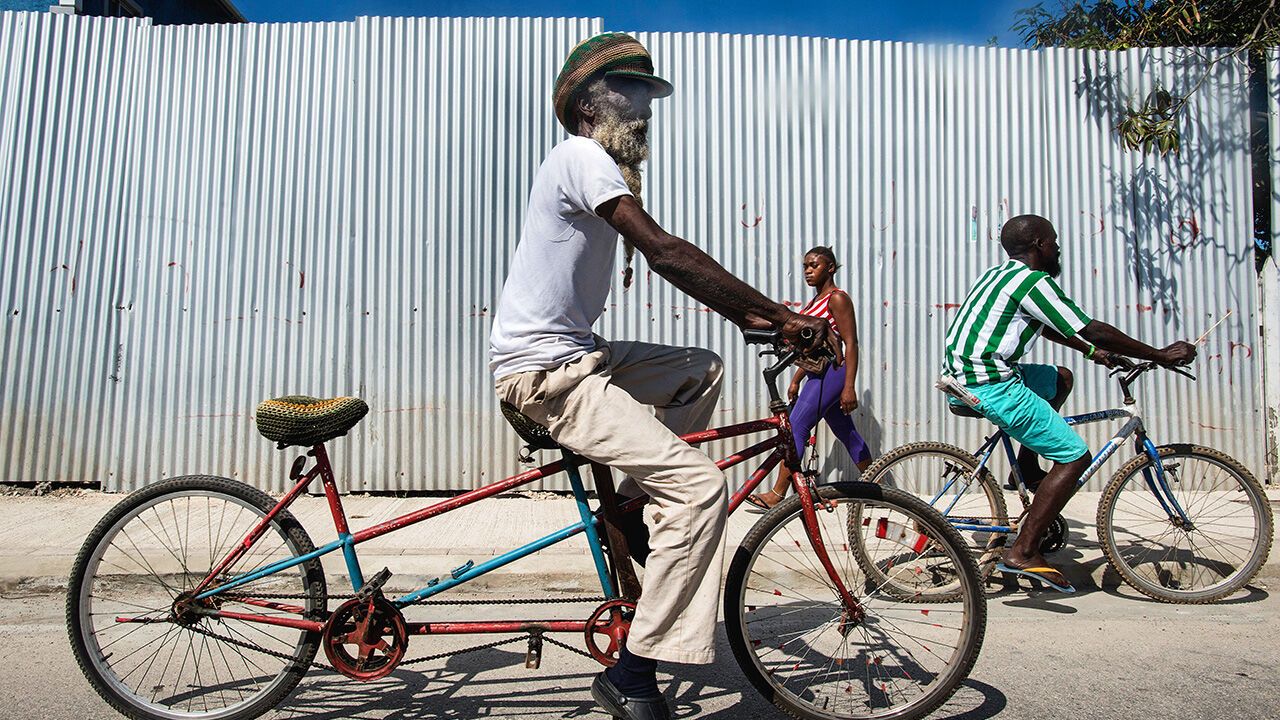
SISTER NANNY is easy to spot(认出,发现). Sporting a red, gold and green dress—with a matching headpiece—the Rastafari campaigner is outlining an idea she thinks will help marginalised(被边缘化的) members of her faith. Jamaica takes advantage of the world’s interest in Rastas to “attract visitors” to the country, she notes. Yet those same people continue to suffer stigma(污名,耻辱). She thinks the Jamaican government should share proceeds(收益,收入) with the community, whenever it profits from their culture.
南尼修女很容易辨认。这位拉斯塔法里运动的活动人士身穿红、金、绿三色连衣裙,头戴相配的头饰,正在阐述一个她认为能帮助其信仰中边缘化成员的想法。她指出,牙买加利用全世界对拉斯塔法里教徒的兴趣来“吸引游客”到该国。然而,这些人却继续遭受污名化。她认为,每当牙买加政府从他们的文化中获利时,就应该与社区分享收益。
Dreadlocks, cannabis, reggae: think of Jamaica and aspects of Rastafari culture commonly leap to mind(跃入脑海,立刻想到). On the island, however, the religious movement has often been maligned(被诋毁,被中伤). Rastafari beliefs originated in poor Jamaican neighbourhoods in the 1930s. They revolve around(围绕……展开,以……为核心) a single God, Jah, said to reside within each person. Haile Selassie I(海尔·塞拉西一世,埃塞俄比亚皇帝,被拉斯塔法里教徒视为神), the Ethiopian emperor crowned in 1930, is seen by some as the second coming of Christ (Selassie politely discouraged the idea).
脏辫、大麻、雷鬼音乐:一提到牙买加,拉斯塔法里文化的这些方面常常会跃入脑海。然而在岛上,这个宗教运动却常常遭到诋毁。拉斯塔法里信仰起源于20世纪30年代牙买加的贫困社区。其信仰围绕唯一的神“贾”展开,据说贾居住在每个人心中。1930年加冕的埃塞俄比亚皇帝海尔·塞拉西一世被一些人视为基督的再临(塞拉西本人礼貌地劝阻了这一想法)。
From the beginning, authorities took a tough line(采取强硬路线). Many Rastafari were arrested for possessing cannabis, which they view as a sacrament(圣礼,圣事). Schools and prisons forced them to shave their dreadlocks, which violates a vow(誓愿,誓言). Violence erupted in 1963, following an altercation(争执,争吵) at a petrol station in the city of Montego Bay. Security forces detained(拘留,扣押) Rastas all across Jamaica; some were killed.
从一开始,当局就采取强硬路线。许多拉斯塔法里教徒因持有大麻被捕,而他们视大麻为圣礼。学校和监狱强迫他们剃掉脏辫,这违背了他们的誓愿。1963年,蒙特哥贝市一个加油站发生争执后,暴力爆发。安全部队在牙买加各地拘留拉斯塔法里教徒;一些人被杀害。