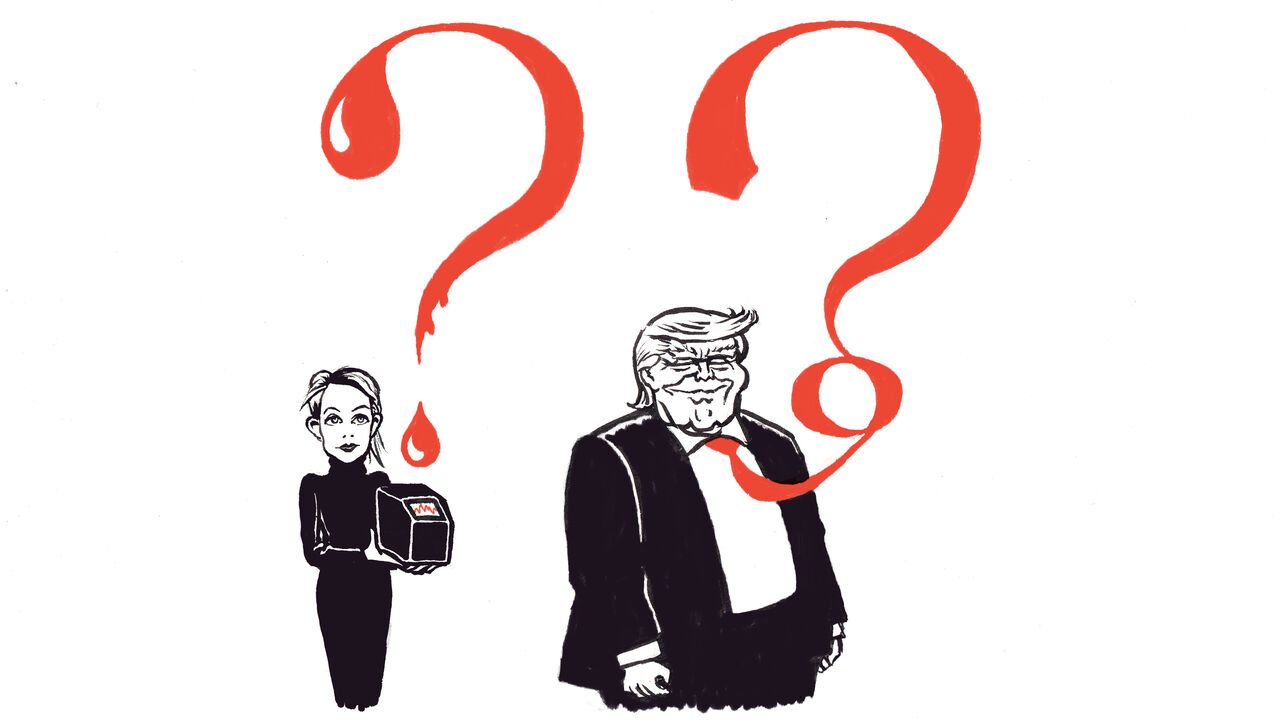
“What is the reality?” asks the disgraced(身败名裂的) entrepreneur Elizabeth Holmes near the start of Nathan Fielder’s new documentary, “You Can See Everything”, about the 34 days he spent with her before she reported to serve(报到服刑) a prison sentence for fraud in 2023. And the audience member thinks, Oh no, here we go again(又来了).
“现实究竟是什么?”身败名裂的企业家伊丽莎白·霍姆斯在内森·菲尔德的新纪录片《你能看见一切》开头附近问道。这部纪录片记录了她2023年因欺诈罪入狱服刑前,菲尔德与她共处的34天。而观众心里想的是:哦不,又来了。
Or, at least, so thinks that audience member who has grown weary of(对……感到厌倦) this endless post-modern era, of being reminded that objective truth is elusive(难以捉摸的), that one’s purchase on reality(对现实的把握) is determined by whichever narrative one chooses to believe. By the end of this ingenious, absorbing film, Mr Fielder and his co-director, Lance Oppenheim, have not only questioned whether Ms Holmes is truly guilty of defrauding investors by claiming, as the founder of the blood-testing company Theranos, to have revolutionised the detection of dozens of illnesses.(到这部巧妙而引人入胜的影片结尾,菲尔德和联合导演兰斯·奥本海姆不仅质疑了霍姆斯是否真的犯有欺诈投资者之罪——她作为血液检测公司Theranos的创始人,声称彻底革新了数十种疾病的检测。) They have raised doubts about the motives of her romantic partner, the integrity(诚信;正直) of the New York Times and even their own portrayal of Ms Holmes. You can’t see everything. So how can you trust anything?(你无法看见一切,那又怎么能相信任何东西?)
或者说,至少那位观众是这么想的——他已经厌倦了这个没完没了的后现代时代,厌倦了不断被提醒:客观真相难以捉摸,一个人对现实的把握取决于他选择相信哪一种叙事。到这部巧妙而引人入胜的影片结尾,菲尔德和联合导演兰斯·奥本海姆不仅质疑了霍姆斯是否真的犯有欺诈投资者之罪——她作为血液检测公司Theranos的创始人,声称彻底革新了数十种疾病的检测。他们还质疑了她男友的动机、《纽约时报》的诚信,甚至他们自己对霍姆斯的刻画。你无法看见一切,那又怎么能相信任何东西?
Americans absorbed this lesson long ago. They might not all have read Michel Foucault(法国哲学家,研究权力与真理的关系) on how power shapes truth, or Jean Baudrillard(法国后现代理论家,提出“超真实”概念) on how modern media erase the boundaries between authenticity and artifice(虚假;人为做作). (Lexington hasn’t got around to it, either.) But they have watched plenty of reality television and become sophisticated enough about the plasticity of truth to have elected their first post-modern president, not once but twice.(但他们看过大量真人秀,对真相的可塑性已经足够老练,以至于选出了他们的第一位后现代总统,而且不是一次,是两次。) Or is it three times? Narratives differ.
美国人早就吸取了这一教训。他们未必都读过米歇尔·福柯关于权力如何塑造真相的论述,也未必读过让·鲍德里亚关于现代媒体如何抹去真实与虚构之间界限的理论。(本专栏作者也还没顾上读。)但他们看过大量真人秀,对真相的可塑性已经足够老练,以至于选出了他们的第一位后现代总统,而且不是一次,是两次。还是三次?说法不一。