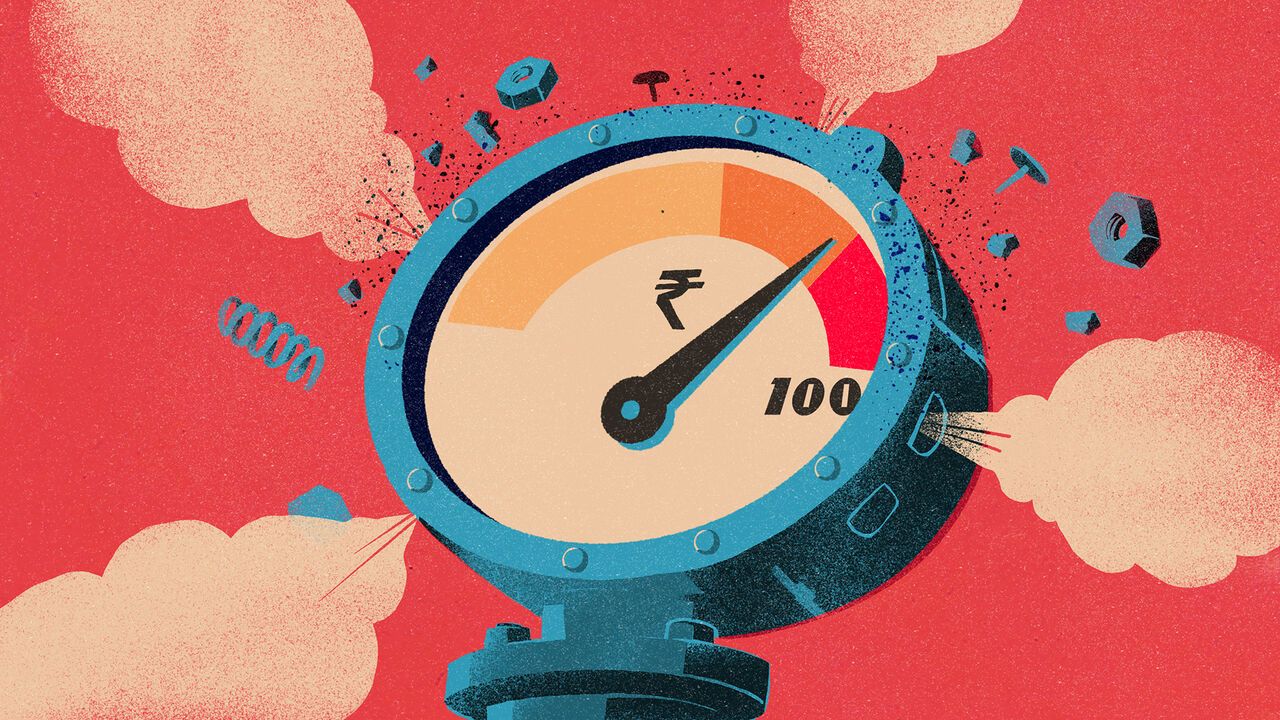
THE RUPEE is back, baby! And all it took was some gentle management by the Reserve Bank of India (RBI). Over the past few months the central bank has, among other things, wooed(争取,招揽) dollar deposits from overseas Indians with juicy interest rates(诱人的高利率) and currency guarantees; spent tens of billions of dollars to buy rupees in the open market; severely limited the ability of investors to speculate(投机) on the currency; and, on October 10th, imposed punitive(惩罚性的) costs on businesses that legitimately need to hedge their own foreign-currency exposure(对冲自身外汇敞口). As a result, the rupee recovered for a while from just under 97 to the dollar to just under 95. Break out the party hats(开香槟庆祝吧).
卢比回来了,宝贝!而这一切只靠印度储备银行(RBI)的些许温柔管理。过去几个月,央行采取的措施包括:以诱人的利率和汇率担保吸引海外印度人的美元存款;在公开市场斥资数百亿美元买入卢比;严格限制投资者投机卢比的能力;并在10月10日对合法需要对冲外汇敞口的企业征收惩罚性成本。结果,卢比一度从略低于97回升至略低于95。开香槟庆祝吧。
Or perhaps not. “Just under 95”, as a close-of-day price, is the level the rupee hit in late March. So unacceptable was the idea that India’s beloved currency might cross that threshold that the RBI imposed a set of measures described by one analyst as rolling back a decade of market liberalisation in just a few days.(卢比可能跌破这一关口的想法如此令人难以接受,以至于印度储备银行推出了一系列措施,一位分析师形容这相当于在短短几天内逆转了十年的市场自由化进程。) The intervention brought some relief. But the currency crossed 95 within weeks, marching ever onwards towards the big “100” flashing like a neon sign(像霓虹灯一样闪烁) in front of traders’ eyes. Ajay Shah, an economist, describes this dynamic as “the recurring round-number skirmish(周而复始的整数关口遭遇战)”. Few numbers are rounder than a century.
或许并非如此。作为收盘价,“略低于95”不过是卢比在3月底就达到过的水平。印度人钟爱的卢比可能跌破这一关口,这个念头如此令人难以接受,以至于印度储备银行推出了一系列措施——一位分析师形容,这相当于在短短几天内逆转了十年的市场自由化进程。干预带来了一些缓解。但卢比在几周内就跌破了95,一路朝着那个大大的“100”挺进,这个数字像霓虹灯一样在交易员眼前闪烁。经济学家阿贾伊·沙阿将这种动态称为“周而复始的整数关口遭遇战”。没有什么数字比“100”更圆整了。
Ever since independence and even more so since a balance-of-payments crisis in 1991(1991年印度国际收支危机), any steep fall in the value of the rupee has been seen as a national humiliation. In 2013 Narendra Modi, then chief minister of the state of Gujarat, cannily(精明地,狡黠地) used its sharp depreciation to paint the Congress-led government of the day as corrupt and incompetent. For Mr Modi to preside over the rupee’s slide into triple digits now would be rather embarrassing.(如今若莫迪眼睁睁看着卢比跌入三位数,那将相当难堪。) It would also provide the opposition with a delicious attack line just months before elections in Uttar Pradesh, a bellwether(风向标,领头羊) state of 240m people. The words “hoist” and “petard” come to mind.
自印度独立以来,尤其是1991年国际收支危机之后,卢比任何大幅贬值都被视为国耻。2013年,时任古吉拉特邦首席部长的纳伦德拉·莫迪巧妙地利用卢比急剧贬值,把当时国大党领导的政府描绘成腐败无能。如今若莫迪眼睁睁看着卢比跌入三位数,那将相当难堪。这也将在北方邦选举前几个月给反对党送上一句绝佳的攻击口实——北方邦是拥有2.4亿人口的“风向标”邦。这让人想起“搬起石头砸自己的脚”这句话。