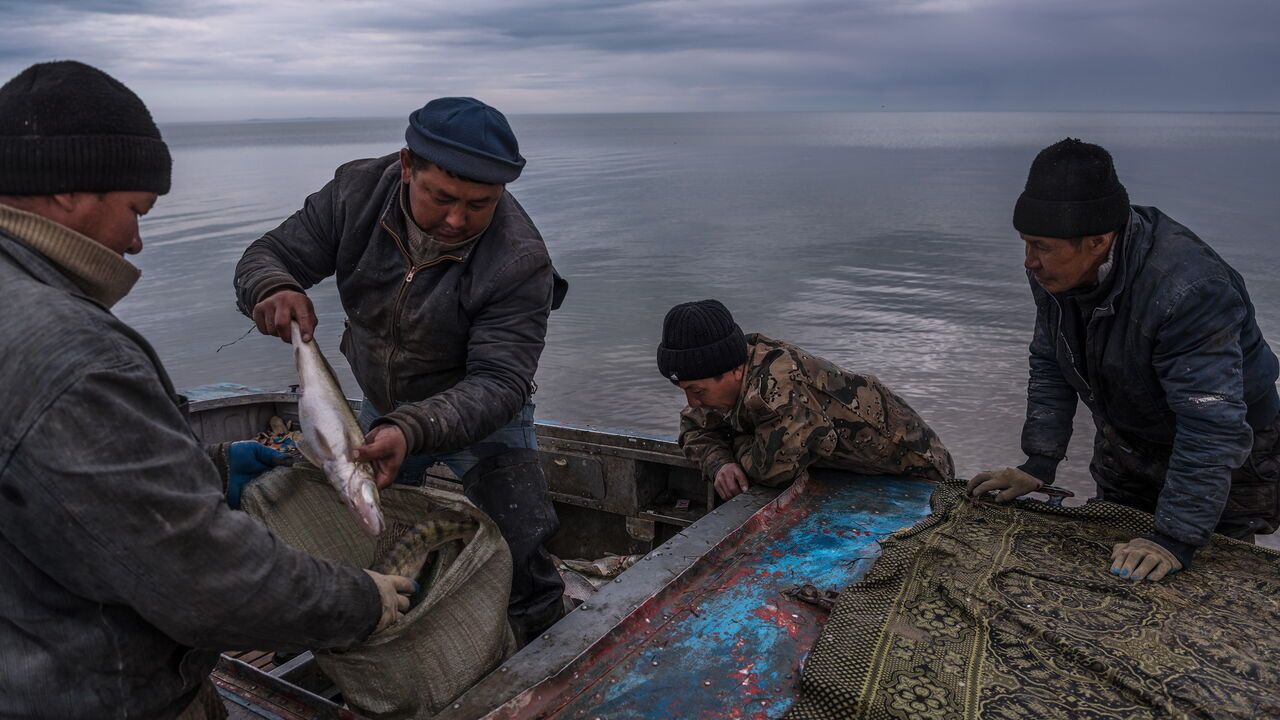
THE ARAL SEA has long been a byword for(……的代名词) ecological disaster. Once the world’s fourth-largest lake, it has been steadily drying up since the 1960s, when the Soviet Union diverted rivers flowing into it to boost cotton production.(它曾是世界上第四大湖泊,但自20世纪60年代苏联为促进棉花生产而将流入该湖的河流改道以来,便一直在稳步干涸。) The lake’s exposed bed became a desert lined with the toxic remnants(残余物) of fertilisers and industrial waste. Strong winds blow poisonous dust from the sands onto nearby communities.
咸海长期以来一直是生态灾难的代名词。它曾是世界上第四大湖泊,但自20世纪60年代苏联为促进棉花生产而将流入该湖的河流改道以来,便一直在稳步干涸。裸露的湖床变成了一片沙漠,到处残留着化肥和工业废料的有毒物质。强风将有毒粉尘从沙地吹向附近社区。
But the Aral is not gone yet. Two much smaller bodies of water still straddle(横跨,跨越) the edges of the new desert. The southern remnant lies in a trench(沟槽,深沟) in the lake’s bed. It survives with inflows from nearby aquifers(含水层). It may last a bit longer though little can be done to enlarge it.(它或许还能多撑一段时间,但几乎无法将其扩大。)
但咸海尚未消失。两片小得多的水域仍然横跨在新沙漠的边缘。南部残存水域位于湖床的一条沟槽中,依靠附近含水层的流入维持。它或许还能多撑一段时间,但几乎无法将其扩大。
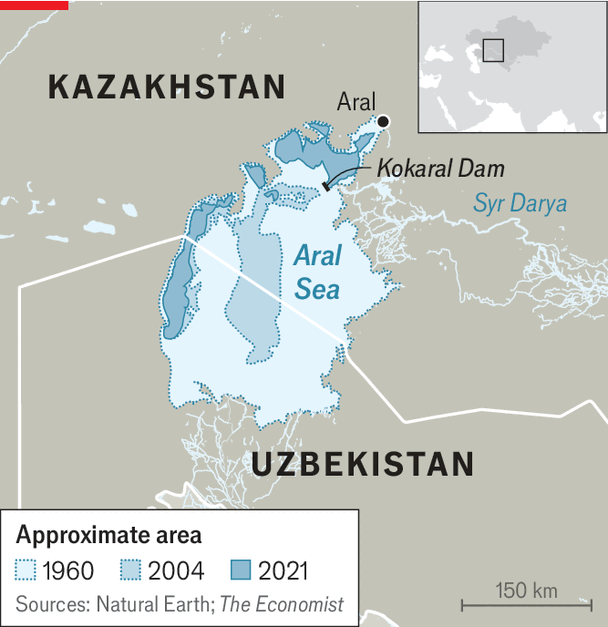
The North Aral is a different story(另一回事), though. It is bordered by higher ground, which cuts it off from the desert except for the tiny Kokaral Strait.(它被地势较高的土地环绕,除了狭窄的科卡拉尔海峡外,这些高地将其与沙漠隔开。) Kazakhstan dammed(筑坝拦截) that gap in 2005, but for many years struggled to refill the rump(残存部分) lake.
不过,北咸海的情况则不同。它被地势较高的土地环绕,除了狭窄的科卡拉尔海峡外,这些高地将其与沙漠隔开。哈萨克斯坦于2005年堵住了那个缺口,但多年来一直难以让这片残存湖泊重新蓄满水。