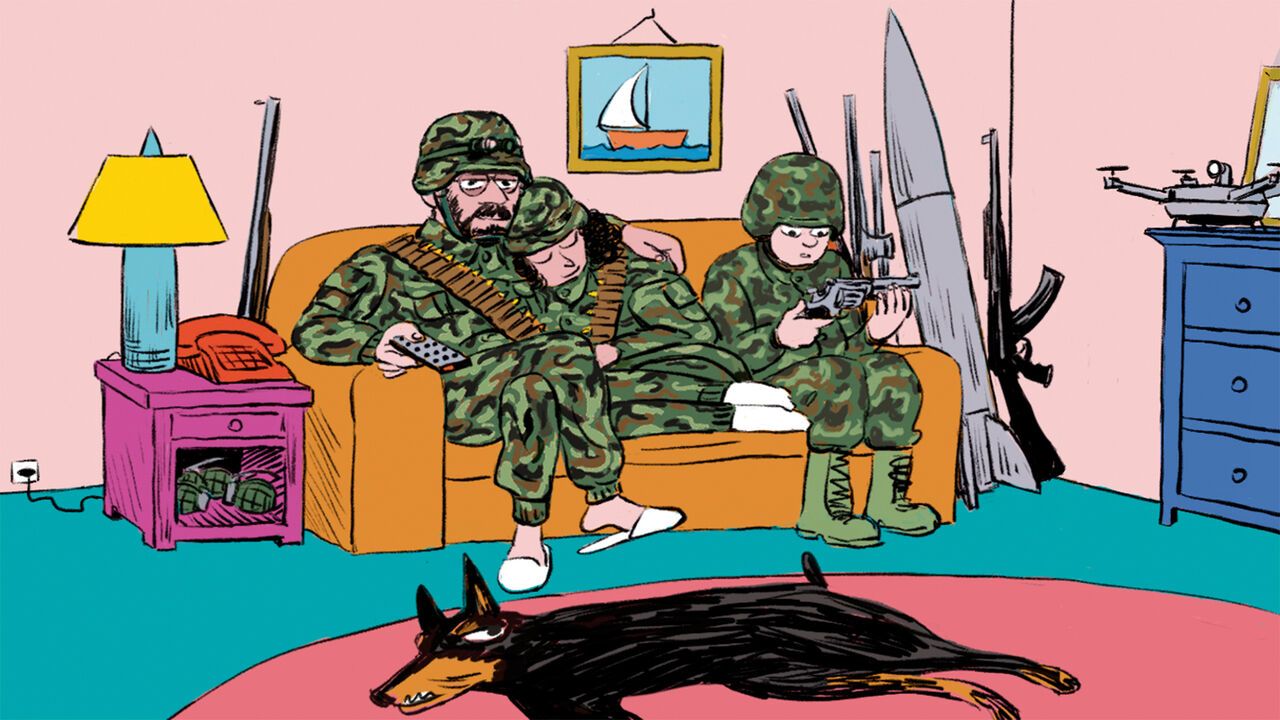
For eight months after France and Britain formally declared war on Germany in September 1939, remarkably little happened. The period became known as the “phoney war(假战争(1939-1940))”: a curious interlude during which western Europeans purported(声称,自称) to be fighting while in fact living at peace. (Not for long, alas.) Today Europe faces the inverse(相反的,倒转的) predicament. In theory no part of the continent west of Ukraine is at war with Russia. But peace ain’t what it used to be(和平已不复从前). Month after month Kremlin-paid stooges(走狗,傀儡) harass European airports with drones, sabotage(蓄意破坏) railway lines, torch shopping centres, threaten defence-company executives, hack computer systems and spread morale-sapping(瓦解士气的) disinformation on social networks. None of this amounts to conventional warfare—but neither does it feel like not-warfare. Call it the phoney peace. Russia is keeping Europe permanently off-balance, displaying too much belligerence to ignore, yet not enough to trigger direct retaliation.(俄罗斯让欧洲长期处于失衡状态,表现出的好战程度足以让人无法忽视,却又不足以引发直接报复。)
1939年9月,法国和英国正式对德国宣战后,整整八个月里几乎什么都没发生。这段时期被称为“假战争”:一段奇怪的插曲,西欧人声称在打仗,实际上却生活在和平之中。(唉,好景不长。)如今,欧洲面临的困境恰恰相反。理论上,乌克兰以西的欧洲大陆没有任何一部分与俄罗斯处于战争状态。但和平已不再是过去那种和平。一个月又一个月,克里姆林宫雇来的走狗用无人机骚扰欧洲机场,破坏铁路线,纵火焚烧购物中心,威胁国防企业高管,入侵计算机系统,在社交网络上散布瓦解士气的虚假信息。这些都不构成常规战争——但也不像是非战争状态。不妨称之为“假和平”。俄罗斯让欧洲长期处于失衡状态,表现出的好战程度足以让人无法忽视,却又不足以引发直接报复。
War and peace, to borrow a Russian phrase, used to be mutually exclusive(互斥的,不能并存的). Today in Europe they exist concurrently(同时地). This poses a dilemma: how much should Europe worry about threats of future invasion, and how much about the current reality of aggression? On one hand, the continent is gearing up for an old-fashioned war against Russia of the sort Leo Tolstoy might recognise, involving artillery and troop movements (and missiles and drones, these days). On the other, it is already embroiled(卷入(纠纷、冲突)) in a different sort of conflict, one fought with sabotage and propaganda. The danger is that Europe fixates on the hard war Russia might wage tomorrow—the clear-cut one that generals have spent their careers preparing for—while neglecting the murkier one already in full swing.(危险在于,欧洲紧盯俄罗斯明天可能发动的那场“硬战争”——那场将军们毕生备战的、界限分明的战争——却忽视了那场已经全面展开、更为模糊的战争。)
借用一句俄语说法,战争与和平过去是互斥的。如今在欧洲,两者同时存在。这带来一个两难:欧洲该为未来入侵的威胁担忧多少,又该为当前侵略的现实担忧多少?一方面,欧洲大陆正在为一场老式对俄战争做准备——那种列夫·托尔斯泰或许能认得的战争,涉及火炮和部队调动(如今还有导弹和无人机)。另一方面,它已经卷入另一种冲突,一场用破坏和宣传进行的冲突。危险在于,欧洲紧盯俄罗斯明天可能发动的那场“硬战争”——那场将军们毕生备战的、界限分明的战争——却忽视了那场已经全面展开、更为模糊的战争。
For now, much of Europe’s focus is on the tanks-crossing-borders threat. That is unsurprising: spooks(间谍,情报人员) from various countries think Russia might try to launch an invasion of NATO territory by 2030. Military materiel(军事物资,装备) is thus being ordered, soldiers trained and battalions(营(军队编制)) positioned accordingly. Defence budgets have soared to meet the challenge. Before 2022 most NATO countries fell short of(未达到) the target of spending 2% of GDP on defence. Now they are (mostly) on track to(有望,正朝着) meet a revised target of 3.5%.
目前,欧洲的关注点大多集中在“坦克越境”这一威胁上。这并不奇怪:各国情报人员认为,俄罗斯可能在2030年前尝试入侵北约领土。因此,军事物资正在订购,士兵正在训练,营队正在相应部署。国防预算已大幅攀升以应对挑战。2022年之前,大多数北约国家未能达到国防开支占GDP 2%的目标。如今,它们(大多)正朝着修订后的3.5%目标迈进。
I know you planned it
我知道你早有预谋