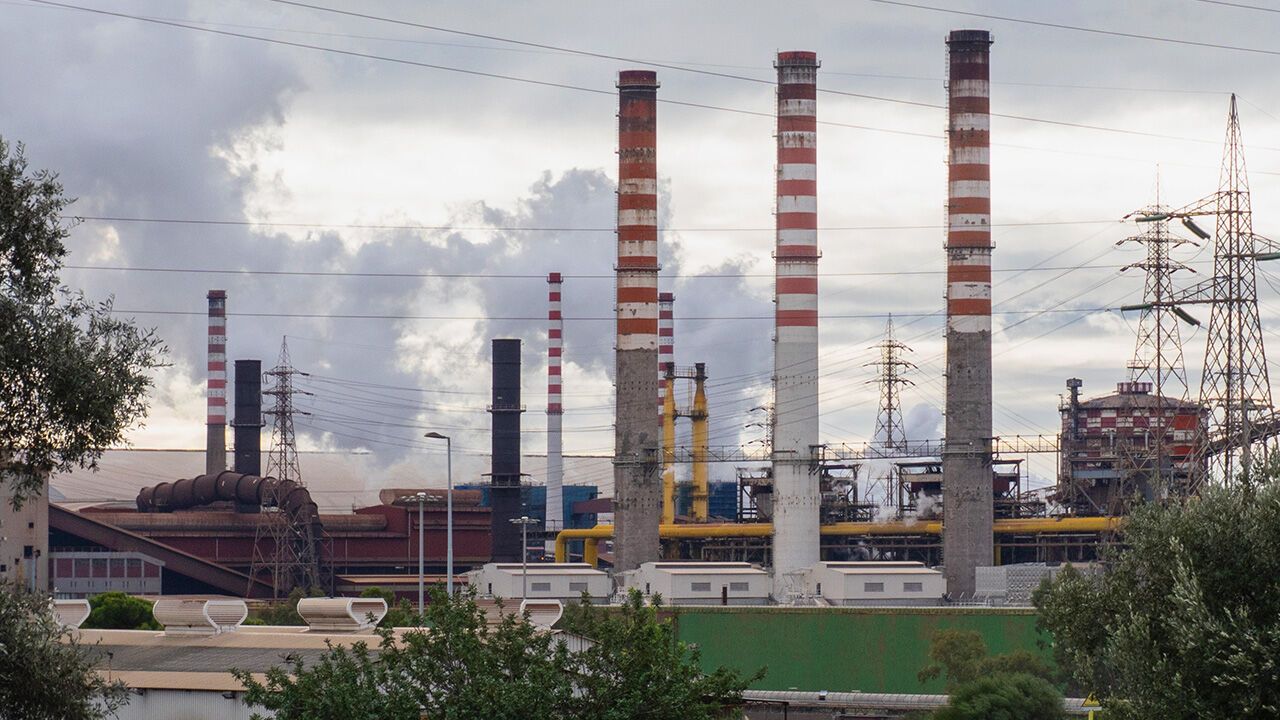
In the 1970s the steelworks(钢铁厂) at Taranto, on Italy’s southern coast, were among Europe’s largest, with 20,000 workers churning out(大量生产) millions of tonnes of steel a year. Today the plant is down to 8,000 employees, and this month it halted(停止) production. In July a court in Milan ordered it shut down(关闭) by October 25th to install pollution controls. The owners appealed(上诉), and the government of Giorgia Meloni, Italy’s prime minister, allowed it to keep its furnaces(高炉) warm so that production could resume. This week Italy’s highest court will decide whether they must be turned off, which could spell the plant’s end(意味着工厂的终结).
20世纪70年代,位于意大利南部海岸的塔兰托钢铁厂是欧洲最大的钢铁厂之一,拥有2万名工人,每年生产数百万吨钢铁。如今,该厂员工已减至8000人,本月还停止了生产。今年7月,米兰一家法院下令该厂在10月25日前关闭,以安装污染控制设备。厂主提出上诉,意大利总理焦尔吉娅·梅洛尼领导的政府允许其保持高炉温热,以便恢复生产。本周,意大利最高法院将裁定高炉是否必须熄火,这可能意味着该厂的终结。
The steelworks’ chimneys(烟囱) tower over(高耸于) the city, spewing out(喷出) toxins(毒素). In the nearby district of Tamburi residents sweep red dust from their balconies every day. Studies have documented elevated(升高的) rates of cancer and respiratory(呼吸的) disease, as well as reduced cognitive(认知的) performance among children. One study found over 1,000 excess deaths(超额死亡) between 2011-19 near the plant; another found deaths from lung cancer were 30% above the regional average.
钢铁厂的烟囱高耸于城市上空,喷吐着有毒物质。在附近的坦布里区,居民每天都要从阳台上清扫红色粉尘。研究记录显示,当地癌症和呼吸道疾病发病率升高,儿童认知能力下降。一项研究发现,2011年至2019年间,工厂附近有超过1000例超额死亡;另一项研究发现,肺癌死亡率比地区平均水平高出30%。
Grazia Parisi, a local paediatrician(儿科医生), says she sees growing numbers of children with respiratory illnesses and conjunctivitis(结膜炎). Her patients include children with leukaemia(白血病) and brain tumours(肿瘤). When children get a cough, mothers fear the worst(担心最坏的情况). “We are afraid to breathe, eat or let our children play in the fields,” says Dr Parisi.
当地儿科医生格拉齐亚·帕里西说,她接诊的患呼吸道疾病和结膜炎的儿童越来越多。她的病人中还有患白血病和脑瘤的孩子。孩子一咳嗽,母亲们就担心最坏的情况。“我们不敢呼吸、不敢吃东西,也不敢让孩子在田野里玩耍,”帕里西医生说。